Languages
Wednesday, October 21, 2026



News and Views from the Global South
IPS UN Bureau

Economic Dogma Blocks Pragmatic Policies
After condemning pragmatic responses to the 1997-98 Asian financial crises, the West pursued similar policies in response to the 2008 global financial crisis without acknowledging its own mistakes.
Children and Armed Conflict Must be at the Forefront of the Global Agenda
Thirty years ago, the groundbreaking report by Graça Machel, renowned and widely respected global advocate for women's and children's rights, to the United Nations General Assembly laid bare the devastating impact of armed conflict on children and shook the conscience of the world. It led to the historic decision of the General Assembly to create the mandate of the Special Representative of the Secretary-General for Children and Armed Conflict (SRSG-CAAC).
Davos: Meaningful Dialogue Requires a Collective Stand Against Military, Economic and Diplomatic Bullying
“The ‘spirit of dialogue’, the theme for this year’s meeting in Davos, which begins January 19, has been painfully and increasingly absent from international affairs of late. President Trump’s first year back in office has seen the United States withdraw from multilateral bodies, bully other states and relentlessly attack the principles and institutions that underpin the international justice system.
Jailed by the Generals She Defended as ICJ Opens Genocide Case Against Myanmar
Held incommunicado in grim prison conditions for nearly five years, Aung San Suu Kyi quite possibly does not even know that this week the International Court of Justice (ICJ) opened a landmark case charging Myanmar with committing genocide against its Rohingya minority a decade ago.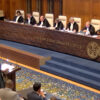
ICJ Begins Proceedings for Rohingya Genocide Allegations Case Against Myanmar
On January 12, the International Court of Justice (ICJ), opened landmark hearings in a case brought by the Republic of The Gambia, alleging that Myanmar’s military committed acts of brutal genocide against the Rohingya minority during its 2017 crackdown. Described by the United Nations (UN) as a case “years in the making,” the ICJ will spend the next three weeks reviewing evidence and testimony from both sides to determine whether the Myanmar military violated the Genocide Convention.
The Iranian Military Is the Only Institution Capable of Catalyzing the Downfall of the Regime
Unlike ever before, Iran’s Islamic regime is facing a revolt led by a generation that has lost its fear. Young and old, men and women, students and workers, are flooding the streets across the country.
What Next? United States Exits Key Entities, Vital Climate Treaties in Major Retreat from Global Cooperation
President Donald Trump has escalated efforts to further distance the United States from international organizations and entities focused on climate, the environment, and energy. This strategy is in step with his administration’s established approach to undermine and redirect funds and international cooperation away from climate and clean energy programs.
Gaza: Physicians Call For Unimpeded Aid To Restore Reproductive Healthcare
Israel must lift all restrictions on medicine, food and aid coming into Gaza, rights groups have demanded, as two reports released today (Jan 14) document how maternal and reproductive healthcare have been all but destroyed in the country.
Tracking the Invisible: Monitoring Air Pollution from Space
Take a deep breath. Did you know that in many countries in Asia and the Pacific, the air we breathe falls short of the safety standards for air quality set by the World Health Organization? While the start of a new year signals new beginnings, it also marks the continuation of the recurring air quality crisis across many countries in the region.
Roots of Evil: Ethnic cleansing in Europe and the U.S.
At the moment, ICE’s advancement in the U.S. is apparently dividing the nation’s population into desired and undesirable elements. The Immigration and Customs Enforcement (ICE) was born after the September 11, 2001 attacks on the Twin Towers and intended to be a response to terrorism. However, with Donald Trump’s return to the White House, federal immigration agents have become the president’s praetorian guard, implementing his immigration politics.
Richest 1% have Blown Through their Fair Share of Carbon Emissions for 2026 –in just 10 Days
The richest 1% have exhausted their annual carbon budget – the amount of CO2 that can be emitted while staying within 1.5 degrees of warming - only ten days into the year, according to new analysis from Oxfam. The richest 0.1% already used up their carbon limit on the 3rd January.
Is the US Moving Towards the UN’s Exit Door?
Judging by the mass US withdrawal from 66 UN entities, including UN conventions and international treaties, is it remotely possible that the unpredictable Trump administration may one day decide to pull out of the UN, and force the Secretariat out of New York-- despite the 1947 UN-US headquarters agreement?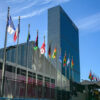
Our New Colonial Era
We’re living in an age where the world is loudly proclaiming the death of empire, yet reproducing its structures. This is not nostalgia for colonial postcards — it’s a reinvention of foreign policy, international governance and global economic power that resembles colonial logic far more than it does meaningful cooperation.
Importing Empire: Why America’s Legacy of Dehumanization in Foreign Wars Is Now a Reality at Home
Before military aid is appropriated, troops deployed, or bombs dropped, the United States lays the groundwork for its political violence by first stripping adversaries of their humanity. Diplomacy is sidelined, legal restraints are treated as inconveniences, and profit is valued over human life. This machinery of dehumanization, imposed around the world for decades and honed in Gaza the past three years, has now returned home, turned inward against Americans by the elected officials and systems meant to protect them.
Experts Urge Rapid Adaptation as India Braces for ‘Stronger’ Cyclones, Quakes
Despite early warnings reportedly reaching communities before the cyclones (Ditwah and Senyar) struck coastal regions in Sri Lanka and Southeast Asia late in November 2025, over 1,500 people lost their lives and hundreds went missing even as millions were impacted by these disasters, which caused massive destruction. Scientists say that these disasters reflect a changing climate system, which is making cyclones more hazardous than what we considered “typical” in the past.
Excluding Food Systems From Climate Deal Is a Recipe for Disaster
As they ate catered meals, COP30 negotiators had no appetite for fixing broken food systems, a major source of climate pollution, experts warn. Food systems are the complete journey food takes—from the farm to fork—which means its growing, processing, distribution, trade and consumption and even the waste.
US Retreat from Multilateral Institutions Undermines Rule Of Law
The Trump Administration’s sweeping executive order to withdraw the United States from dozens of United Nations bodies and international organizations, as well as a treaty ratified by the United States with the advice and consent of the US Senate, is a targeted assault on multilateralism, international law, and global institutions critical to safeguarding human rights, peace, and climate justice.
United States Withdrawal From Organizations Triggers Global Alarm
President Donald Trump's executive order to stop United States support for 66 international organizations, including 31 United Nations (UN) groups, has faced strong opposition from these organizations, the global community, humanitarian experts, and climate advocates, who are concerned about the negative effects on global cooperation, sustainable development, and international peace and security.
A Year of High Expectations and Frustrations
As many of you know, out of the blue, I have been called in to assist the Interim Government led by Nobel Laureate Professor Muhammad Yunus in stabilising the economy left in ruins by the fallen autocratic-kleptocratic regime that looted the banks, stole public money and robbed small investors in the capital market to siphon off billions of dollars out of the country. I had never served in a government; neither had I ever expected this opportunity. However, my UN experience and political economy understanding have been handy.
Sudan’s War Nears 1,000 Days as Violence and Hunger Reach Unprecedented Levels
As Sudan approaches 1,000 days of civil war, late December and early January saw a brutal escalation of violence, with drone strikes hitting areas at the center of the country’s deepening hunger crisis.
Africa Squeezed Between Import Substitution and Dependency Syndrome
Squeezed between import substitution and dependency syndrome, a condition characterized by a set of associated economic symptoms—that is rules and regulations—majority of African countries are shifting from United States and Europe to an incoherent alternative bilateral partnerships with Russia, China and the Global South.« Previous Page — Next Page »





The Week with IPS

NEXT STOP - SDGs
Tracking global progress towards a sustainable world
Tracking global progress towards a sustainable world
