Languages
Sunday, August 30, 2026



News and Views from the Global South
Afghanistan

As U.S. Exits Iraq, “Endgame” in Afghanistan Remains Elusive
Washington's failure to gain Iraqi approval for a significant U.S. military presence in that country beyond December could make it harder for Afghanistan to agree to a similar deployment beyond 2014.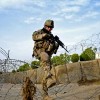
U.N. Tally Excluded Most Afghan Civilian Deaths in Night Raids
A July United Nations report asserting that only 30 civilians died in targeted raids in Afghanistan during the first six months of 2011 reflected only a very small fraction of night raids in which civilians were killed, according to officials of the independent Afghan commission which had co-produced the 2010 report on civilian casualties with the U.N. Mission.U.S. Debate on Haqqani: Military or Political Solution?
Dissension over Adm. Mike Mullen's accusation that the Haqqani network of Afghan insurgents is a "veritable arm" of Pakistan's intelligence agency and the revelation that a U.S. official met with a Haqqani official have provided new evidence of a long-simmering struggle within the Barack Obama administration over how to deal with the most effective element of the Afghan resistance to U.S.-NATO forces.Afghan Women’s Rights ‘Under Threat’
Women's rights in Afghanistan are once again under threat after 10 years of progress, two leading British aid agencies have said.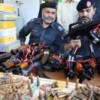
PAKISTAN: Guns Aimed Increasingly at Women
Guns available in new abundance in the troubled north of Pakistan are increasingly being used on women in ‘honour’ killings and domestic disputes, according to local reports.UZBEKISTAN: Don’t Let Logistics Trump Rights, Groups Tell Clinton
A broad coalition of 20 human rights, labour and consumer groups is appealing to the administration of President Barack Obama not to renew military aid and sales to Uzbekistan, widely considered one of the world's most repressive dictatorships.U.S. Knows Pressure on Pakistan Won’t Change Policy
The U.S. threat last week that "all options" are on the table if the Pakistani military doesn't cut its ties with the Haqqani network of anti-U.S. insurgents created the appearance of a crisis involving potential U.S. military escalation in Pakistan.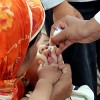
Polio Spreading Out From Pakistan
Despite two decades of mass oral polio vaccination (OPV) drives, Pakistan has failed to control the crippling paediatric disease. Health authorities now fear that it is exporting the virus and setting back global eradication plans.New Study Says U.S. Night Raids Aimed at Afghan Civilians
U.S. Special Operations Forces have been increasingly aiming their night-time raids, which have been the primary cause of Afghan anger at the U.S. military presence, at civilian non- combatants in order to exploit their possible intelligence value, according to a new study published by the Open Society Foundation and The Liaison Office.U.S.-IRAQ: Hawks Fret Over U.S. Withdrawal
Eclipsed by the war in Afghanistan, growing tensions between Israel and its neighbours, and the continuing reverberations of the so-called "Arab Spring", Iraq is inching back into the news here as a debate over the future of U.S. military forces there gathers steam.Kabul Attack Continues Taliban Control of War Narrative
Gen. David Petraeus wrote in his 2006 counterinsurgency manual that the U.S. command headquarters should establish a "narrative" for the counterinsurgency war – a simple storyline that provides a framework for understanding events, both for the population of the country in question and for international audiences.NATO-Led Forces Secure Kabul After Attacks
Afghan and NATO forces have ended their assault on Taliban fighters, 20 hours after the group launched coordinated attacks in Kabul, targeting NATO's headquarters, the U.S. embassy and the Afghan intelligence agency.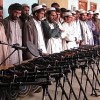
PAKISTAN: 9/11 Legacy – An AK-47 in Every Home
The United States-led war-on terror, unleashed on Afghanistan in the wake of the 9/11 attacks, has utterly destabilised the neighbouring Pashtun-dominated tribal areas of Pakistan and reduced them to a state of utter lawlessness.Washington Warned Against Lifting Aid Curbs
As a high-ranking Uzbek delegation wound up talks with senior U.S. officials here Wednesday, human rights groups urged the administration of President Barack Obama not to lift seven- year-old restrictions on Washington's aid to Tashkent in exchange for a new agreement on using Uzbek territory to transport "non-lethal" supplies to and from Afghanistan.
PAKISTAN: Dodging Drones and Bullets to Beat HIV
Having to contend with U.S. army drones and the crossfire between the Taliban and the Pakistani army, the residents of Pakistan’s tribal areas find access to treatment for HIV/AIDS harder than in most other parts of the world.Post-9/11 Rebuffs Set U.S.-Iran Relations on Downward Spiral
Of all the mistakes and missed opportunities that have characterised U.S. foreign policy since Sep. 11, 2001, few may have been as consequential as the failure to improve relations with Iran.CIA’s Push for Drone War Driven by Internal Needs
When David Petraeus walks into the Central Intelligence Agency Tuesday, he will be taking over an organisation whose mission has changed in recent years from gathering and analysing intelligence to waging military campaigns through drone strikes in Pakistan, as well as in Yemen and Somalia.Afghan Security Faces Long-Term Challenges
U.S.-led efforts to build Afghan security forces capable of preventing Taliban resurgence face a series of challenges, from the reluctance of southern Pashtuns to serve in a national army, to maintaining the billions of dollars in infrastructure and equipment provided by the U.S. and other foreign countries over the past decade.CANADA: Hawkish Foreign Policy at Odds with Popular Priorities
Canada has flexed its military muscles, first in Afghanistan for nine years alongside NATO forces, and now in Libya in its supply of ships and combat planes for the rebel forces, but little debate has happened on the ground among Canadians themselves on this direction.PAKISTAN: Gem of a Plan Against Taliban
Mining gems and other valuable minerals may provide, the Pakistan government hopes, alternate careers to militancy in the restive Federally Administered Tribal Areas (FATA), bordering Afghanistan.
PAKISTAN: Videogames Pictured Killing the Innocent
‘Gaming in Waziristan’, a current photo exhibition, graphically supports charges that drone strikes carried out by the United States military and intelligence in Pakistan’s tribal areas kill more civilians than Taliban.« Previous Page — Next Page »


The Week with IPS

NEXT STOP - SDGs
Tracking global progress towards a sustainable world
Tracking global progress towards a sustainable world
