Languages
Saturday, July 4, 2026



News and Views from the Global South
Afghanistan
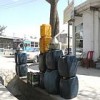
AFGHANISTAN: Subsidised Fuel Trail Winds Back to Pakistan
In a teeming petrol market on the outskirts of Kabul, black market traders sell fuel to everyone from individual customers to large business groups. Although much of this petrol comes from Iran or the Central Asian countries, a good amount also hails from Pakistan, where government subsidies have made the fuel much cheaper than in Afghanistan.
PAKISTAN: Tax Payers Pay for Subsidised Fuel to Afghanistan
Petrol pumps in Pakistan’s border regions do brisk business. Jerry cans of fuel are carried both clandestinely and openly across the porous frontier for sale in neighbouring Afghanistan.POLITICS-US: Bush Had No Plan to Catch Bin Laden after 9/11
New evidence from former U.S. officials reveals that the George W. Bush administration failed to adopt any plan to block the retreat of Osama bin Laden and other al Qaeda leaders from Afghanistan to Pakistan in the first weeks after 9/11.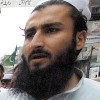
PAKISTAN: ‘Militants Are Not Taliban, We Are’
The world knows the Taliban as armed fighters who have unleashed a wave of violence in Afghanistan and neighbouring Pakistan including devastating suicide bomb attacks, the most recent on the luxurious Marriot Hotel in high-security Islamabad last week.POLITICS-PAKISTAN: No Military Solutions to Suicide Bombings
Political analysts have long been warning the United States and Pakistan governments that there are no easy military solutions in prosecuting the global ‘war on terror’ which may now have become inextricable from ‘home-grown’ militancy.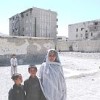
AFGHANISTAN: Severe Hunger Can Help Taliban
If 11-year old Zayainullah doesn't bring home enough money today, he says he will get beaten. "We don't have food and my aunt threatened me, saying I have to bring back enough money to buy bread," he says.POLITICS-US: Vested Interests Drove New Pakistan Policy
The George W. Bush administration's decision to launch commando raids and step up missiles strikes against Taliban and al Qaeda figures in the tribal areas of Pakistan followed what appears to have been the most contentious policy process over the use of force in Bush's eight-year presidency.AUSTRALIA: Winning ‘Hearts and Minds’ in Afghanistan?
Responses by defence officials in the wake of a recent inquiry into claims that Australian soldiers mistreated detainees in Afghanistan undermine efforts to win the battle for hearts and minds in that war-ravaged country.POLITICS-US: Intel Council Warned Against Raids in Pakistan
The National Intelligence Council, the U.S. intelligence community's focal point for estimating future developments, warned the George W. Bush administration last month that a decision to launch commando raids by U.S. troops against al Qaeda-related targets in Pakistan's North-West Frontier region would carry a high risk of further destabilising the Pakistani military and government, according to sources familiar with the intelligence community's response to the issue.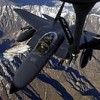
AFGHANISTAN: US-NATO Airstrikes Bring Higher Civilian Toll
Ramped-up U.S. and NATO airstrikes in Afghanistan are causing an increased civilian death toll, raising concerns about the fallout from civilian deaths on the war effort against the Taliban insurgency, according to a major new report by Human Rights Watch (HRW) released here Monday.US/PAKISTAN: Raid May Herald More Confrontational Policy
An apparent raid into Pakistani territory by U.S. forces stationed in Afghanistan has prompted angry denunciations from Pakistani officials and renewed questions about the future of the war against the Taliban in the region.
PAKISTAN: Outlawed Taliban Have Free Run of Media
Taliban factions in the North West Frontier Province (NWFP) and tribal areas have been outlawed and their accounts frozen by the Pakistan government. But that has not in the least bit altered their presence in the media.PAKISTAN: Border Villages Rise Up Against Taliban
"We are trend-setters. Others are following us," boasts Rauf Khan, mayor of Pakistan’s Buner district, where villagers killed six militants in the Dara Shalbandi area on Aug. 14.POLITICS-US: A Really Bad Couple of Weeks for Pax Americana
Whatever hopes the George W. Bush administration may have had for using its post-9/11 "war on terror'' to impose a new Pax Americana on Eurasia, and particularly in the unruly areas between the Caucasus and the Khyber Pass, appear to have gone up in flames - in some cases, literally - over the past two weeks.US/PAKISTAN: Taliban Tests Fragile Coalition Gov’t
When Pakistani president and former military dictator Gen. Pervez Musharraf stepped down on Monday, it marked the official end of the flawed Pakistan policy of the administration of U.S. President George W. Bush.POLITICS-US: McCain’s Plan to Privatise Veterans’ Health Care
If John McCain is elected the next U.S. president, wounded veterans could be in for a world of hurt.AFGHANISTAN: Taliban Fill Power Void in Kabul?
The ambush that killed 10 NATO soldiers outside of Kabul on Tuesday, the worst battlefield loss for western forces since the war began, was the capstone in a week of high-profile insurgent activities in Afghanistan.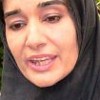
US/PAKISTAN: Mystery Behind Aafia Siddiqi’s ‘Arrest’ Deepens
‘’For you it’s just another story. If you want the truth go to Ghazni where you will get more than I can ever tell you about my sister," said a distraught Fouzia Siddiqi, speaking with IPS, in a voice breaking with helpless desperation.POLITICS: Bush Covered up Musharraf Ties with Qaeda, Khan
Pakistani President Pervez Musharraf's resignation Monday brings to an end an extraordinarily close relationship between Musharraf and the George W. Bush administration, in which Musharraf was lavished with political and economic benefits from the United States despite policies that were in sharp conflict with U.S. security interests.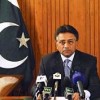
PAKISTAN: Musharraf Quits, Avoids Impeachment
Pakistan President Pervez Musharraf resigned from office on Monday ending weeks of speculation over whether he would quit or face impeachment on charges of illegally seizing power by a parliament elected in February and dominated by political parties opposed to him.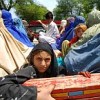
PAKISTAN: Civilians Flee Fresh Fighting in Tribal Area
"We have been staying in this camp for two days. My daughter is still in Loi Sam which we left due to heavy shelling by the army," says Gul Pari, who fled the fighting in volatile Bajaur Agency, a tribal area on Pakistan’s northern border.« Previous Page — Next Page »


The Week with IPS

NEXT STOP - SDGs
Tracking global progress towards a sustainable world
Tracking global progress towards a sustainable world
