Languages
Saturday, July 4, 2026



News and Views from the Global South
Afghanistan
PAKISTAN/AFGHANISTAN: Taliban Raids on NATO Convoys Crippling – Analysts
While NATO and United States forces have downplayed raids in Peshawar by pro-Taliban militants, destroying hundreds of their military vehicles and supply containers destined for Afghanistan, analysts here believe that the damage is significant.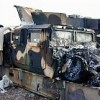
PAKISTAN: NATO Convoys Under Taliban Attack
The past two months have seen an upsurge in violence unleashed by Pakistani Taliban in the North West Frontier Province (NWFP) and the adjacent tribal areas bordering Afghanistan.RIGHTS: Politics Still Reign Over Principles at U.N.
The United Nations Wednesday commemorated the 60th anniversary of the landmark Universal Declaration of Human Rights (UDHR) against the backdrop of widespread political repression - most notably in Zimbabwe, Sudan, Burma (Myanmar), Iraq, Afghanistan and in the Israeli-occupied territories of West Bank and Gaza.INDIA/PAKISTAN: Hoax Call Hyped by Media – Get Hostilities to Brink
A hoax phone call from India to Pakistan’s President threatening military reprisals in the aftermath of the terrorist attack on Mumbai city, hyped up by media, brought the nuclear-armed neighbours close to conflict.SOUTH ASIA: Concern for Zardari's Civilian Gov't Stays India
After United States Secretary of State Condoleezza Rice’s visit to New Delhi and Islamabad, in the wake of the Mumbai terrorist attacks, India has added a new rationale for stepping up pressure on Pakistan for taking decisive action against jehadi extremists operating from its soil.U.S.: Mumbai Massacre Seen as Major Blow to Regional Strategy
A week after the massacre of more than 170 people by armed militants in Mumbai, U.S. officials are scrambling to prevent the incident from blowing up into a full-fledged confrontation between nuclear-armed India and Pakistan.MEDIA-PAKISTAN: Reporting From Tribal Areas Highly Risky
Reporting from Peshawar - hub of Pakistan’s tribal areas, currently the focus of a pincer movement between the Pakistan army and the United States-led forces in neighbouring Afghanistan - has become a highly risky affair.
RELIGION-INDONESIA: ''My Roommate, the Terrorist''
For one Indonesian journalist, the acts of terror unleashed on the resort island of Bali in October 2002, that killed 202 people, were more than a major story to cover.US-PAKISTAN: Obama-Tied Think Tank Calls for “Dramatic” Shift
A think tank closely tied to U.S. President-Elect Barack Obama is calling for a "dramatic strategic shift" in Washington's policy towards Pakistan, one designed to both strengthen civilian institutions and promote an effective counter-insurgency against al Qaeda and indigenous Islamist extremists in the tribal areas along the Afghan border who increasingly threaten the country's stability.POLITICS-US: Vets See Hope for a Broken System
Thirty-three-year-old Walter Williams was among the thousands of revelers who flooded into the streets of Oakland on Nov. 4 to celebrate Barack Obama's election as the 44th president of the United States.U.S.: Obama Foreign Policy May Not Require a Clean Break
While much of the world and many of his U.S. supporters are expecting a sharp break with his predecessor's foreign policy after President-elect Barack Obama takes office Jan. 20, they may be surprised by the degree of continuity between the two administrations.AUSTRALIA/US: Afghanistan – Potential Sticking Point For Obama
While change may have come to the United States - as professed by president-elect Barack Obama following his election victory, a result largely welcomed here - Australia’s alliance with the superpower is likely to remain strong.POLITICS: ‘New US President Must Review Pakistan Policy’
Tensions between the United States and Pakistan - on the eve of the keenly-watched U.S. Presidential elections - accompanying a visit by U.S. commander Gen. David Petraeus over unabated air strikes into Pakistani territory bode ill for peace in the region say analysts.AFGHANISTAN: ‘If Talks With Taliban Bring Peace, I’ll Support It’
Western officials are increasingly turning to new strategies in an effort to stabilise Afghanistan and defeat the insurgency here, according to U.S. and Afghan officials. The various initiatives - from negotiating with the Taliban to arming tribal militias - have differing degrees of support from Afghans.AFGHANISTAN: Journalist Serving 20 Years for “Blasphemy”
International human rights groups have called on Afghan authorities and President Hamid Karzai to free 24-year-old Afghani journalist Perwiz Kambakhsh, who has been sentenced to 20 years of prison after being convicted of blasphemy.
US/IRAQ: "We Have to Share This Pain"
Veterans from the U.S. occupation of Iraq and Afghanistan, along with Iraqis, Afghanis, Vietnam veterans, and family members of U.S. military personnel converged in this west coast city over the weekend to share stories of atrocities being committed daily in Iraq, in a continuation of the "Winter Soldier" hearings held in Silver Spring, Maryland in March.US/AFGHANISTAN: Fears of Blowback Nixed Airstrikes in 2004
The present U.S. policy in Afghanistan of using airstrikes to target local Taliban leaders was rejected by the top U.S. commander in Afghanistan in early 2004 as certain to turn the broader population against the U.S. presence.US/AFGHANISTAN: Moving Towards a 'Grand Bargain'
Increasingly frustrated by the "downward spiral" that the U.S. intelligence community sees in Afghanistan, the Pentagon appears to be moving in support of engaging leaders of the resurgent Taliban who are prepared to disassociate themselves from al-Qaeda.POLITICS: Afghan Peace Talks Widen US-UK Rift on War Policy
The beginning of political talks between the Afghan government and the Taliban revealed by press accounts this week is likely to deepen the rift that has just erupted in public between the United States and its British ally over the U.S. commitment to an escalation of the war in Afghanistan.U.S.: Pakistan "Greatest Single Challenge" to Next President
Calling Pakistan the "greatest single challenge" to the next U.S. administration, a bipartisan group of South Asia experts recommends cutting aid to the Pakistani army unless it commits itself to the counter-insurgency struggle against the Taliban and al Qaeda.
Q&A: "Mistakes Will Continue to Happen When There Isn’t Transparency"
Not many people want to spend time at Guantánamo Bay. But while studying law at the University of Miami in 2005, Mahvish Rukhsana Khan became outraged to learn of the lack of rights afforded detainees in the "war on terror" and was keen to get involved.« Previous Page — Next Page »


The Week with IPS

NEXT STOP - SDGs
Tracking global progress towards a sustainable world
Tracking global progress towards a sustainable world
