
Saturday, October 17, 2026



News and Views from the Global South
Africa: Women from P♂lls to P♀lls
POLITICS-SIERRA LEONE: A Sea of Challenges for the New Government
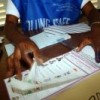
A voting process that has stretched over more than a month came to an end this week with the announcement that Ernest Bai Koroma of the All People's Congress (APC) had won the presidency in Sierra Leone's general elections.POLITICS-MOROCCO: Quotas Overpowered by Machismo
When Morocco held legislative polls a decade ago, just two women were elected to the lower house of parliament in this North African country. Legal reforms enacted since have ensured that women will fare better when the latest parliamentary ballot gets underway Friday. But for activists, there is still a long way to go in bringing gender parity to the Chamber of Representatives.POLITICS-KENYA: “I Almost Have No Fare to Come Back to Nairobi”
Posters, campaign appearances, radio spots and television adverts: all are essential for winning office in Kenya's general elections, set for December, and all cost money that parliamentary candidates are responsible for raising in this East African country.
Q&A: “I Have Ideas for Things That Need To Be Done in All Social Sectors”
It's a long way from the north of France to West Africa - and from studying mathematics at the University of Lille to becoming a mayor in central Cameroon. But Marie-Hélène Ngoa has successfully undertaken both these journeys.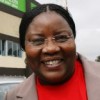
KENYA: Legislation to Get More Women in Parliament – the Next Chapter…
Activists in Kenya have resumed efforts to legislate an increase in the number of women occupying seats in the East African country's parliament, this after a constitutional amendment bill that would have created 50 special seats for women was thrown out by the governing body.POLITICS-MALI: Worst Expectations Confounded
As former British Prime Minister Harold Wilson once remarked, "A week is a long time in politics." By this token, a political landscape can alter even more in a month, recent developments in Mali being a case in point.
Q&A: Elections "Will Indicate Maturity in the Democratic Process"
Just hours remain before polling stations are scheduled to open in Sierra Leone for general elections that will see seven parties vie for the presidency, and control of the West African nation's parliament.
POLITICS-SIERRA LEONE: Women As An Antidote to Corruption?
Sierra Leone will hold general elections Saturday with a number of significant achievements in hand, not least maintaining peace for five years.
KENYA: More Women in Parliament, Hopefully – By Way of the Constitution
Kenya's parliament will soon debate a constitutional amendment bill to improve female representation in the legislature by creating 50 special seats for women. At present, only some eight percent of parliamentary posts in the East African country are occupied by women.
SIERRA LEONE: A Women's Issue That Women Are Wary of Campaigning About
Female genital mutilation (FGM) can make sex painful, complicate childbirth, lead to urinary tract infections, enable the transmission of HIV - and induce a host of other ills. So, promising to fight this practice should be a winning strategy for someone hoping to be elected to parliament this Saturday in Sierra Leone - where about 90 percent of girls and women undergo FGM, according to rights watchdog Amnesty International.
Q&A: "In Sierra Leone They Just Cut You, And There's Not Much Problem With That"
Certain comments resonate long after they are made, and Shirley Yeama Gbujama's reported threat to "sew up the mouths of those preaching against Bondo" is certainly one of them.
POLITICS-SIERRA LEONE: Making a Voting Right a Voting Reality
Having the right to vote is one thing; using it properly, or indeed at all, is quite another, as Sierra Leone has shown ahead of general elections this Saturday.POLITICS-MALI: Bracing for “Zero to Six” in Parliamentary Elections
A fear has been voiced that the number of women in Mali's parliament could be more than halved during legislative elections that wrapped up Sunday.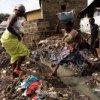
SIERRA LEONE: Caught Between Leaving the Kitchen and Putting Food on the Table
When Iyesha Josiah told people last year that after the August 2007 general elections, she would stand before them as a new member of parliament for Sierra Leone, they thought she was joking.AFRICA: “If You Want More Development, Include Women in Decision-making”
The '8th Triennial Commonwealth Women's Affairs Ministers Meeting' (8WAMM) has closed with an acknowledgement that gender equality is central to democracy, peace and economic growth; ministers also called for greater efforts to achieve parity between men and women.BURKINA FASO: Giving Political Parties a Legal Nudge
Awareness raising alone hasn't managed to bring about sufficient change...Perhaps quotas are now required. That's the thinking behind a law that will be put before Burkina Faso's parliament later this year, in an effort to increase the number of women in decision-making posts in the West African country's government.POLITICS-BENIN: A Drubbing in National Elections Turns Attention to Local Polls
Out of 250 candidates, just a handful triumphed: not an impressive track record by any measure. So, Benin's women are already looking ahead to the next election.POLITICS-MALI: A Presidential Election That Breaks With Tradition
When Malians queue to cast ballots in presidential elections Sunday, they will be participating in a poll with a difference: for the first time ever, a woman will be amongst the candidates voters have to choose between.POLITICS-NIGERIA: Watershed Elections – For Men, That Is
Declarations of no confidence in the electoral commission, threats of an opposition boycott, a key candidate clawing his way back onto the ballot at the last minute...There has been no shortage of political theatre concerning Saturday's milestone elections in Nigeria, or debate on whether the country can successfully hand over power from one civilian government to another for the first time since independence in 1960.NIGERIA: What Have Eight Years of Democracy Done for Women Politicians?
"Men are the decision makers; women should be cooking in the kitchen while men play politics." This is the type of comment that Dorothy Ukel Nyone's male counterparts repeatedly made when she announced her intention to contest a seat in Nigeria's state elections, which got underway Saturday.LESOTHO: Local Elections May Hold the Key to National Success for Women
As Lesotho's newly-elected legislators settle down to the task of governing, activists are expressing disappointment at the low representation of women in the country's parliament.« Previous Page — Next Page »





With democratic elections a fact of life across Africa, the continent now faces a different challenge at the polls: ensuring that women have equal opportunities when running for office, representing their constituents, and casting ballots for future leaders. The Inter-Parliamentary Union notes that women hold an average of just 17.5 percent of legislative seats in sub-Saharan Africa -- a far cry from the 30 percent believed necessary for them to have real influence in parliaments, and further still from the 50 percent that would signal parity had finally been attained. Here, we examine obstacles to women's participation in legislative politics. We also analyse how women -- and men -- are dealing with the problems, so that these difficulties can be relegated to the history books.

The Week with IPS

Tracking global progress towards a sustainable world


This page includes independent IPS news coverage which is part of a partnership with UN WOMEN SARO to strengthen the voice and visibility of "Women in Politics" in the region.
Advocacy Toolkit for Women in Politics

- Planning for Advocacy
- Framing an advocacy message
- Mobilising Resources fot your Advocacy Activities
- Conducting Research
- Networking Tools - Srength in numbers
- Be Media Savvy
- Writing for Media - Opinion and Commentary Pieces
- Key Gender Concepts
- Using the SADC Protocol on Gender and Development as an Advocacy Tool
- One woman's journey in advocacy
