Languages
Tuesday, October 27, 2026



News and Views from the Global South
Burma
POLITICS-BURMA: Junta Has No Plans For Political Change – Suu Kyi
Burma’s pro-democracy leader, Aung San Suu Kyi, turned a rare moment of freedom in the military-ruled country, this week, to urge Asian governments not to be lulled into believing the junta’s promises of political change.INDIA/CHINA: Eyeing Burma
When the world’s two most populous countries held a summit this month in Beijing, their agenda was brimful with collaboration. India and China, once adversaries that fought a war in 1962, are now leading trading partners.BURMA: Junta Achieves Food Shortages Amidst Plenty
By announcing a new programme to expand its work in military-ruled Burma, a U.N. food agency has shed more light on the dire economic realities faced by that country’s impoverished people.RIGHTS-BURMA: Lobby Says Gem Boycott Is Working
Rights advocates are renewing calls for consumers and merchants to shun Burmese gems in the run up to the military government's latest auction of precious stones, saying evidence shows Western boycotts are beginning to bite.RELIGION-BURMA: Falling Back on Buddhism
Burma’s military leaders lived up to their reputation as repressive rulers on the day this country celebrated 60 years of independence from British rule. This erstwhile capital's main road was closed for two hours on the morning of Jan. 4.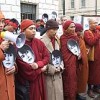
POLITICS-BURMA: Junta Snubs UN Yet Again
Burma’s military regime fired a warning shot this week to let the United Nations and the international community know that it will not cave into pressure on domestic political reform.POLITICS: ASEAN Family Gets ‘Protective’ About Burma
South-east Asian leaders closed ranks this week behind a view that places a higher premium on protecting the life of the region’s governments, no matter how oppressive they are, than on being accountable to their respective peoples.
BURMA: UN Envoy Pushes For Prison Visits by Red Cross
By making a case for the International Committee of the Red Cross (ICRC) to be allowed to resume visiting Burma's prisons, a United Nations human rights envoy has brought to relief a benchmark that will prove difficult for the country’s military regime to ignore.
BURMA: Picture of Normalcy Presented to UN Envoy
Over the past few days, Burma’s military regime has yet again proved its mastery at conjuring up an image of normalcy when an important visitor is in town.TRADE: Rights Group Urges Burmese Gem Ban
Human rights advocates have urged the United States and other countries to ban imports of gems from Burma, saying the trade helps to finance military rule and abuses in the country, also known as Myanmar.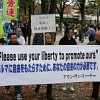
RIGHTS-JAPAN: Cut Aid to Burma Say Demonstrators
About 1,300 Burmese expatriates rallied in the capital’s Yoyogi Park on Sunday afternoon, appealing to the international community to put pressure on the Japanese government to cut aid to their military-ruled country.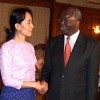
POLITICS-BURMA: Aung San Suu Kyi’s Release Fits Junta’s Agenda
Tentative talks between Burma’s pro-democracy leader Aung San Suu Kyi and the country’s military rulers have begun, raising hopes of a political breakthrough. "If the talks go well, she may be released soon," a spokesman for her party, the National League for Democracy (NLD), told journalists on the weekend.MEDIA-BURMA: Keeping the Flame Alive Over Radio, Internet
International media interest in Burma seems to have cooled down after images of the violent dispersal of pro-democracy demonstrators were splashed on TV screens and newspapers late September. But exiled Burmese journalists are determined to keep the flame going over radio and the Internet.
POLITICS-BURMA: UN Envoy Fails to Impress Junta
On his second visit to Burma since the brutal crackdown on demonstrators, in September, United Nations special envoy Ibrahim Gambari held talks with senior members of the Burmese military regime. But there are few signs of a breakthrough in encouraging a transition to civilian rule.RIGHTS-BURMA: “You Are 18,” Child Soldiers Told
Burma's military government will face another round of international scrutiny next week when the U.N. Security Council Working Group on Children and Armed Conflict meets to consider evidence on the country's ongoing forced recruitment of child soldiers, according to a report released Wednesday by Human Rights Watch (HRW).
RIGHTS-BURMA: UN Envoy’s Visit – Facelift for Junta?
While they welcome the return of a U.N. human rights envoy to Burma, political exiles from the country are asking pointed questions such as who stands to gain most from the high-profile visit.
POLITICS-BURMA: Will the Olympic Card Nudge China to Act?
Having scored a subtle victory in using the Olympics card to nudge China to apply pressure on Sudan, international activists are now hoping to tie the 2008 Beijing Olympics with the unfolding civil crisis in Burma and draw the world’s attention to China’s potential to act there.
RIGHTS-BURMA: Media-in-Exile Examine Strengths, Weaknesses
As Burma’s junta clamps down on citizen journalists in the wake of the brutal repression it unleashed on monks and pro-democracy protestors, the ‘media-in-exile’ are hard put to maintain the information flow on events in their country.BURMA: EU Takes Some Firm, But Small, Steps
Import of gemstones, timber and metal from Burma have been banned by the European Union in protest against the violent suppression of protests by Buddhist monks in Rangoon.POLITICS: UN, ASEAN Lock Hands on Burma
Launching his latest diplomatic mission in South-east Asia, the United Nations special envoy for Burma has thrown his weight behind a view that governments in this region have to play a lead role in defusing the crisis in the military-ruled country.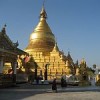
RIGHTS-BURMA: Buddha's Peace Prevailed in Mandalay
When Burma’s military regime mounted an attack on unarmed Buddhist monks and civilian protestors in Rangoon, the residents of this ancient city feared similar treatment.« Previous Page — Next Page »





The Week with IPS

NEXT STOP - SDGs
Tracking global progress towards a sustainable world
Tracking global progress towards a sustainable world
