Languages
Tuesday, October 13, 2026



News and Views from the Global South
City Voices: The Word from the Street
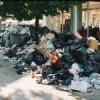
BULGARIA: A Capital That Can’t Handle Its Mess
On several occasions over the past two years, the streets of the Bulgarian capital Sofia have been literally covered with trash. The city of one million is one of the few European capitals without a waste processing system.YEMEN: Disarming Will Not Be Easy
Government plans to disarm large swaths of the population are running into difficulties, with some lawmakers reticent to pass new legislation, calling for enforcement of existing law instead, and tribal leaders demanding the right to protect themselves.
BRAZIL: Homeless Squatters Find 'Social Function' for Empty Buildings
The dark entry hallway and a lower floor full of rubble that smells of excrement make it difficult to imagine that this was once a busy hotel, located next to two train stations in the central Luz neighbourhood of the southern Brazilian city of Sao Paulo.PARAGUAY: Solidarity Lending Bolsters Community Development
Esperanza Santos Aranda, who lives in a poor neighbourhood in the Paraguayan capital, used to sell vegetables at a precarious market stall. But thanks to a 60-dollar loan, she was able to open up her own small clothes-selling business.BRAZIL: Indigenous Resistance Movement Defends Traditional Beliefs
Twenty indigenous people have been occupying the abandoned building of the Museu do Indio in Rio de Janeiro since October, to call attention to "500 years of resistance to genocide," a view of their history that has acquired new relevance in the light of the Vatican's latest position on Christian evangelisation during the colonial era.FINANCE-AFRICA: Mobile Phones Revolutionise Banking
Mobile phone banking is expanding across the region from South Africa to Kenya and is putting the poor directly in control of their own finances like never before.LATIN AMERICA: Measuring Civil Society By Its Own Yardstick
Legal reforms, manuals of good practice, codes of ethics and schools for activists are some of the tools that organised civil society in Latin America wants in order to improve its transparency and legitimacy.VENEZUELA: Marches and Counter-Marches Over TV Station’s End
Hundreds of journalists and students carried a one-kilometre banner reading "S.O.S. Freedom of Expression", written in 10 languages with letters one metre high, through the Venezuelan capital Monday to protest the authorities' decision not to renew the broadcasting licence of the country's most popular TV station.HEALTH: Sanitation Advocates Lead Bowl Movement
Sim Jae-Duck, a member of the South Korean national assembly, did a quick survey of the urban landscape in New York last week and expressed disappointment over a woeful shortage of public restrooms in a densely-populated city of over eight million people.ARGENTINA: The Long (Children’s) March Against Hunger
"There are lots of hungry, barefoot children in Argentina, but they don't talk about that in school, so I learn a lot when I come on these marches," said Aluminé Giuliani, a teenager participating in a nationwide children's march, which arrived in the Argentine capital Friday.BOLIVIA: Faster Internet Connections – For the Few
A varied crowd of academics, civil servants, and university and high school students gathered in the hall of the vice-presidential building to celebrate Internet Day. The main event was the launching of Internet II, a project to incorporate Bolivia into the cutting-edge Latin American Cooperation of Advanced Networks (CLARA).PORTUGAL: Some Missing Children More Equal than Others
Never before has the Portuguese idiom "para o inglês ver" (literally: for the English to see), which means putting on a front to impress outsiders and ward off criticism, been so apt as today in Portugal, when the entire country has its attention riveted on the case of a four-year-old British girl who disappeared from a hotel two weeks ago.BIODIVERSITY: Wild Parrots Tame the Concrete Jungle
Southern California has a vast array of transplants lured by the moderate climate and endless days of sunshine, and perhaps none are more exotic than the urban parrots that have come to colonise bedroom communities ringing major cities like San Diego and Los Angeles.
CLIMATE CHANGE: Cities Get Serious About CO2 Emissions
Leaders of the world's largest and most innovative cities met in New York this week with international business leaders, environmental experts and representatives of major urban utilities to discuss ways to cut carbon emissions through cleaner transport and more energy-efficient infrastructure.ARGENTINA: Privatised Railways – a Timebomb
A riot by commuters enraged over delays, who destroyed part of the busiest train station in Buenos Aires, has drawn attention to the profound crisis afflicting Argentina's privatised railways, which have severe shortcomings despite the huge subsidies they receive from the state.RELIGION-MALAYSIA: Dismay at Cancellation of Islam-Christian Meet
Malaysia's sudden move to cancel, at the 11th hour, an international inter-faith conference in mid-May between Islam and Christianity is a major blow to the country's image as a tolerant multi-ethnic nation, opposition political leaders and civil society critics said.
HEALTH-U.S.: Boston Residents Face to Face with Bio-War
The U.S. government and Boston University are facing protests and lawsuits for building a laboratory to research potential biological weapons in a neighbourhood whose residents are mostly African-American and Latinos.ARGENTINA: Civil Society Wants Transparency – For Itself as Well
Non-governmental organisations have won prestige and credibility revealing injustice and corruption in business and government. But who oversees the watchdogs? Who holds them accountable for how they use their funds, how they operate, and the results achieved through their work?ENVIRONMENT-CUBA: From Dump to Growing Garden
When Irania Martínez said she would make that rubbish dump productive, people said she was crazy. Today the greenery, hundreds of trees and sense of order that reigns in the place confirm that she is in her right mind, and the project is a model that could spread all over the country.PAKISTAN: Karachi Allowed to Burn, Say Residents
"Pervez Musharraf should apologise to the nation for what happened in Karachi," says a fragile, 81-year-old Yusufali, angrily referring to a rash of ethnic violence which left 45 people dead and more than 150 others injured over the weekend.RELIGION-BRAZIL: A New Saint to Help Stem the Loss of Adherents
"We have to say no to the media that ridicule the sanctity of marriage and virginity before marriage," Pope Benedict XVI said Friday as he canonised Friar Antonio de Sant'Anna Galvão, Brazil's first native-born saint, at an open-air mass attended by a huge crowd in this southern Brazilian city.« Previous Page — Next Page »





The Week with IPS

NEXT STOP - SDGs
Tracking global progress towards a sustainable world
Tracking global progress towards a sustainable world
