Languages
Saturday, October 17, 2026



News and Views from the Global South
Commodities
DEVELOPMENT: Food Crisis an Opportunity to Rethink Policy
Southern governments have stressed the need for developing countries to use the food crisis as an opportunity to rethink development strategies and to put in place policies that support agricultural development.
DEVELOPMENT: Brazilians Resist Finnish Plantations
Displaced Finnish factory workers and landless peasants in Brazil have become unlikely allies in a struggle for livelihoods. They are both fighting the Finnish-Swedish forestry giant Stora Enso.BRAZIL: Agroenergy Can Boost Food Production – Experts
The web of truth and lies surrounding the controversy over agrofuels has led to the distortion or oversight of certain facts. For instance, making biodiesel from soybeans does not reduce food production, but increases it, according to experts.TRADE: WTO Agriculture Talks – So Much to Do, So Little Time
While they are not enduring the acute crisis that is affecting talks on industrial products, negotiations on agriculture at the World Trade Organisation (WTO) are still facing considerable difficulties in reaching agreement on the trade liberalisation to which the Doha Round aspires.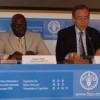
DEVELOPMENT: Food Summit Agrees Greater Liberalisation
The three-day world summit called by the UN Food and Agricultural Organisation to respond to the food crisis ended with plans and pledges – and a new push to liberalisation.LABOUR-PERU: Business Fights Restrictions on Outsourcing
The business community in Peru is pressuring the government not to sign into law new legislation that would establish full labour rights for some 400,000 subcontracted workers.LATIN AMERICA: Factors in Climbing Food Prices – A Baker’s Dozen
Where today’s high food prices are concerned, there are 13 villains of the piece: the structural and circumstantial causes associated with supply and demand, according to the Latin American and Caribbean Economic System (SELA), which says that to tackle them, regional cooperation is essential.
DEVELOPMENT: 'Food Production Must Rise 50 Percent'
Food production must rise 50 percent by 2030 to meet increasing demand, UN Secretary-General Ban Ki-moon told world leaders as they started a summit to deal with food price crisis.
DEVELOPMENT: About Farmers, Without Farmers
Record high food prices and their impact on poor countries will dominate the three-day UN Food and Agriculture Organisation (FAO) summit of world leaders that opened Tuesday in Rome. But the solutions to the food crisis cannot be left to governments only, according to several small farmers groups running a parallel civil society food forum.DEVELOPMENT: Licensed to Plunder
Metals and mineral mining have been notorious for the "resource curse" they have inflicted on the communities who live where they are mined. Today, as prices are high, the appetites of these mining companies are on the increase.DEVELOPMENT: Japan-Africa Outcome ‘Inadequate’
A key document emerging from the fourth round of the Tokyo International Conference on African Development (TICAD) has failed to address HIV/AIDS in the region, says a non-governmental organisation.
Q&A: 'Biofuels Must Include the Poor'
Biofuels are being criticised for contributing to the rise in commodity prices, but their energy potential can be developed too, on condition "that the poor are part of the production chain."ECONOMY: 'Biofuels Will Keep Food Prices High'
In the next ten years, prices for agricultural commodities will come down from current record levels but remain higher than the mean of the past decade, according to a new prediction.AGRICULTURE-BRAZIL: Fertiliser Prices Hinder Expansion
A simple imbalance in agricultural supply and demand can be corrected in less than a year, the time it takes to sow and harvest grains, but the present global food crisis cannot. The shortage of fertilisers and their consequent rise in cost are standing in the way of quick solutions.ECONOMY-CAMBODIA: Resource Curse or Blessing?
Cambodia is facing a natural resource boom, prompting donors and non-government organisations (NGOs) to warn that without measures to improve financial transparency, promote better governance and curb corruption, the potential windfall could be squandered.
Q&A: Lack of Food Is a "Persistent Myth"
The current food crisis has revived the myth that the world doesn't produce enough food for its six billion people, according to Michel Pimbert, author of a new study that highlights local production as a potential solution.TRADE: France Seeks Greater Flexibility with Africa
France, the forthcoming holder of the European Union's rotating presidency, has asked that the bloc display greater flexibility in talks aimed at reaching free trade accords with Africa.
LATIN AMERICA: The Divorce of Agriculture and Biodiversity
Latin America's vast biological diversity has contributed little to the region's commercial agriculture, despite being the birthplace of two of the world's four most widely consumed food crops: maize and potatoes.BRAZIL: Agribusiness Undermines Environmental Leadership Role
Brazil is a world leader in agriculture and on several environmental issues, but it will find it hard to reconcile both fronts, judging by the many battles lost by former environment minister Marina Silva, in spite of the political clout she wielded for over five years.EL SALVADOR: Poor Eating Less While Food Prices Soar
Eating less is the only option left to the poorest of the poor in El Salvador, in the face of the steady rise in global food prices, which has had an impact on the domestic cost of staples like rice, beans, tortillas, milk, eggs and bread.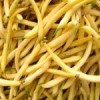
MEXICO-US: The Perverse Patent of the Yellow Bean
Patenting an invention in the United States and benefiting from the patent rights is, in theory, an incentive for innovation and scientific discovery. But in practice it can spur theft, as occurred with a variety of Mexican bean.« Previous Page — Next Page »





The Week with IPS

NEXT STOP - SDGs
Tracking global progress towards a sustainable world
Tracking global progress towards a sustainable world
