Languages
Monday, September 28, 2026



News and Views from the Global South
IPS UN Bureau Report

World’s Oceans Hit Record Heat in 2025, at Great Economic and Social Costs
In 2025, global ocean temperatures rose to some of the highest levels ever recorded, signaling a continued accumulation of heat within the Earth’s climate system and raising deep concern among climate scientists. The economic toll of ocean-related impacts—including collapsing fisheries, widespread coral reef degradation, and mounting damage to coastal infrastructure—is now estimated to be nearly double the global cost of carbon emissions, placing immense strain on economies and endangering millions of lives.
Thousands of Kenya’s Smallholder Coffee Farmers Risk Losing EU Market as Deforestation Law Takes Effect
For the last twenty years, Sarah Nyaga, a smallholder farmer from Embu County in central Kenya, has farmed coffee. Like most across Kenya, she relies on the export market. A greater percentage of Kenya’s coffee ends up within the European Union market, but a new law threatens to disrupt what has been a source of income for thousands of farmers like Nyaga.
World Living Beyond Its Means: Warns UN’s Global Water Bankruptcy Report
The world has entered what United Nations researchers now describe as an era of Global Water Bankruptcy, a condition where humanity has irreversibly overspent the planet’s water resources, leaving ecosystems, economies, and communities unable to recover to previous levels.
How Extreme Weather is Testing Tanzania’s $2 Billion Electric Railway Dream
On a rainy Wednesday morning, in Dodoma, the capital of Tanzania, the Standard Gauge Railway (SGR) terminal bustled with a steady flow of passengers. Women ushered toddlers along. Snack bags dangling on their hands. Tourists dragged wheeled suitcases across the floor. Students scrolled through smartphones as they returned to campus. Each had been attracted by the speed, reliability and comfort of the electric train.
Jailed by the Generals She Defended as ICJ Opens Genocide Case Against Myanmar
Held incommunicado in grim prison conditions for nearly five years, Aung San Suu Kyi quite possibly does not even know that this week the International Court of Justice (ICJ) opened a landmark case charging Myanmar with committing genocide against its Rohingya minority a decade ago.
ICJ Begins Proceedings for Rohingya Genocide Allegations Case Against Myanmar
On January 12, the International Court of Justice (ICJ), opened landmark hearings in a case brought by the Republic of The Gambia, alleging that Myanmar’s military committed acts of brutal genocide against the Rohingya minority during its 2017 crackdown. Described by the United Nations (UN) as a case “years in the making,” the ICJ will spend the next three weeks reviewing evidence and testimony from both sides to determine whether the Myanmar military violated the Genocide Convention.
What Next? United States Exits Key Entities, Vital Climate Treaties in Major Retreat from Global Cooperation
President Donald Trump has escalated efforts to further distance the United States from international organizations and entities focused on climate, the environment, and energy. This strategy is in step with his administration’s established approach to undermine and redirect funds and international cooperation away from climate and clean energy programs.
Gaza: Physicians Call For Unimpeded Aid To Restore Reproductive Healthcare
Israel must lift all restrictions on medicine, food and aid coming into Gaza, rights groups have demanded, as two reports released today (Jan 14) document how maternal and reproductive healthcare have been all but destroyed in the country.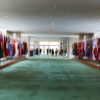
Is the US Moving Towards the UN’s Exit Door?
Judging by the mass US withdrawal from 66 UN entities, including UN conventions and international treaties, is it remotely possible that the unpredictable Trump administration may one day decide to pull out of the UN, and force the Secretariat out of New York-- despite the 1947 UN-US headquarters agreement?
Experts Urge Rapid Adaptation as India Braces for ‘Stronger’ Cyclones, Quakes
Despite early warnings reportedly reaching communities before the cyclones (Ditwah and Senyar) struck coastal regions in Sri Lanka and Southeast Asia late in November 2025, over 1,500 people lost their lives and hundreds went missing even as millions were impacted by these disasters, which caused massive destruction. Scientists say that these disasters reflect a changing climate system, which is making cyclones more hazardous than what we considered “typical” in the past.
Excluding Food Systems From Climate Deal Is a Recipe for Disaster
As they ate catered meals, COP30 negotiators had no appetite for fixing broken food systems, a major source of climate pollution, experts warn. Food systems are the complete journey food takes—from the farm to fork—which means its growing, processing, distribution, trade and consumption and even the waste.
United States Withdrawal From Organizations Triggers Global Alarm
President Donald Trump's executive order to stop United States support for 66 international organizations, including 31 United Nations (UN) groups, has faced strong opposition from these organizations, the global community, humanitarian experts, and climate advocates, who are concerned about the negative effects on global cooperation, sustainable development, and international peace and security.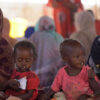
Sudan’s War Nears 1,000 Days as Violence and Hunger Reach Unprecedented Levels
As Sudan approaches 1,000 days of civil war, late December and early January saw a brutal escalation of violence, with drone strikes hitting areas at the center of the country’s deepening hunger crisis.
Consent Ignored, Convictions Rare: Pakistan’s Courts Under Fire
As 2026 dawns, women in Pakistan are left grappling with a stark reality: rape and marital rape continue to be misinterpreted by judges in the country’s highest courts.
Maternal Deaths Spike in War-Torn Ukraine
“It was an emergency caesarean section when the life of the pregnant woman was at risk. We did the operation with just flashlights and no water, and against a backdrop of constant explosions,” says Dr Oleksandr Zhelezniakov, Director of the Obstetrics Department at Kharkiv Regional Clinical Hospital, in eastern Ukraine.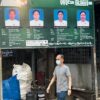
Bombing and Ballots, Myanmar’s Contentious Election
With thousands of civilians killed in years of civil war and over 22,000 political prisoners still behind bars, no one was surprised that early results from Myanmar’s first but tightly controlled elections since the 2021 coup show the military’s proxy party speeding to victory.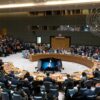
Security Council’s Deep Concern Over United States’ Venezuela Action
United Nations Secretary-General Antonio Guterres expressed deep concern about the immediate future of Venezuela. In a statement read by Under-Secretary-General for Political and Peacebuilding Affairs Rosemary DiCarlo, Guterres told the Security Council’s emergency meeting he was deeply concerned about “possible intensification of the instability in the country, the potential impact on the region, and the precedent it may set for how relations between and among states are conducted.”
Skyrocketing Military Spending Undermines Development Aid to World’s Poor
The statistics are staggering: while military spending keeps skyrocketing, Official Development Assistance (ODA)-- from the rich to some of the world's poorer nations-- has been declining drastically.
The Bitter Sweet Future of Cocoa Showcased During COP30, Belém
Izete dos Santos Costa, also known as Dona Nena among locals in Combu Island, welcomed hundreds of people from around the world during the recent climate conference in Belém. Her team showcased local crafts and chocolate-making processes in the land of the Amazon rainforest—far from the deafening air conditioner sounds at the Parque da Cidade, where the COP30 negotiations were ongoing.
In Kenya, Smallholder Farmers Push Back Against Corporate Control of Agriculture
For the past two years, Samuel Ndungu, a smallholder farmer, has been growing organic food and supplying it to the local market in Githunguri, just outside Nairobi.
Nigeria: Will Nnamdi Kanu’s Life Sentence End the Violent Agitation for Biafra?
On 20 November 2025, a Nigerian court in Abuja sentenced separatist leader Nnamdi Kanu to life imprisonment after finding him guilty of terrorism and several related offenses, bringing an end to a decade-long legal battle.« Previous Page — Next Page »


The Week with IPS

NEXT STOP - SDGs
Tracking global progress towards a sustainable world
Tracking global progress towards a sustainable world
