Languages
Wednesday, April 29, 2026



News and Views from the Global South
IPS UN Bureau Report
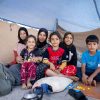
Bombardments in Lebanon Threaten Civilian Safety, Destroy UNESCO Cultural Heritage Sites
As winter approaches, the ongoing airstrikes and bombardments on Lebanon has threatened the lives and livelihoods of civilians across the country and neighboring regions, which has resulted in skyrocketing death tolls and levels of displacement. Since hostilities escalated in September, Lebanon has seen the destruction of a significant amount of critical infrastructure, including historical sites that are integral to Lebanese history.
Progress as Draft Decision Text for COP29 Presidency’s Top Negotiating Priority Released
Three days into the landmark COP29 conference, the co-chairs of the New Collective Quantified Goal (NCQG) have arrived at a workable basis for discussion on the summit’s top priority goal—a new climate finance goal. The COP29 Presidency says the draft will, moving forward, “guide conversations around potential landing zones and help identify concerns.”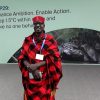
Seeking COP29 Solutions as Desert Lake Disrupts Harmonious Co-Existence With Indigenous Community
Climate change exacerbates the difficulties already faced by indigenous communities, multiplying their vulnerabilities from political and economic marginalization and loss of land and natural resources. The ongoing climatic carnage is displacing indigenous communities at seven times the rate of the global population.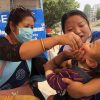
Make Health Top of Climate Negotiations Agenda—Global Climate & Health Alliance
Climate change and its impact on public health hasn't made the top of the agenda even at a forum like the UN Climate Conference, but is should, say the health community. Understanding the gap, more than 100 organizations from across the international health and climate community came together as the Global Climate and Health Alliance and have called wealthy countries to protect people's health by committing to provide climate finance in the order of a trillion dollars annually, in addition to global action with leadership from the highest emitting countries to end the fossil fuel era.
UNDP’s Sustainable Energy Director Calls For Innovative Financial Solutions for Adaptation, Mitigation
Riad Meddeb, Director of the Sustainable Energy Hub at the United Nations Development Programme (UNDP), stressed the urgency of finding innovative financial solutions during COP29.
Blinded by Circumstance: Trachoma’s Stranglehold on Kenya’s Rural Pastoralists
Draped in the vibrant red of his Maasai shuka, 52-year-old Rumosiroi Ole Mpoke sits cross-legged on a worn cowhide mat outside his hut, his face etched with a sorrow deeper than the lines of age. His once-sharp eyes, now clouded by trachoma, can barely make out the shadows of the cattle he once tended with pride.
2024 Poised to Be Warmest Year Ever—WMO Warns of Escalating Climate Crisis
Once again, scientists issued a red alert by analyzing ongoing world’s weather and its impact on the climate. The year 2024 is on track to be the warmest year on record, contributed by an extended streak of high monthly global mean temperatures.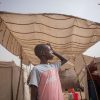
Sudan Faces Esclations in Famine, Humanitarian Law Violations
After 19 months of conflict, the ongoing Sudanese Civil War continues to deteriorate living conditions for millions of Sudanese people. Intensive conflicts between the Rapid Support Forces (RSF) and the Sudanese Armed Forces (SAF) have greatly exacerbated nationwide levels of famine. Numerous civilians have been caught in the crossfire, leading to a rising death toll. Sexual violence and rape have been used as weapons of war, with thousands of cases going unreported due to a pervasive state of fear. Sudan has seen record numbers in displacement, becoming one of the biggest displacement crises in the world.
Countdown Begins in Defining Twelve Days to Historic Global Climate Deal
The 29th session of the Conference of the Parties on climate change has officially kicked off in Baku, Azerbaijan, with the promise of striking yet another historic global climate deal and finance adaptation, gender responsive action and financing, and forgotten issues such as food waste are top on the agenda as every action is as crucial as every fraction in the rise or fall of a Celsius degree.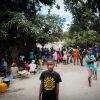
Haiti’s Transition of Power Predicted to Worsen Gang Violence
Gang violence has ravaged Haiti, causing thousands of civilian deaths, displacements, and violations of international humanitarian law. Turmoil is expected to escalate following the removal of Haitian Prime Minister Garry Conille from office on November 11.
Cryosphere Crisis: Scientists Warn of Devastating Global Impacts Without Urgent Climate Action
Scientists warn of vastly higher impacts on billions of people’s livelihood and cost to the global economy by the accelerating losses in the world’s snow and ice regions, aka the cryosphere. Over 50 leading cryosphere scientists released an annual report on the status of the world’s ice stores on Tuesday (November 12) at the UN Climate Conference (COP29) in Baku. An updated report on the world's ice warns of “drastically higher costs without immediate emissions reductions.”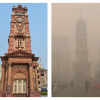
Lahore’s Dangerous Smog: Where Disease and Death Stalk
"It's been horrible; I've been sick on and off for the last 10 days," said 29-year-old asthmatic Natasha Sohail, who teaches A-Level students at three private schools in Lahore. Last week, her condition worsened with a vertigo attack and fever. “It’s criminal what is happening here,” said an incensed Sohail, referring to the “band-aid measures” taken by the Punjab government.
Without Supercharging Adaptation Funding Global Temperatures Could Surge
The Head of Impact Assessment and Adaptation, Henry Neufeldt, UN Environment Programme Copenhagen Climate Centre, has called for increased climate adaptation funding, particularly for developing nations facing significant climate risks.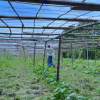
Farming in Crisis: Suicides and Climate Change Threaten India’s Agrarian Future
"Farming is in my blood, and I can’t imagine doing anything else," said Mahim Mazumder, a farmer from Assam. "Even though the past three to five years have seen drastic changes—with temperatures rising so much that even sitting under a tree no longer offers relief—I will keep farming, even if it only yields a small harvest. I've spent my entire life farming, and despite all the challenges, I’ll continue."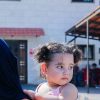
Growing Death and Displacement Devastate Lebanon
The ongoing, escalating violence in Lebanon forces millions of Lebanese civilians to face daily bombardment, repeated orders of evacuation, routine destruction of critical infrastructure, and limited access to basic services. With the death toll and rates of displacement on the rise, humanitarian organizations fear that the upcoming winter season is expected to exacerbate these harsh conditions, making Lebanon almost uninhabitable.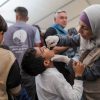
Polio Vaccination Campaign in Gaza Misses Thousands of Children
On November 6, the World Health Organization (WHO) announced that the second round of polio vaccinations in the Gaza Strip has been completed. A total of 556,744 children under ten years of age received the mOPV2 vaccine along with a dose of vitamin A to ensure immunization. However, due to rampant hostilities from the Israeli Defense Forces (IDF), the campaign has not been entirely successful, leading to humanitarian organizations fearing that herd immunity has not been achieved.
UN Arms Embargo on Israel: Dead on Arrival
When the United Nations imposes sanctions or penalizes a member state – be it the General Assembly or the Human Rights Council – the resolutions are “non-binding” and often remain unimplemented. But the Security Council resolutions are “binding” – and still openly violated by countries such as North Korea—because all these UN bodies have no means of implementing these resolutions, nor a standing army to forcibly enforce them. But they only carry moral weight.
Cities Will Be Hit Hardest By Climate Change, UN Report Warns
Cities are in a unique position, simultaneously the biggest emitters of greenhouse gasses and the most affected areas of the greenhouse effect. As a new UN report shows that rapid urbanization and industrialization have adverse effects on the environment, causing a rise in sea levels, prolonged rainfalls and flooding, and an increase in overall temperature. The coastal areas that cities most often inhabit face the brunt of these effects, with marginalized populations being the most vulnerable.
UNEP: Nations Must Step Up Adaptation—Starting with Bold Finance Action at COP 29
The United Nations Environment Programme’s (UNEP) 2024 Adaptation Gap Report has warned that adaptation actions are not keeping pace with the surging demands of a warming planet. Released ahead of the COP29 climate conference in Baku, Azerbaijan, the report—titled Come Hell and High Water—projected a bleak future where vulnerable communities bear the brunt of climate-induced hardships.
Hustle Culture Emerges in Benin in Face of High Graduate Unemployment
At just 11 years old, with a heavy heart, Louis peered up at his parents and said goodbye. He was leaving his small village in northern Benin to live with his uncle in Parakou, where the schools were better. Ever since, Louis has continued to make sacrifices to pursue a strong education and a better life.
Arab Region Leaders, Experts Gather to Find Solutions to Water Scarcity, Sustainable Development
The Arab region is among the most water-scarce areas globally, as nearly 392 million people live in countries facing water scarcity or absolute water scarcity. So dire is the situation that, of the 22 Arab countries, 19 fall below the annual threshold for water scarcity in renewable resources, defined as 1,000 cubic meters per person.« Previous Page — Next Page »


The Week with IPS

NEXT STOP - SDGs
Tracking global progress towards a sustainable world
Tracking global progress towards a sustainable world
