Languages
Wednesday, April 29, 2026



News and Views from the Global South
IPS UN Bureau Report
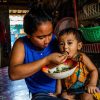
The Impact of Media Literacy for Meat Production
With the emergence of generative artificial intelligence (AI) and social media, the dissemination of public information moves at a faster speed than ever before. Social media platforms have become an integral tool for users of younger generations to access the news. Although this shift has led to public news being more accessible to younger users, it has also led to an overall decline in media literacy.
Biden’s Middle East Endgame Spells a Death Sentence for Thousands More Palestinians and the Israeli Hostages
Nobody should be fooled by President Biden's recent warning to Israel that the U.S. may level consequences if it doesn't do more to surge humanitarian aid into Gaza within the next 30 days. Biden's warning, along with Anthony Blinken's 11th trip to Israel and the region to try and revive ceasefire talks, is nothing more than cynical double talk designed to appease domestic audiences and buy time for Israel to deepen its genocidal aims against the Palestinian people and brutally punish those who support their liberation.
Without Accelerated Action, We Will Miss the Chance to Limit Warming to 1.5°C, Says UNEP Chief Climate Advisor
Anne Olhoff, Chief Climate Advisor at UNEP, underlined the urgent need for accelerated climate action ahead of COP29 in an exclusive interview with IPS. “The next six years are crucial—without accelerated action, we will miss the chance to limit warming to 1.5°C,” she warned.
UNEP’s 2024 Emissions Gap Report Warns: ‘No More Hot Air, Please’
The United Nations Environment Programme’s (UNEP) Emissions Gap Report 2024 delivered a stark reminder that the world is still far from meeting its climate commitments.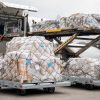
Israel Escalates Offensives on Lebanon
Attacks on Lebanon over the past two months, as instigated by the Israeli Defense Forces (IDF) have been increasingly indiscriminate. The Disaster Risk Management Unit at the Lebanese Council of Ministers confirmed that the death toll of Lebanese civilians has risen to over 2,530. Furthermore, Israel’s hostilities have led to casualties among United Nations (UN) personnel, which has been described as “violations of international law”.
Egyptian Parliament Moves to Strengthen Support for People with Disabilities and the Elderly
In a significant move to address the challenges faced by people with disabilities and the elderly, six Egyptian parliamentary committees met in Cairo on October 12 to discuss national strategies and legislative efforts.
Meet the Young Women Arrested for Fighting Corruption in Uganda
Until recently, Margaret Natabi would never have dreamed of taking her anti-corruption fight on the streets of Uganda’s capital, Kampala.
Syrian Displaced Children Go Hungry, Stunting Their Growth
Children in northern Syria are suffering from hunger, illness, and malnutrition as a result of poverty, poor living conditions for most families, and the collapse of purchasing power amid the soaring prices of all essential food commodities. Displacement and a lack of job opportunities make this worse.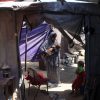
69 Years of Development in Gaza Erased by Israel-Hamas War
The second of the polio vaccination campaign in Gaza has yielded relative success, as so far more than 420,000 children have been vaccinated since the second round of immunizations began one week prior. This exception stands out as the uptick in airstrikes and sustained blockages of aid give humanitarian organizations cause for concern for the deterioration of Gaza, especially in the north.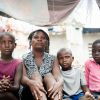
UN Announces Embargo on Arms in Haiti
On October 19, the United Nations (UN) Security Council unanimously voted to expand an arms embargo in an effort to combat the high levels of gang violence that plagues Haiti. Armed groups have taken control of the majority of Port-Au-Prince, the nation’s capital, leading to numerous clashes with the local police. Humanitarian organizations hope that this embargo will prevent Haitian gangs from accessing illicit weapons and munitions unchecked.
Capacity Building Is Key to Africa’s Digital Sequencing Success Story
Christian Tiambo has always wished to uplift local farmers’ communities through cutting-edge science. As climate change wreaked havoc on local agriculture, Tiambo, a livestock scientist at the Centre for Tropical Livestock Genetics and Health (CTLGH) and at the International Livestock Research Institute (ILRI), focused on conserving and developing livestock that could withstand environmental stress.
Salt: Bangladesh Communities On the Frontline of Climate Change
Global warming has far-reaching effects, and certain countries, particularly those with low lying coastal regions, are more vulnerable than others. Bangladesh, the largest delta in the world, is at the forefront of the global warming crisis. Its coastal areas are increasingly exposed to rising sea levels, natural disasters, and salinization, all of which have devastating effects on its population.
Aid Blockades Signal Trouble for Gaza Ahead of Winter
On October 15, the World Health Organization (WHO) announced the beginning of the second round of Gaza’s polio vaccination campaign. Over the last week, the Palestinian Ministry of Health, in partnership with WHO, the United Nations Children’s Fund (UNICEF), and the United Nations Relief and Works Agency for Palestine Refugees in the Near East (UNRWA), has managed to vaccinate over 181,000 children under the age of ten in Gaza.
A Glimpse into Tanzania’s Political Turmoil Ahead of 2025 Election
At a rally to mark International Youth Day on August 12 in Tanzania’s southern Mbeya region, John Mnyika stood with a determined expression, addressing his supporters. The air was charged with anticipation. Mnyika, the Secretary-General of Tanzania’s opposition party, Chadema, was preparing to speak about the upcoming elections when the chaos erupted. Without warning, heavily armed police officers stormed the event, grabbed Mnyika, and dragged him away.
Overlapping Crises Hinder Global Social Development and Poverty Reduction
Social development in a global context shows the risk of trending downwards and not recovering if countries do not minimize the long-term impacts of multiple crises and work towards building up their resilience. As much as this will require national political will, it will also need global cooperation for it to be possible.
A Pact for the World’s Poorest
Last month, world leaders gathered at the time of the UN General Assembly in New York and agreed on a pioneering Pact for the Future. This global accord has implications across a broad range of issues that affect every country. It offers much hope for the poorest and most vulnerable countries on the planet, known as Least Developed Countries (LDCs).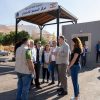
Attacks on Aid Personnel in Lebanon Impede Relief Efforts
In the midst of Israel’s ground incursion of southern Lebanon, frequent airstrikes have demolished civilian infrastructure, which is only contributing to the increasing rates of civilian casualties and displacement. Humanitarian organizations fear that conditions in Lebanon will soon resemble those of Gaza if a ceasefire isn’t reached soon.
What is the World’s Most “Demanding and Impossible Job”?
When Dr Gamani Corea, a former Secretary-General of the Geneva-based UN Conference on Trade and Development (UNCTAD) was holding court in the delegate's lounge, I asked him what he thought of the bitter dispute between then Secretary-General (SG) Boutros Boutros-Ghali (1992-1996) and the United States over the Egyptian's determination to win re-election for a second term.
Race to Close Global Climate Finance Gaps Amid Escalating Climate Risks
The impact of climate change continues to devastate economies worldwide, creating a pressing need for all countries to significantly increase international climate finance. To drive critical action towards reduced climate risks and sustainable economic growth calls for expanded access to affordable, predictable finance at scale.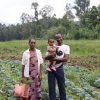
Sustainable Food Production is Imperative for a Healthy Planet
Food waste has been a pressing concern for environmentalists and humanitarians for decades. The Food and Agriculture Organization (FAO) estimates that approximately one third of all global food products end up in landfills, equating to roughly 1.3 billion metric tons. Conversely, according to the Asia-Pacific Economic Cooperation (APEC), about 3 billion people lack access to nutritious or sufficient amounts of food that will sustain a healthy diet. Additionally, food waste has been a leading factor in environmental degradation since the start of the industrial revolution, with food in landfills releasing millions of metric tons of carbon emissions into the atmosphere yearly.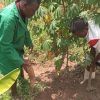
Kenya’s Mung Bean Legislation Debate Underscores Farmers’ Vulnerability
Kenyan farmers have faced a turbulent year, caught between legislative changes and a devastating scandal. While the country's Mung Bean Bill, aiming to regulate the lucrative mung bean industry, has moved to mediation, farmers are battling the fallout from the widespread distribution of counterfeit fertilizers that have jeopardized their crop yields and livelihoods.« Previous Page — Next Page »


The Week with IPS

NEXT STOP - SDGs
Tracking global progress towards a sustainable world
Tracking global progress towards a sustainable world
