Languages
Sunday, November 8, 2026



News and Views from the Global South
IPS UN Bureau

IPBES Invasive Alien Species Assessment
 At the tenth session of the IPBES Plenary, held in Bonn, Germany from 28 August - 2 September 2023, the IPBES Thematic Assessment of Invasive Alien Species and their Control was accepted and its summary for policymakers was approved. The Report is the result of four years of work by 86 experts from 49 countries, and synthesizes information from over 13,000 references into a comprehensive scientific assessment and concise summary document for policy makers.
Africa’s Debt Crisis Needs a Bold New Approach– & a Way Forward
It hasn’t been easy for African states to finance their developmental and environmental policy objectives over the past few years. Recent events suggest that the situation may be improving. For the first time in two years, three African states have been able to access international financial markets, albeit at high interest rates. Kenya, for example, is now paying over 10% compared to about 7% in 2014.
‘I Haven’t Forgotten Where I Came From,’ says Yvonne Pinto, Incoming IRRI Chief
Growing up on a small farming station in Holetta (Ethiopia), Yvonne Pinto would accompany her agriculturist father to the farm, where she would spend her time cross-fertilizing plants. Her tiny fingers making the task easier, as she would marvel at the end product of a prospective new and higher yielding variety. These formative years laid the foundation for her career in agricultural science.
Bali’s Ancient Canine Guardians on the Brink of Extinction
Bali's Island's ancient canine guardians, the proud descendants of lineages tracing back tens of thousands of years, stand on the brink of extinction. Culling triggered by rabies outbreaks and interbreeding is pushing these living cultural treasures towards a tragic end.
Hapless New Year for Global South
As dire economic predictions for 2023 did not materialise, pundits began 2024 far more optimistically. But policy ghosts from the last half-century will likely undermine such wishful thinking.
Female Genital Mutilation Continues Amid Sudan’s Conflict and Forced Displacement
Female genital mutilation (FGM) stands as one of the most egregious violations of human rights, particularly affecting women and girls worldwide. However, when conflict and forced displacement enter the equation, the horrors of FGM are exacerbated, creating a dire situation that demands urgent attention and action. Where instability and insecurity prevail, the prevalence of FGM often intensifies, exacerbated by factors such as displacement, poverty, and the breakdown of social systems.
Abusive Use of Veto Power Against Global Public Opinion — Why?
With its current cash crisis, UN's leadership is finding itself in a helpless situation both politically and financially. The UN’s credibility has reached rock bottom.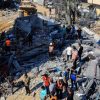
UN’s Credibility at Stake—as Russia and Israel Continue to Remain Defiant
The two devastating military conflicts—Russia vs Ukraine and Israel vs Hamas—have exposed once again the stark reality that the United Nations, created 79 years ago to maintain international peace and security, has failed in its political mission – while its credibility is at stake. Russia is accused of violating the UN charter by invading a sovereign nation state and causing hundreds and thousands of deaths over two years --- with no signs of a peaceful settlement.
‘Unbounded’ Impunity Emboldens Israel
Israel continues to reject calls for a ceasefire in Gaza and now readies itself for an assault on Rafah with a Ramadan deadline for the release of all hostages. It emphatically says, it will oppose any international attempt at creating a Palestinian State, regarded as an “unilateral recognition”. Its unrestrained bombings and ground assaults so far have resulted in close to 30,000 Palestinian deaths more than half of whom are women and children. they have brazenly ignored the International Court of Justice (ICJ) order to take all measures to prevent a plausible genocide. Many thousands are facing starvation and death even when the United Nations Security Council (UNSC) demanded unhindered aid flows to besieged Gaza. All these were possible due to Israel’s ‘unbounded’ impunity which emboldens it.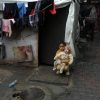
No Ceasefire Gaza Threatens Humanitarian Aid, Raises the Palestinian Question
As negotiations within the UN Security Council and internationally continue, the humanitarian response to Gaza continues to be under threat.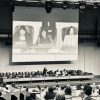
Western States Scramble to Explain Themselves, as UN experts call for Arms Transfers to Israel to “Cease Immediately”
There are moments when international treaties, long forgotten by the general public, suddenly spring back to life. Moments when glimpses of reality shine through the thick-laden bureaucracies of the United Nations and catch the attention of the world outside.
Parcels for Prisoners: Exiled Myanmar Activists Keep the Revolutionary Faith
Rangoon Nights is rocking. The bar is on its feet and the cocktail shaker is shaking in abandon as the band Born In Burma starts pumping out its beat. Except we’re not in Rangoon or Burma (officially called Myanmar), but in the northern Thai town of Chiangmai which has evolved into a hub for activists, fugitives, and those taking a break from the war tearing their country apart.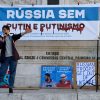
Russia: Moments of Dissent after Two Years of War
Russia’s full-scale invasion of Ukraine marked its second anniversary on 24 February. And while civil society is offering an immense voluntary effort in Ukraine, in Russia activists have faced intense constraints. The suspicious death of opposition leader Alexei Navalny is part of a great wave of repression. He’s the latest in a long list of people who’ve come to a sudden end after falling out with Vladmir Putin.
Call for Scaled Up Funding for Much-Needed, Successful Joint Program in Nigeria
Nigeria is home to 15 percent of the world’s out-of-school children. More than 7.6 million girls are not in school, and only nine percent of the poorest girls in the country are in secondary school. The Boko Haram insurgency and other armed groups fuel the out-of-school crisis in northeast Nigeria, disrupting the education of nearly two million school-age children.
No God but Greed: Slavery and Indifference
At Statens Museum for Kunst in Copenhagen there is a great painting made in 1797 by the Danish Golden Age painter Jens Juel. It depicts one of Denmark’s richest merchants at the time – Niels Ryberg, his newlywed son Johan Christian, and the son’s bride, Engelke. Johan Christian makes a gesture as though to show off the family estate. There is a strong feeling of harmony between the people and the countryside in which they are placed. The picture reflects the new interest in nature that emerged all over Europe towards the end of the 18th century. It also demonstrates how Denmark’s new, rich bourgeois wished to carry themselves in the style of the aristocracy, a social class which dominance they were infringing. Ryberg and his son appear just as distinguished as the aristocrats that used to be portrayed by Jens Juel.
Funding, Policy Changes Could Result in Countries Reaping Benefit of Migration
Amid an escalation of global conflict and climate change-induced displacements, the International Organization for Migration (IOM) is escalating its donor campaign. For the first time since the organization’s formation in 1951, the IOM says it is "proactively approaching all partners to fund this vital appeal," at a time when the number of migrants making perilous intercontinental journeys has increased.
The World Social Forum: The counterweight to the World Economic Forum
This week the 2024 annual meeting of the World Social Forum (WSF) was held in Nepal. There were fifty thousand participants from over 90 countries, exchanging strategies to address the multiple global crises, from climate catastrophes to unfettered capitalism, inequality, social injustice, wars and conflict.
Children’s Futures at a Crossroads
At the start of 2024, we stand at a critical juncture: Geopolitical tensions are escalating, economic integration is unravelling, and multilateral cooperation is faltering. This global fragmentation threatens to undermine decades of progress made for children worldwide.
Unpacking 2023, the Warmest Year on Record
2023 was the warmest year on record. The latest Copernicus Climate Change Service highlights that February 2023 to January 2024 was the first time that we experienced 12 consecutive months of temperatures 1.5-degree hotter than the pre-industrial era.
Pakistan’s Election Outcomes Leave Many Unhappy
Pakistan’s 8 February election has resulted in an uneasy compromise that few wanted or expected. There’s little indication the outcome is going to reverse recent regression in civic freedoms.
#UNmute: Over 350 Civil Society Organizations Ask for Real Inclusion in UN Summit of the Future Negotiations
A coalition of over 350 civil society organisations part of the #UNmute initiative, shared concerns over the current engagement mechanisms for civil society at the UN – particularly in light of the upcoming Summit of the Future.« Previous Page — Next Page »





The Week with IPS

NEXT STOP - SDGs
Tracking global progress towards a sustainable world
Tracking global progress towards a sustainable world
