Languages
Sunday, November 8, 2026



News and Views from the Global South
IPS UN Bureau
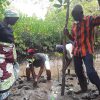
Coastal Indigenous and Minority Women Driving Kenya’s Blue Forest Conservation Efforts
Tsunza Peninsula is a natural wonder that sits just inside the many inlets of Mombasa Island on the border between Mombasa and Kwale Counties—a little-known spectacle of lagoons, islands, and thick mangroves in Kinango Sub-County, Kwale County, on Kenya’s coastal region.
Inside Kenya’s Seed Control Battle: Why Smallholder Farmers Want to Share Indigenous Seeds
A group of 15 smallholder farmers in Kenya petitioned the country’s High Court, seeking to compel the government to review sections of a law that bans the sharing and exchange of uncertified and unregistered seeds.
Small Island “Digital” States: Charting the Course for Transformation
Small Island Developing States, or SIDS, have long been pioneers in international development, often compelled by the challenges they face. Positioned on the frontlines of climate change, they lead efforts in mitigation, adaptation, and advocacy, and despite their geographical dispersion, they are innovating approaches to resilience and sustainability.
New Anti-Rape Crisis Centre Brings Hope for Sexual Abuse Survivors in Pakistan
Medical experts and women's rights activists are pinning hopes on the establishment of an anti-rape crisis centre for the provision of medical and legal aid to victims of sexual assaults in a timely manner will ensure convictions. Currently, it takes years to bring the perpetrators of rape to justice due to a lack of evidence and more often than not, the accused get acquitted.
Snowless Winter and a Climate Crisis: Kashmir’s ‘Unprecedented’ Weather
Abdul Gani Malik, a 75-year-old goldsmith living in Kashmir’s capital, Srinagar, has witnessed eras of tranquility and turbulence in the Himalayan region. What he has not seen, however, is a snowless Kashmir during the winter.
INTERVIEW: AI Expert Warns of ‘Digital Colonization’ in Africa
Artificial intelligence (AI) is ripe to help resolve certain major problems in Africa, from farming to the health sector, but Senegalese expert Seydina Moussa Ndiaye is warning of a new “colonization” of the continent by this new technology if foreign companies continue to feed on African data without involving local actors.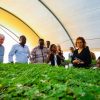
Smallholder Farmers Are Key to CGIAR Response to Hunger Crisis
Dr Ismahane Elouafi has her work cut out. As the new executive managing director of CGIAR, a global network of agricultural research centers, her mandate, simply put, is to tackle the world’s most severe hunger crisis in modern history. And it is in Africa that the former Chief Scientist of FAO with a PhD in durum wheat genetics faces her greatest challenges, both in terms of developing science-based innovations and technologies and lobbying governments to adopt responsible policies.
Making Chile’s Economy More Dynamic, Greener, and Inclusive
Chile’s economy is at a crossroads. Strong policies have successfully brought down high inflation and reduced the large current account deficit that emerged during the pandemic. Increases in social benefits have provided some relief in response to discontent over inequality.
Imperialism, Globalisation and Its Discontents*
Imperialism continues to dominate the world. Globalisation is losing to some of its anti-theses, but imperialism still rules, increasingly by law, albeit in changing even contradictory ways.
South Africa vs Israel: ICJ Declines SA’s New Application But Says Israel Duty Bound to Protect Civilians
The International Court of Justice has declined the South African government's urgent application for further measures to prevent an "unprecedented military offensive against Rafah,” but reiterated that Israel is bound to protect civilians in the country. South Africa argued in an urgent application that this military offensive “announced by the State of Israel, has already led to and will result in further large-scale killing, harm, and destruction in serious and irreparable breach both of the Genocide Convention" and of the Court's Order of January 26, 2024.
Educate an Africa Fit for the 21st Century
As we lead into the Africa Year of Education, and under the leadership of Africa, world leaders have an opportunity to solidify commitments to ‘Educate an Africa Fit for the 21st Century’. That means to empower Africa to deliver on the goals outlined in the 2030 Agenda for Sustainable Development, Paris Agreement and Convention on the Rights of the Child, and to invest in an end to inequity through the power of quality education and lifelong learning.
UN’s Financial Troubles Jeopardize Critical Human Rights Work
A cash crunch and hiring freeze at the United Nations threaten to hinder UN human rights investigations in places like Sudan, Ukraine, and Syria.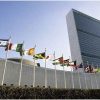
UN’s Cash Crisis May Force Hiring Freeze, Limit Official Travel & Curtail Expenses System-Wide
The United Nations is heading towards a severe cash crisis forcing the world body “to implement aggressive cash conservation measures to avert a default in meeting the legal obligations of the Organization”. Secretary-General Antonio Guterres has drawn attention to “the unfortunate deteriorating financial situation of our regular budget operations”.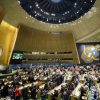
UN Tax Convention is Historic Opportunity at Risk of Failing
In late November, the UN General Assembly passed a landmark resolution signaling a start on working on a UN framework convention on taxation.
Tracking Global Development in Child Benefits Through New Monitoring and Information Platform
Inclusive social protections for children would be a positive signifier of social development in a time where 1.4 billion children globally are denied them. A step towards realizing this has been taken through a new monitoring tool on current social protection and child poverty statistics.
Last Chance Saloon? Myanmar Junta Imposes Military Conscription
The news travelled like wildfire. In the teashops, bars, and market stalls that make Thailand’s border town of Mae Sot feel far more Burmese than Thai, the feared rumours circulating at the weekend were suddenly confirmed. Military conscription would be imposed on young men and women for two to five years, regime-controlled broadcasters in Myanmar announced on the Saturday night airwaves. Details were sparse.
The West’s Frankenstein Moment
Israel continues to defy its strongest backer the US and its western allies in its quest to control the land from the “River to the Sea”, and in the process ethnic cleansing of the Palestinian population. Israel’s Prime Minister Benjamin Netanyahu is determined to push ahead with a ground offensive against Gaza’s southernmost town of Rafah despite mounting warnings from aid agencies and the international community that an assault on Rafah would be a catastrophe. He also snubbed the US on the latest hostage release and ceasefire deal brokered by Qatar and Egypt. The interim order of the International Court of Justice (ICJ) to take all effective measures to stop “plausible” genocide in Gaza seems irrelevant to Israel. Josep Borrell, the EU’s foreign policy chief admits that Netanyahu “doesn’t listen to anyone”.
Women, Girls Equal Partners in HIV Responses, Says Activist
UNAIDS Executive Director, Winnie Byanyima, recently made an impassioned call for governments to support women and girls from marginalized communities at the frontlines of the defence of human rights, to help ensure, among others, that global health is protected.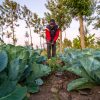
Start-ups Powering up Africa’s Solar Energy Ecosystem
Often referred to as the “Sun continent,” Africa receives more hours of bright sunlight than any other continent. But even with 60 per cent of the world’s solar resources, Africa has only one per cent of solar generation capacity, according to the International Energy Agency (IEA).
North Ignores ‘Perfect Storm’ in Global South
A gathering ‘perfect storm’ – due to various developments, several quite deliberate – now threatens much devastation in the global South, likely to most hurt the poorest and most vulnerable.
Nepal Farmers Face Another Year of ‘Agricultural Drought’, Threatening Food Security
Najboon Khatun looks up at the sky every day, searching for the possibility of rain. Clouds come and go without a drop of water. “Winter crops like wheat and vegetables need water, but like last year, there has been no rainfall yet,” says 65-year-old Khatun, expressing her anguish. In her village in Dhanusha, one of the agricultural hubs in the southern plains of Nepal, farmers mostly depend on rain as a source of irrigation. However, they are facing yet another year of drought, affecting winter crops, including wheat, mustard, lentils, and vegetables.« Previous Page — Next Page »





The Week with IPS

NEXT STOP - SDGs
Tracking global progress towards a sustainable world
Tracking global progress towards a sustainable world
