Languages
Monday, November 9, 2026



News and Views from the Global South
IPS UN Bureau

Behind the Scenes of a General Assembly Session
The 78th UN General Assembly (UNGA) session begins September 5. Below is an interview with the outgoing President of the 77th session, Csaba Kőrösi of Hungary.
Bangladesh’s Battle Against Climate Change: A Nation at Risk
Bangladesh, a picturesque land of rivers, lush green landscapes, and a vibrant cultural heritage, faces one of its most significant challenges ever — climate change.
What Niger’s Coup Says About US Security Assistance in the Sahel
In what has become an all too familiar phenomenon, U.S.-trained security personnel have been implicated in the July 26th coup that deposed Niger’s democratically elected president, Mohamed Bazoum.
Climate Justice Delayed, Is Justice Denied
The failure to tackle the climate change crisis is an injustice to the millions who have lost lives and livelihoods through floods, extreme weather, and wildfires, pointing to the urgency of adaptation and mitigation finance, experts say.
‘Investing’ Key to the Prevention of Military Coups – UN
The United Nations says increased investment in the Sahel region will assist in preventing military coups. This after military officers in Gabon announced a seizure of power from long-time President Ali Bongo Ondimba following the results of a disputed election in Gabon on Wednesday.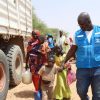
Want to Prevent Atrocities? Think Locally. Act Locally
When I first travelled to the Middle Belt of Nigeria, I listened to harrowing tales of murdered family members, physical injury, sexual violence, displacement, and hopelessness. In the years that have passed, these stories have only continued to stack up.
Alleviating Urban Poverty Through Livelihood Generation
In a bid to tackle the complexities of urban poverty, the Government of Bihar’s Rural Livelihoods Promotion Society (BRLPS) has launched Satat Jeevikoparjan Yojana Shahari (SJY Urban). The program will include a time-bound series of multifaceted interventions addressing food security, social inclusion, and sustainable economic livelihoods to enable participating households to achieve a better standard of living.
General Assembly President Calls for a ‘Human-Centered Approach to Disarmament’
The President of the UN General Assembly, Csaba Kőrösi, struggled to find a reason to celebrate the 13th International Day against Nuclear Tests. There have only been five nuclear tests, all conducted by North Korea since the day was declared in 2010. Still, Kőrösi said he sees a world plagued by more distrust, geopolitical competition, and conflict than before.
From Challenges to Solutions: Unleashing Africa’s Potential for Achieving SDGs
September 2023 marks the halfway point to the deadline for achieving the 2030 Agenda and the Sustainable Development Goals (SDGs). Yet, globally we are still far off-track, and Africa is only halfway towards achieving the SDGs, with nearly 600 million Africans still lacking access to electricity and 431 million people living in extreme poverty.
UN Summits & High-Level Meetings: More Promises, Less Deliveries
The United Nations will host six “high-level” meetings, including two summits of world leaders-- over a short span of five consecutive days, beginning September 18. The back-to-back meetings, described as unprecedented, includes the Sustainable Development Goals (SDG) Summit on September 18-19; a high-level dialogue on Financing for Development (FfD) on September 20; and a ministerial meeting of the Summit of the Future on September 21 (with the summit itself scheduled to take place September 2024).
UN Financing Appeal Last Hope for SDGs and Climate?
The United Nations Secretary-General’s Dialogue on Financing for Development on 20 September may well be the world’s last chance to save the Sustainable Development Goals (SDGs) and curb global warming in time.
Guatemala: Change Within Reach
On 20 August, Guatemala witnessed a rare event: despite numerous attempts to stop it, the will of the majority prevailed. Democracy was at a dramatic crossroads, but voters got their say, and said it clearly: the country needs dramatic change and needs it now.
Digging Africa Deeper into Hunger
Annual Green Revolution Forum ignores widespread failure of its push for industrialized agriculture
As the adage goes, when you find yourself stuck in a hole, stop digging. As African leaders and their philanthropic and bilateral sponsors prepare for another glitzy African Green Revolution Forum, convening September 5-8 in Dar es Salaam, Tanzania, they are instead handing out new shovels to dig the continent deeper into a hunger crisis caused in part by their failing obsession with corporate-led industrialized agriculture.

Africa Climate Summit: Time for Tangible, Impactful, & Accountable Climate Action
African leaders, public officials, and private-sector executives will converge in Nairobi, September 4-6, at the Africa Climate Summit (ACS) – coinciding with the UN Africa Climate Week (ACW). In recent years, Africa has been the poster child for climate solutions, with carbon credit and offset projects gaining popularity among the public and private sectors alike.
IPBES’ Third Season of Hit Podcast ‘Nature Insights – Speed Dating with the Future’ Takes Listeners Inside Humanity’s Relationship With Nature
If you’ve ever heard that 1 million species are at risk of extinction and wondered what that means for you, your family, and your future – there’s a podcast you won’t want to miss.
Two Years after the Taliban Took over, More Should Be Done to Rescue Afghanistan
His name is Matiullah Wesa, a girls education campaigner who now symbolises the “war” waged by the Taliban against the education and empowerment of women and girls. Exactly two years since the Taliban took over, Afghanistan is on a downward trajectory and unfortunately, global attention that was drawn by families chasing planes to flee a few days after the Taliban assumed control of the government has waned over the last two years.
Empowering Asia’s Farming Communities through Inclusive Business
When Lisa Huyen first set up her company, Vinasamex, which specializes in certified organic cinnamon and star anise grown in the mountainous and poorer provinces of Viet Nam, she faced daunting challenges including market access and securing financial support from banks.
Kenya’s Population Growth Decreases as More Women Embrace Modern Family Planning
According to a family planning brief, more than 370 million women in middle and low-income countries were finally embracing modern contraception to help curb unintended pregnancies. This statistic suggests that one in every three women from middle and low-income countries use contraceptives today.
Debt & Crisis of Survival in Sri Lanka & the World
Sri Lanka has been faced with an unprecedented political and economic crisis since the beginning of 2022. The dominant narrative attributes the crisis to the confluence of the COVID-19 pandemic, the Ukraine conflict, China’s ‘debt trap diplomacy’ and – most importantly – the corruption and mismanagement of the ruling Rajapaksa family.
A Plea for a UN Summit on the Global Food Crisis
A coalition of civil society organizations, (CSOs), including climate activists, anti-poverty campaigners and celebrity chefs, are among those calling for an emergency meeting of world leaders on the global food crisis during the UN General Assembly (UNGA) sessions in New York next month.
Flooding, Water Insecurity Looms as Indian Kashmir’s Titanic Water Bodies Shrink
Sadiq Dar, 68, is surprised how the heavy siltation of Wular Lake has turned many of its areas into land masses. “When we were growing up, we would only see water in this lake. Now, we see cattle grazing in it while a large portion is also being used by children for playing cricket,” he tells IPS.« Previous Page — Next Page »





The Week with IPS

NEXT STOP - SDGs
Tracking global progress towards a sustainable world
Tracking global progress towards a sustainable world
