Languages
Monday, October 26, 2026



News and Views from the Global South
IPS UN Bureau
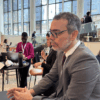
Prioritize Multilateralism to Resolve Iran War Deepening Humanitarian Crisis, Says OSF Vice President
Seven months into the Iran War, threats of further military escalation and stalled efforts to reopen the Strait of Hormuz have heightened fears of worsening humanitarian suffering and wider regional instability.
Workers Help Feed the World but Starved of Dignity
A new report reveals widespread labour exploitation among food system workers, warning that keeping the world fed comes at the cost of human dignity.
The Late Arrivals
One night, many years ago now, on a remote beach in the outer islands of Seychelles, I sat in the darkness and watched a green turtle come ashore. She had waited for the heat of the day to leave the sand. Under a sky crowded with stars, she hauled herself slowly above the tideline, dug with a patience no human hand could match, and laid her eggs. Then, in the small hours, she turned back toward the water. She did not hurry. She paused once, as though listening, and then made her slow, unhesitating way down the sand, back to a home older than any I could imagine.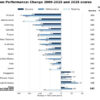
Austerity and Privatization Weakened OECD Education Systems
The results of the OECD PISA 2025 report point to the marked deterioration of results in countries whose education systems were once considered exemplary. PISA assesses how students aged 15 apply skills in reading, mathematics, and science to real-life situations, and the latest report contains the lowest averages ever measured in all three subjects across the OECD (as illustrated in the graph above). Public debate has rushed to blame the use of AI and social media, but the deterioration long predates them. In many countries, this decline has unfolded alongside years of austerity cuts and growing pressures on public education systems, including public spending, teacher pay and working conditions, staffing and the capacity of schools to provide quality education.
Sweden’s Far Right Falters
Four years ago, Sweden’s far right became the power behind a right-wing government. This time, it expected further gains and cabinet seats. But voters turned against it. In the 13 September general election, support for the far-right Sweden Democrats fell for the for the first time in the party’s history. Four days later, Prime Minister Ulf Kristersson resigned, leaving the way clear for the centre-left Social Democrats to negotiate a coalition. But the Sweden Democrats’ defeat will prove hollow if the next government maintains the hostility towards migrants that has come to characterise Sweden’s politics.
Climate Change Is Becoming a Pregnancy Hazard Worldwide, Survey Finds
Extreme heat is increasingly threatening pregnant women and newborn babies around the world, with almost all maternal health professionals surveyed across five continents saying they have cared for women or infants whose health was affected by high temperatures.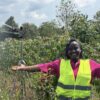
Renewables, Farmer Aggregation Offer Solutions to Africa’s Post-Harvest Losses
Post-harvest losses, particularly in rural areas, threaten the gains Africa is making in agricultural production and export capacity.
For Pakistan Rising Fistula Cases Make SDG 3 Goal Elusive
“You’re living a life drained of joy,” is how Shehnaz Sher Ali describes her “perpetually wet and stinky” existence. “I wouldn’t wish it on my worst enemy,” says the 35-year-old, who travelled by bus for more than 12 hours with her husband from their village in Rahim Yar Khan, Punjab, changing diapers whenever possible to keep the smell from reaching the fellow passengers.
SUDAN: ‘It’s Shocking to Be Forced into Silence Simply Because You Are a Refugee’
CIVICUS discusses life as a refugee with an exiled Sudanese civil society activist who has asked to remain anonymous for security reasons.
The Ingenuity Trap
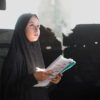
In the 21st century, getting a pencil into Gaza became international news. In January, after more than two years of restrictions, UNICEF finally brought in learning kits with pencils and exercise books. Textbooks stayed out. By then, the UN had recorded damage to 97.5 per cent of Gaza's schools.
If We Can Start an Epoch, We Can Start a Farming Revolution
In November 1952, the United States detonated the world's first thermonuclear device at Enewetak Atoll in the Marshall Islands. The test, code-named Ivy Mike, erased the island of Elugelab and scattered a signature of plutonium across the planet that remains in lake beds, ice sheets and ocean sediments today.
How to Protect Coastal Communities From Tide-Related Loss and Damage in Bangladesh
Villagers rush to the vulnerable spot of the embankment—early warning of the rising tide has alerted them. Together, they save the village from tidal flooding by repairing the vulnerable embankment, which is at risk from the impact of low pressure in July this year. The message is clear: early warnings of the rising tide save lives and property.
“The Price of a Narrow Metric: Why Vulnerability Must Count”
From a distance, an island nation can appear to possess everything: pristine waters, a thriving tourism industry and a strong cultural identity. Its income figures may suggest prosperity.
UNGA81: UN Leaders Calls for Faster Action on Pandemic Preparedness
The United Nations High-level Meeting on Pandemic Prevention, Preparedness and Response (PPPR) on September 25 called for faster and more sustained investment in pandemic preparedness. Speakers emphasized that future outbreaks will require coordinated action across governments, health systems, and communities.
New Ocean Report Warns of Rising Seas, Ocean Heat and Acidification
Fatuma Makame learned to farm seaweed in the shallow water where her parents worked. These days, she grows it farther from shore.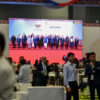
BRICS: Growing Ambition, Zero Accountability
At the 18th BRICS Summit, held on 12 and 13 September in New Delhi, India’s Prime Minister Narendra Modi brought together presidents Xi Jinping of China, Vladimir Putin of Russia and Masoud Pezeshkian of Iran, along with Abu Dhabi’s Crown Prince, Sheikh Khaled bin Mohamed bin Zayed, representing the United Arab Emirates (UAE). Around the table sat longstanding rivals such as India and China and, in the case of Iran, Saudi Arabia and the UAE, states on opposite sides of an ongoing war. That the summit produced a joint declaration every member could sign was a modest multilateralist success.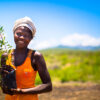
What Faith Can Teach Agriculture
Years ago, standing in a small farmer's field in Haiti, I began to suspect that we had agriculture backward. The development world saw a man in need of rescue. I saw a farmer who might help rescue the rest of us.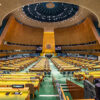
Strategic Blindness at UNGA 81: “Super Intelligence” and “Killer Robots” Take Center Stage as Women’s Rights Take a Back Seat
“Artificial intelligence (AI) must be shaped by humanity, with humanity, and for all humanity... Life-and-death decisions must never be surrendered to machines. Killer robots must have no place in our future.”
Fragmented Policies Hold Back Agroecology Adoption in Africa’s Congo Basin
Agricultural, land, forestry, environmental and trade policies in the Congo Basin remain compartmentalised at country levels, leaving proven agroecological models trapped at pilot stages due to a lack of advisory services, organic inputs, market outlets and sustainable financing.
Overshoot of Paris Agreement and the Looming Super El Niño Drive Urgent Calls for Global Climate Action at UNGA 81
The United Nations 2026 Climate Summit addressed critical strategies to mitigate the compounding impacts of the climate crisis and accelerate progress toward the Sustainable Development Goals (SDGs).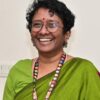
India Still Needs to Address Harmful Dark Skin Stereotypes
As a young girl, Sarada Murlidharan cringed at the thought of going to school. It was not the studies but the taunts of 'being black' or having dark skin, where fair skin was considered preferential, that made her unhappy.« Previous Page — Next Page »





The Week with IPS

NEXT STOP - SDGs
Tracking global progress towards a sustainable world
Tracking global progress towards a sustainable world
