Languages
Monday, September 28, 2026



News and Views from the Global South
IPS UN Bureau

Extreme Heatwave Escalates Urgency of Climate Adaptation in Europe
As Western Europe endured its worst-ever June heatwave in recorded history, the imperative for climate adaptation is now urgent as the continent accelerates beyond others to become the fastest-warming region in the world.
Sudan’s War Economy: Funded by Gum Arabic and Gold
In the three years since the outbreak of the Sudanese Civil War, the humanitarian crisis has deteriorated significantly, with the United Nations underscoring a blatant disregard for international humanitarian law among warring parties. This includes the deliberate targeting of civilians in residential areas, widespread sexual violence, and attacks on critical infrastructure that have hindered aid efforts and pushed communities to the brink of collapse. To manage rising military expenses, the warring parties have increasingly relied on the exploitation of trade routes and territories, prompting humanitarian experts to express concern about a persistent, self-sustaining “war economy.”
Ongoing Need for Humanitarian Assistance in the Occupied Palestinian Territory
On Monday July 20, a team from the United Nations Office for the Coordination of Humanitarian Affairs (OCHA) visited two displacement sites in Gaza where they found two family tents decimated by domestic fires. This incident is indicative of the increasing frequency of domestic fires in Gaza.
U.S.-Saudi Nuclear Agreement Opens Door to Civilian Nuclear Cooperation, with One Major Caveat
On Wednesday, July 22, the U.S. Secretary of Energy, Chris Wright, and Saudi Arabia’s Minister of Energy, HRH Prince Abdulaziz bin Salman bin Abdulaziz signed a civilian nuclear cooperation agreement, best known as a 123 agreement, as well as an accompanying bilateral safeguards agreement, according to the U.S. Department of Energy and the Saudi Ministry of Energy.
Cockroach Protests: How India’s Youth Movement Led to Minister’s Resignation
On July 25, after 50 days of protest at Delhi's Jantar Mantar, Union Education Minister Dharmendra Pradhan resigned.
UNHCR: 75 years on, the Refugee Convention Remains a Lifeline for Millions
Seventy-five years after the Refugee Convention was opened for signature on 28 July 1951, it remains the foundation of the international refugee protection system and one of the most consequential international legal instruments ever adopted.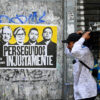
Guatemala: A Narrow Opening in a Captured Justice System
José Rubén Zamora, founder of elPeriódico, Guatemala’s now-defunct leading investigative newspaper, spent 1,295 days in detention before a court granted him house arrest on 12 February. He endured long stretches of solitary confinement in a military jail, held in near-constant darkness and subjected to treatment that six UN experts warned could amount to torture. His offence was simply doing his job. For decades, he exposed the corrupt dealings of Guatemala’s economic and political elites. Prosecutors are still trying to send him back to prison.
From Castel Gandolfo to Campidoglio: Call for Human Dignity to Be at the Heart of the AI Revolution
After two days of debate at an international conference devoted to the challenges of artificial intelligence (AI), nuclear war and global security, Nobel laureates, former heads of state and government, scientists, human rights defenders, religious leaders and representatives of civil society adopted a joint declaration, calling for it to be based on human dignity.
The Houthis Don’t Need to Close the Bab el-Mandeb Strait to Strangle the Suez Canal
With regional friction between Iran and the Gulf monarchies escalating, Houthi leadership in Yemen has proclaimed a total maritime blockade against all vessels linked to Saudi shipping. While this declaration does not constitute a verified military obstruction of the Bab el-Mandeb Strait, it significantly heightens the risk of volatility at the Red Sea’s southern gateway, potentially severing the primary arterial link to the Suez Canal.
What Development Looks like in Myanmar Today
When asked what development looks like today, a community leader in Kalaw township points to these fields. Once destroyed by a typhoon, they are now productive again. What began as emergency food assistance in the first month was followed by UNDP support in the community—seeds, training, debris removal, support to microbusinesses and small infrastructure—backed by the Republic of Korea, Norway and Switzerland. One year on, the fields sustain three annual production cycles—rice and flowers—with more resilient practices and higher yields. “This is what development looks like to us,” he says.
Food and Transport Costs through Strait of Hormuz Remain High, Burdening Vulnerable Economies
Prior to the latest round of hostilities between the United States and Iran, freight traffic had been increasing in the Strait of Hormuz, and negotiations were underway for a new agreement to fully restore trade through this channel.
Human-Caused Climate Change, Not El Niño, Drives Most Coral Bleaching Events – Research
Every morning, as the Indian Ocean retreats from the reef off Zanzibar's Jambiani village, Chiku Chande steps into the knee-deep lagoon carrying bundles of seaweed seedlings. Years of farming these waters have taught her about every channel and coral outcrop. But lately, the corals that once glowed in brown and gold have become chalky white.
Trump’s Authoritarian Gambit to Muzzle the Foreign Press
Under a new rule proposed by the Department of Homeland Security, the duration of “I visas” for foreign media will be slashed from renewable multi year periods—often up to five years—to a maximum of 240 days, and just 90 days for Chinese journalists. Renewals would no longer be a routine administrative step tied to continued employment and compliance with the law, but a discretionary privilege the government can grant or withhold at will.
Don’t Cry for Milei, Argentina
Sunday’s World Cup final focused world attention on the stench of corruption, past and current, surrounding some of its main protagonists, including Argentina, and the presidents of FIFA, Argentina and the main host nation.
Children in Conflict Zones and Remote Areas Bear the Brunt of Global Immunization Gaps
Despite growing up and working in vastly different geographic regions and environments — one shaped by decades of armed conflict and political instability, and the other by remote, hard-to-reach areas — both Sagal and Johao encounter children daily who have never been vaccinated. Sagal and Johao are members of UNICEF’s Global Youth Health Advisory Group, where they advance children’s health by shaping UNICEF’s strategies, policies, and campaigns, while working directly in their own countries to connect community realities to global conversations about children's health.
Africa’s Health Defenses Have Improved But Its Funding Has Not
In September 2024, an outbreak of Marburg virus disease in South Ethiopia was confirmed, contained, and declared over within three months.
US Plans to Restrict Visas to Foreign Journalists Come Under Fire
A proposal to restrict US visas to foreign journalists assigned to cover the US has triggered a strong protest from the New York-based Foreign Press Association (FPA).
Africa Can Grow Faster With AI—If It Moves Now
A farmer in Kenya gets weather and planting advice on a basic phone. A teacher in Nigeria uses a chatbot to help students catch up in math. South Africa’s revenue authority uses data analytics to better target tax audits. These are not futuristic examples from Silicon Valley. They are early signs of the broader transformation that artificial intelligence (AI) could bring to sub-Saharan Africa.
ALBANIA: ‘The Public Only Learns about These Development Megaprojects Once Construction Machinery Arrives’
CIVICUS discusses land grabs and environmental damage linked to a luxury coastal resort project with Eva Kushova, Director of Destination Management Organisation Albania, a civil society organisation that supports sustainable tourism in Albanian destinations, seeking to preserve culture and nature while maximising benefits for communities.
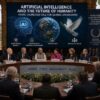
Artificial Intelligence and the Future of Humanity: Nobel Laureates Call for Global Safeguards
"I’m sorry, Dave. I’m afraid I can’t do that.” By bringing the supercomputer HAL 9000 to life in his 1968 film 2001: A Space Odyssey, American director Stanley Kubrick created one of the most powerful symbols of the fear of artificial intelligence (AI) escaping human control.
Global Value Chain Trade Reaches Historic Highs, Despite Push for Reshoring
Despite rising geopolitical tensions, trade restrictions and calls to bring production back to domestic shores, the global economy remains more interconnected than it may appear. Trade through global value chains (GVCs) reached historic levels in 2024, according to a new report from the Organisation for Economic Co-operation and Development (OECD).« Previous Page — Next Page »


The Week with IPS

NEXT STOP - SDGs
Tracking global progress towards a sustainable world
Tracking global progress towards a sustainable world
