Languages
Saturday, November 7, 2026



News and Views from the Global South
IPS UN Bureau
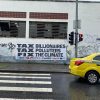
South Africa’s G20 Presidency: A Call for Transformative Leadership in a Fractured World
South Africa’s G20 Presidency begun in December, with only 12% of SDG targets on track and significant backsliding on more than 30%. As we write this today, there is an urgent need for a paradigm shift and practical solutions for a progressive, people-centred, and development-driven agenda in a fractured global landscape that needs collective healing.
Bold Donor Action Urgently Needed to Give Ethiopia’s Crisis-Impacted Children a Lifeline
Ethiopia’s education system is buckling under the weight of complex, competing challenges. The aftermath of a deadly war in the north, ongoing violence, climate-induced disasters, and widespread forced displacements have converged to push as many as 9 million children out of school. With close to 18 percent of schools in the country destroyed or damaged and persisting intercommunal conflicts in various regions, there are fears that many might never find their way back to school.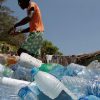
Plastics, Power, and Politics: The High-Stakes Fight for a Global Treaty
As the fifth round of negotiations of the Intergovernmental Negotiating Committee (INC) for a global plastics treaty concluded in Busan, South Korea (25 November-December 1 2024), the meeting underscored both the complexities and the promises of multilateralism. What we saw in Busan was indicative of other environmental treatymaking spaces, including ones on climate and biodiversity.
Zambia: Civil Society Fighting New Legislative Threats and Restrictive NGO Bills
Over the past few years, new “tools of control” affecting the work of civil society organisations have multiplied, often imposing forms of “bureaucratic criminalisation” and “administrative harassment”. In particular, more and more restrictive and demanding laws are hurting civil society organisations’s capacity to operate across the globe.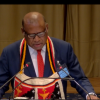
African Union, Nations Lay Bare Climate Vulnerabilities at UN’s Top Court
Kenya agrees with many UN member states testifying before the International Court of Justice (ICJ) that the law of international responsibility should hold countries legally responsible for major damage to the global climate system.
UNCCD COP16 Raises Hopes for Ambitious Global Land Action
While many delegates at the 16th meeting of the Conference of the Parties to the UN Convention to Combat Desertification (UNCCD COP16) hope that this could be the convention’s own Paris moment—referring to the historic Paris agreement inked by UNFCCC signatories—however, this hedges heavily on the UN parties’ seriousness to combat drought, desertification and land degradation.
Climate Finance Not Charity, But Obligation, International Court of Justice hears
Developing nations should not bear the brunt of the climate crisis caused by the industrialized world's historical emissions. This was the resounding message as the Solomon Islands, India, and Iran, among others, presented their cases before the International Court of Justice (ICJ).
Heightened Insecurity in Sudan Threatens Nationwide Collapse
As the Sudanese Civil War continues to ravage the people of Sudan, conditions for internally displaced persons grow more dire every day. The situation in Sudan is currently the biggest displacement crisis in the world. Famine, violence, and gender-based violence are rampant. Described as “an invisible crisis” by the United Nations (UN) new emergency relief chief, Tom Fletcher, many believe that the humanitarian response has been largely ineffective in tackling the urgent and growing scale of needs.
Conservation Agriculture Transforming Farming in Southern Africa
On the dusty plains of Shamva District in Zimbabwe, Wilfred Mudavanhu's maize field defies drought.> With the El Niño-induced drought gripping several countries in Southern Africa, Mudavanhu’s maize crop is flourishing, thanks to an innovative farming method that helps keep moisture in the soil and promotes soil health.
COP29 Outcomes – A Call to Action for the World’s Most Vulnerable Nations
The conclusion of the 29th Conference of Parties (COP29) brings with it a blend of urgency, frustration, and a glimmer of hope for the Least Developed Countries (LDCs), Landlocked Developing Countries (LLDCs), and Small Island Developing States (SIDS).
New Approaches Urgently Needed to Tackle Resurgent Social Crises
Despite uneven economic recovery since the pandemic, poverty, inequality, and food insecurity continue to worsen, including in the Asia-Pacific region, which used to fare better than the rest of the Global South.
States Individually Accountable For Contributions to Climate Change—Fiji
At The Hague, the United Nation’s highest court heard Fiji, a small island nation, lay out its arguments on the threat posed by climate change and the legal obligations, especially those of developed nations.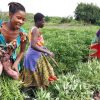
How an App Transformed Farming for Rural Tanzanian Women
In the sun-scorched soils of Moshi, where every drop of rain counts, two female farmers have defied the odds through technology. Mwajuma Rashid Njau and Mumii Rajab, once locked in a daily struggle to survive, have found a mobile phone their best ally.
Israel-Lebanon Ceasefire Uncertain Amid Repeated Violations
On November 27, Israel, Lebanon, and a host of mediating states agreed upon a ceasefire agreement that would establish a permanent cessation of warfare between the two parties. As of December 3, there have been no reported instances of Hezbollah directing attacks toward Israel that resulted in any casualties. Despite this, there have been numerous reported violations committed by Israel, causing extensive harm to civilian lives and local infrastructure. Many parties have warned for the international community to hold Israel accountable for these violations.
Courage, not Compromise? A Rallying Cry that Failed a Deadlocked COP Meeting
Courage and not compromise. That was the motto desperately launched by members of the civil society in the twilight of the negotiations of the Plastic Pollution Treaty in Busan, South Korea last week.
‘Quilombola Communities Live in Fear Because the Laws That Are Supposed to Protect Them Are Ignored’
CIVICUS discusses threats to the security, rights and ancestral lands of Brazil’s quilombola communities with Wellington Gabriel de Jesus dos Santos, leader and activist of the Pitanga dos Palmares Quilombola community in Bahia state.
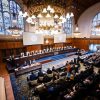
Climate Change’s Dire Consequences Laid Bare at International Court of Justice Hearings
At the International Court of Justice on Tuesday, December 4, 2024, Brazil called for climate justice, and Canada urged swift action on the world's "greatest challenge," while China advocated for equity and development rights. These countries are among the 98 that will make presentations during the fortnight of hearings, after which the court will give an advisory opinion.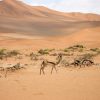
Focus on Africa: IPBES Plenary Session Makes Inaugural Visit to Biodiverse Continent
The Intergovernmental Science-Policy Platform on Biodiversity and Ecosystem Services’ (IPBES) first Plenary session in Africa is a “crucial acknowledgement of Africa’s important contribution to biodiversity conservation, which is a global public good, a heritage that Africa has the privilege to share with the peoples of the world,” says Dr. Luthando Dziba, from South Africa, co-chair of the IPBES Multidisciplinary Expert Panel.
UN ECOSOC Special Meeting Highlights the Urgent Scale of Needs in Haiti
As a result of the ongoing hostilities from gang violence in Haiti, children continue to bear the brunt of the humanitarian crisis. Armed gangs have committed various human rights violations, many of which compound issues surrounding food insecurity, displacement, and social instability for millions of children in Haiti. Children have also lost their access to education and continue to be recruited into gangs. It is crucial for the international community to prioritize the multifaceted crisis facing Haitian children in order to avoid losing an entire generation to violence.
South Africa’s G20 Presidency in 2025: A Pivotal Moment for the Country and Africa
In 2025, South Africa will assume the presidency of the G20, a pivotal moment in the African country's international diplomatic efforts. The Group of Twenty (G20), is an intergovernmental economic forum comprising 19 countries and two regional unions - the European Union (EU), and recently the African Union (AU). It represents 85 per cent of the global economy, 75 per cent of world trade and 67 per cent of the global population.
Small Island States Urge International Court to Look Beyond Climate Treaties
A few UN member states responsible for the majority of emissions have breached international law, Ralph Regenvanu, a special climate envoy from Vanuatu, told the International Court of Justice in the Hague in his opening address.« Previous Page — Next Page »





The Week with IPS

NEXT STOP - SDGs
Tracking global progress towards a sustainable world
Tracking global progress towards a sustainable world
