Languages
Tuesday, September 22, 2026



News and Views from the Global South
Israel - Palestine
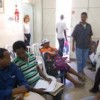
MIDEAST: Israel Denies Healthcare to Refugees
Medication and pillboxes fill two white bookcases, lining the wall behind a volunteer Israeli doctor. He talks to a patient in Hebrew about the man’s medical condition, as another man is examined behind a curtain that divides the small office. In the next room, at least 40 people – mainly of Eritrean and Sudanese origin – sit quietly on plastic chairs, waiting for their turn to be seen.EGYPT: Parties Proliferate in Political Spring
The liberalisation of Egypt's political process following the Jan. 25 Revolution has led to a proliferation of new political parties, both religiously-oriented and secular. Within the last five months, four new parties have officially launched, while at least 16 others are currently in the pipeline.
PALESTINE: Freedom Flotilla Ready to Sail Despite Threats and Sabotage
As the 10 ships of the Freedom Flotilla II - Stay Human make their final preparations to set sail for the Gaza Strip, purported acts of sabotage have been added to threats from Israel.
MIDEAST: A Zionist Way to Back Palestinians
To many people Rabbi Arik Ascherman would appear to be a contradiction in terms. He is an ardent Zionist and religious Jew who believes that God made a covenant with the Jewish people and the Land of Israel. But the core of Ascherman’s Zionist ideology revolves around fighting for human rights, especially those of the Palestinians.MIDEAST: Confrontation Begins Before the Sailing
Activists are engaged in a harsh confrontation with Israeli authorities days before the international ‘Freedom Flotilla II – Stay Human’ sets sail towards the Gaza strip in an attempt to break the naval blockade Israel has imposed since 2007.TURKEY-ISRAEL: Diplomatic Wounds Leave Half-Healed Scars
Turkey and Israel are close to resolving their dispute over last year's flotilla fiasco, but the partnership that existed between them for more than a decade will almost certainly stay submerged.MIDEAST: Post-Mubarak Egypt Inches Towards Iran
Based on several recent statements by Egyptian and Iranian officials, Cairo and Tehran appear closer than ever to restoring diplomatic ties following a 31-year hiatus.MIDEAST: Turkey Sails Closer to Israel Ahead of Flotilla
Amidst last-minute preparations for a new Peace Flotilla that will try this week to break Israel's maritime blockade on Gaza, signs of a tentative thawing in relations between Israel and Turkey following a two-year crisis are becoming more and more apparent.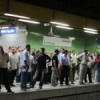
Scrubbing Egypt Clean of Mubarak
Throughout Egypt the once-ubiquitous name and image of ousted president Hosni Mubarak is becoming increasingly scarce as citizens attempt to purge the land of the former dictator's tarnished legacy.
Second Humanitarian Flotilla Prepares to Sail for Gaza
As the second Freedom Flotilla, made up of some 10 ships carrying 1,000 activists from 20 countries, gets ready to sail for the besieged Gaza Strip, Israeli authorities are stepping up their threats.MIDEAST: When a Spy Speaks
The man who, for the last eight years, embodied Israel's secret operations and had a penchant for the use of forged documents by his spies has been ordered by his former boss to relinquish his own diplomatic passport.
MIDEAST: Medical Crisis Worsening in Gaza
"During the first years of the siege, we could still manage, but nowadays we have no alternatives," says Dr. Hassan Khalaf, Deputy Health Minister in Gaza. "It is a major crisis: many health services have stopped, and I'm afraid this will spiral out of control, because Gaza doesn't have the essential medicines and supplies needed."OP-ED: Experts Fear Israeli Design to Balkanise Arab States
Developments in Libya have raised fears among Egyptian analysts and political figures of the possible break-up of the North African nation into two warring halves. To support the assertion, they point to longstanding Israeli designs - supported by the western powers - to balkanise the Arab states of the region.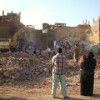
MIDEAST: Sphinx Avenue Paved With Bitter Memories
Mohamed Saeed’s battle with a wrecking crew ended predictably. His refusal to leave the home his grandfather built and defiant attempts to throw himself in front of the giant hydraulic hammer bought his family some time, but by the end of the day their two-storey house was reduced to rubble.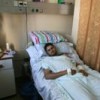
MIDEAST: Where Freelance Means Abandoned
Sitting by the hospital bed of freelance photographer Mohammed Othman, Ashraf Abu Amrah knows that nobody owns a freelance journalist from Gaza who gets injured, or dies.MIDEAST: Politics Triumphs Over Reason
"The heart has it reasons, of which reason knows nothing of," wrote 15th- century French philosopher Blaise Pascal. Apply the words of wisdom to the prospective U.N.-endorsed recognition of Palestinian statehood, but replace "the heart" with 'politics'.MIDEAST: A Price to Pay for Israeli Aid Restrictions
Israeli restrictions on the delivery of international aid to impoverished Palestinians in the occupied Palestinian territories are costing aid organisations nearly five million dollars annually, and European and U.S. tax payers are footing the bill.Moussa Seeks to Calm Arab Countries ‘Privately’
Leaving his position as secretary-general of the Arab League, Amr Moussa is now a "private citizen" as he prepares to contest the Egyptian presidential election. And as a private citizen there is little he can do officially to fight government crackdown on citizens across parts of the Arab world, he tells IPS in an interview.
MIDEAST: Fishing Under Fire
In Gaza's main port, beyond the newly-built memorial to the Freedom Flotilla martyrs, Gaza's fishermen prepare to go out trawling at shallow depths in Palestinian waters. Other fishers stay on land to mend nets and fix boats damaged or destroyed by Israeli navy gunfire, shelling, water cannoning and even ramming. Such moves as the opening of Rafah have done nothing for Gaza's fishermen.
EGYPT: Gaza Crossing Lets Trickle Through
Egypt's border with the Hamas-run Gaza Strip was reopened to Palestinian travellers Wednesday after a series of squabbles over operational procedures had temporarily brought cross-border traffic to a halt.
MIDEAST: Promised Crossing Denied
Many hoping to find free movement between Egypt and Gaza have found the border gates at the Rafah crossing closed. Egyptian officials closed the gates on Saturday, according to Palestinian officials.« Previous Page — Next Page »


The Week with IPS

NEXT STOP - SDGs
Tracking global progress towards a sustainable world
Tracking global progress towards a sustainable world
