Languages
Wednesday, November 11, 2026



News and Views from the Global South
Millennium Development Goals (MDGs)
COTE D’IVOIRE: Formal Economy Returns to the North
Mamadou Dembélé has removed all the contraband products he has sold for the past in six years at his shop in Bouaké in central Ivory Coast. This is due to the gradual return of government control in the area - occupied by the rebellion launched in the country in September 2002.
ZIMBABWE: Teachers' Strike Infringes Children’s Right to Education
The crisis of Zimbabwe’s education sector is deepening by the day, as the country’s schools remain closed due to the unremitting teachers strike.ECONOMY-JAPAN: Meltdown Prompts ODA Boost To Asia
Japanese Prime Minister Taro Aso told the World Economic Forum (WEF) at the Swiss mountain resort of Davos on Saturday that Japan will provide 17 billion US dollars worth of aid to stimulate Asia’s economies.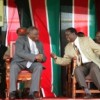
EAST AFRICA: Increasing Women's Participation in Government
Kenya’s poor record of improving percentage of women in decision making positions has come under scrutiny, but its neighbours are doing significantly better.BURKINA FASO: Grain Shortage Despite Record Harvest
Looking worried, Hadja Mamounata Belegda, commercial grain farmer, rubs the beads of her rosary between her fingers and ponders the consequences of grain shortages on the market in Burkina Faso.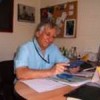
Q&A: Water Pushed to the Limit
When it comes to water, "humanity does not have the full awareness of the danger it is facing and will only act under extreme circumstances. The bad news is that those extremes are drawing near," Manuel Baquedano, president of the Chilean non-governmental Institute of Political Ecology, told Tierramérica.SWAZILAND: Simple Solution – Save Rainwater
It's so early, the frogs are still croaking, as women push forward holding firmly onto their buckets while dodging cattle that are also scrambling for water in the pond at Gebeni. It has rained only a few times since the wet season began in October, and competition for water begins as early as 5:00 am.HEALTH: U.S. Urged to Pay Fair Share of Global Fund
The Global Fund to Fight AIDS, Tuberculosis (TB) and Malaria is facing a critical funding gap of five billion dollars - an amount that could save nearly two million lives in the coming year, leading public health advocates said at a teleconference Thursday.
MAURITIUS-RIGHTS: Sceptical Welcome for Equality Law
Nobody shall suffer prejudice in his social life or his place of work because of his or her ethnic origin, religion, age, sexual orientation, political conviction or physical handicap. This is the challenge of Mauritius's new Equal Opportunities Act (EOA).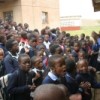
SWAZILAND: Free Education? Maybe Next Year…
Although the Swazi constitution stipulates free primary education from 2009, parents will have to pay school fees this year. Only three days before the start of the January term, the country's government announced it will continue to charge for primary education, contrary to the law.RIGHTS-ZAMBIA: Vulnerable Children Must Fend For Themselves
There will be as many as one and a half million orphaned children in Zambia by 2010. Deprived of adult guardians by the AIDS pandemic, many of these children will end up living in the streets of the country's major towns and cities.DEVELOPMENT: Food Summit – Concern Yes, Concrete Steps No
A "High Level Meeting on Food Security for All" convened by the United Nations and the Spanish government ended Tuesday without approving concrete measures but with a commitment to redoubling efforts to bolster official development aid (ODA).POLITICS: Six Compete for Agriculture Agency Head
Against the backdrop of rising hunger, declining agricultural production and food shortages, the Rome-based International Fund for Agricultural Development (IFAD) is set to elect a new president next month.
HEALTH-MALAWI: Rains Expose Poor Sanitation
Zimbabwe - where cholera has claimed more than 2,700 lives so far according to the Red Cross - is not the only southern African country facing increased disease as rains set in across the region. Malawi is also battling a cholera outbreak which has killed 19 people since the onset of the rainy season, an unusually high death toll.HEALTH-AUSTRALIA: Fighting Dengue With Bacterial Ally
Australian scientists appear to have made a potentially major breakthrough in the battle to combat dengue fever, the mosquito-borne infection which leads to more than 20,000 fatalities worldwide each year.POPULATION: Bridging the Family Planning Gap
Some 43 countries around the world now have populations that are either essentially stable or declining slowly.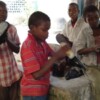
SOMALIA: Poverty Forces Children Into the Streets
Hassan Maye, 13, has been fending for himself and his family in the streets of Mogadishu since he was ten. He shines shoes in the Sinai neighbourhood in the southern part of the Somali capital. On a good day, he says he earns 18,000 shillings - equivalent to roughly 50 cents.
ZIMBABWE: Now a 'Factory for Poverty'
Over 75 percent of the people in crisis-riddled Zimbabwe are living in desperate poverty, with children bearing the brunt. And with rival parties still deadlocked over implementation of a power-sharing agreement signed four months ago, things are likely to get worse before they improve.
AFRICA: Climate Change Threatens Food Security
Climate change will have a significant impact on southern Africa’s already compromised food security, environmental experts warned at the fifth Alexander von Humboldt International Conference at the University of Cape Town (UCT) in South Africa.HEALTH-LATAM: Too Many Women and Children Dying
"Latin America is not in the tragic conditions of the least developed countries, but an average rate of 130 maternal deaths per 100,000 live births is very high," UNICEF representative Egidio Crotti told IPS.DEVELOPMENT-AFRICA: Better Education Improves Health of Mothers and Children
A new UNICEF report reveals there is still much to be done to reduce infant and maternal mortality in sub-Saharan Africa. Failure to improve care for pregnant women and newborns threatens to undermine progress on all health-related development goals.« Previous Page — Next Page »





The Week with IPS

NEXT STOP - SDGs
Tracking global progress towards a sustainable world
Tracking global progress towards a sustainable world
