Languages
Wednesday, November 11, 2026



News and Views from the Global South
Millennium Development Goals (MDGs)
DEVELOPMENT: African Agriculture Uprooted by Economic Policies
People across Africa have taken to the streets in recent months to demand that their most basic need be met: access to food. The various states in which these protests have taken place, however, have reacted swiftly and brutally.SOUTH PACIFIC: Poverty Breeds Child Labour and Sex Tourism
Beyond the fabulous palm-fringed beaches and cascading waterfalls of the islands of the Pacific is a sordid reality - child labour and commercial sexual exploitation of children.TRADE-AFRICA: Some Interim EPAs May Not Be Concluded
Some of the 35 African, Caribbean and Pacific (ACP) states that have initialled interim economic partnership agreements (EPAs) may still withdraw from the process – apart from the 44 states that have so far refused to sign EPAs with the European Union, according to researchers studying the fraught trade negotiating process.
SOMALIA: Dire Situation for Internally Displaced
The United Nations estimates that well over 700,000 people have fled their homes in the Somali capital Mogadishu since clashes between insurgents and Ethiopian forces backing Somali government troops began in Mogadishu in February 2007.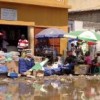
DEVELOPMENT-ANGOLA: Stressing the Importance of Clean Water
A survey of Angolan households has revealed less than half of caregivers always treat water with a reliable method before giving it to children. And one third of those interviewed by Population Services International (PSI) believes water is blessed by God and does not need to be sterilised before use.EAST TIMOR: Outsourcing Sugar Cane
The East Timor government’s recent decision to grant vast lands to an Indonesian company to plant sugar cane has been heavily criticised by Timorese society, who are demanding that the government immediately revoke the contract with the foreign company.RIGHTS: Scant Compassion for Migrants with HIV
Even as people who migrate from their homelands run a higher risk of contracting the HIV virus, they also are far less likely to receive adequate healthcare, and often face deportation or other harsh treatment in destination countries, activists say.PAKISTAN: Call to Demilitarise Aid
U.S. aid to Pakistan needs to put far greater emphasis on education and far less on the military than it has to date, a Brussels conference has been told.
DEVELOPMENT-ANGOLA: Absorbing Lessons on Clean Water
Playing happily in the sand with her twin sister, it's hard to believe Vivia Paulino was only months ago on the brink of death.
AFRICA: Concerns over Chinese Investment and Working Conditions
Chinese investment in African countries comes with few strings attached – which is exactly what concerns civil society organisations.ASIA: Civil Society Uniting Against Corruption
Cambodian lawmakers are still to offer unanimous support for a petition aimed at combating corruption that was presented to the National Assembly in mid- May. The call was a cry from ordinary people - over a million of them.
VENEZUELA: Co-operatives Turn Idle Landed Estates Green
"As far as you can see, there was not one litre of milk produced, not even an ear of corn," says José Tapia Coirán, turning with his arms outstretched, pointing to the horizon of the Venezuelan savannah dotted by trees. "Now we produce 500 litres of milk per day and we harvested one million kilos of maize."
HEALTH-PAKISTAN: Anti-Polio Campaign Resumes With Taliban Support
Health workers fanned out into hundreds of villages in a troubled north-western district of Pakistan to immunise children against polio following a peace agreement with a pro-Taliban faction that had campaigned against the vaccine.PARAGUAY: University Students on the March Again
After nearly two decades of apathy, the university student movement in Paraguay has made a comeback, demanding a law to grant them rebates on public transport fares and opposing a draft law on higher education reform.HEALTH: Cultural Double Standards Undercut HIV/AIDS Fight
The United Nations says religion and culture continue to have a significant impact - both good and bad - on the spread and prevention of HIV/AIDS worldwide.NEPAL: Education Far More than ABCs – Experts
Far more than just the learning of ABCs and 123s, education should be playing a transformative role in children’s lives if it is to ensure them a better and more ‘equal’ and gender-responsive future.NEPAL: Gender Inequality in Education Has Deep Roots
A shortage of female teachers, lack of proper training, inadequate delivery of services and indifferent attitudes combine to add to gender inequality in education in this small Himalayan nation.RIGHTS-SOUTHERN AFRICA: Xenophobia Impacts on Mozambique
A month ago, 47-year-old Catarina Manungo was the owner of a two-bedroom house in Boksburg, where she lived with her four children and a grand-daughter. A few short weeks later, Manungo and her two youngest children find themselves living in a tent in the Maputo neighbourhood of Matola Garre.FINANCE: Inflation to Overshadow Aid at G8 Talks
Inflation is to dominate two-day talks of wealthy nations' finance ministers despite warnings that millions of people face death because of a shortfall in development aid.
BOLIVIA: Domestics to Gain Healthcare Coverage
Domestic workers in Bolivia, most of whom are young indigenous women from the highlands region, are about to gain access to healthcare coverage.
US/MEXICO: Neighbours Try to Reclaim Polluted Valley
A sinuous coil of murky water winds through the Tijuana River Valley. On each side of the U.S.-Mexican border, residents eye each other warily, caught in the cross-currents of political intrigue and economic polices that make the floodplain seem almost orderly by comparison.« Previous Page — Next Page »





The Week with IPS

NEXT STOP - SDGs
Tracking global progress towards a sustainable world
Tracking global progress towards a sustainable world
