Languages
Wednesday, November 11, 2026



News and Views from the Global South
Millennium Development Goals (MDGs)
LABOUR-SRI LANKA: Working Children Get Second Chance
Sujit is 22-years-old and studying hard to graduate in 2010 as a professional electrician. The handsome young man, speaking at a workshop on eliminating child labour, talked proudly of how his life changed dramatically when he was given the opportunity to enter an electrical course and re-start his life again.DEVELOPMENT-AFRICA: High Food Prices Here For Another Five Years
Hundred million people worldwide - mostly from developing countries - may sink deeper into poverty when food prices continue to rise, the World Bank predicts.ECONOMY-AFRICA: HIV/AIDS Reduces Children’s Education Chances
Children who live in communities with an HIV prevalence rate of 10 percent or more have half a year of schooling less than children in other communities.EDUCATION-ASIA: Girls Should Go to School, Stay There
It is not enough that girls go to school - they must also remain in school and complete their education, a goal that educators, policymakers and communities all need to brush up on.SOUTH PACIFIC: Food Crisis, An Opportunity For Change?
Pacific Island governments should not view the global food crisis as a threat but as an opportunity to boost their neglected agricultural sectors, says a professor in development economics.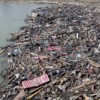
BURMA: One Million Survivors Not Yet Reached – U.N.
U.N. officials are giving the impression that the world body is making headway in helping the millions of survivors in Burma’s cyclone-hit Irrawaddy Delta.
Q&A: “Criminalisation of HIV/AIDS Will Not Help Us”
As the United Nations winds down a major two-day conference to take stock of the global response to the HIV/AIDS pandemic, the problem of persistent discrimination against people living with the virus has been high on the agenda.ECONOMY-AFRICA: Informal Sector Also Needs Skills Training
Bringing basic skills training programmes to workers in the informal sector can help to bring down poverty and unemployment levels, while improving economic growth.ECONOMY: Global Woes Hit Developing Countries
The global credit crunch unleashed in the United States is combining with runaway food and fuel prices to put the squeeze on developing countries, according to the World Bank.AFRICA: Women Say Regional AIDS Plan Falls Short
Despite the admirable progress made by some African countries in preventing and treating HIV/AIDS since 2000, 14 million Africans have died of AIDS in that time span, and an additional 17 million have been infected, says a new report on HIV/AIDS on the continent.RIGHTS-COLOMBIA: Defending Women’s Defenders
After nearly six years of the "democratic security" policy of the government of rightwing President Álvaro Uribe, women activists in Colombia are as vulnerable to human rights abuses as ever, said female rights defenders who met recently in the Colombian capital.
WOMEN-MEDIA: Stuck at the Starting Gate
"We should not be all that surprised that we are stalled," says Jane Ransom, executive director of the International Women's Media Foundation (IWMF), referring to the absence of women leaders in media organisations.
G8 SUMMIT: Japan To Champion Africa's Cause
The state of the world economy will as usual top the agenda of the G8 summit of major western industrial nations. But Japanese Prime Minister Yasuo Fukuda, who will chair the high-level gathering, is keen to devote equal attention to climate change and the development of Africa.
BOLIVIA-PERU: Titicaca Truths Revealed
Nobody doubts that Lake Titicaca, a watershed and resource shared by Bolivia and Peru, is polluted. But a half-century after the two governments realised there was a problem there are still no detailed studies of the state of its waters.DEVELOPMENT: More Food Summits, But Less to Eat
After two major U.N. food summits, one in 1996 and the other in 2002, the international community pledged to alleviate hunger and reduce malnutrition.HEALTH-SOUTH AFRICA: Children in the Path of the Pandemic
There is barely a path leading down the steep incline and through the dense bush to the Mabuyakhulu homestead. It would be easy to pass by without finding 13 year old Zanele* and her eight year old sister Andiswa who stay there on their own.
BURMA: Nargis Victims Forced From Camps
A global human rights lobby slammed Burma’s military regime for driving survivors who have endured untold hardship since last month’s powerful cyclone into further misery.
WOMEN-MEDIA: Conspicuous By Their Absence
Observe any summit picture - you won't find many women. The mystery of female underrepresentation in the echelons of power persists: after so many decades of the feminist movement, why are women at the helm scarce? A look at the media sector may provide some answers.CLIMATE CHANGE: Greens, Lawmakers Assail World Bank Funds
"Climate Investment Funds" to be run by the World Bank and backed by the George W. Bush administration are drawing fire from lawmakers and environmentalists who say the initiatives will accomplish little against global warming.
PAKISTAN: School Bombings Force Girls to Drop Out
"I am disappointed about quitting school, but my parents want me to stay at home," says Sumaira Begum, a student of class 8 at the Government High School Mardan in Pakistan’s North West Frontier Province (NWFP). "On Mar. 20, my school was bombed after which nearly 100 girls including I stopped attending."EDUCATION-KENYA: Students Pour In, Teachers Drain Away
Six hundred teachers have left classrooms in Kenyan schools for better paying jobs elsewhere in just the past six months, according to the Head Teachers Association and the Kenya National Union of Teachers (KNUT). That is about three teachers leaving the service every day.« Previous Page — Next Page »





The Week with IPS

NEXT STOP - SDGs
Tracking global progress towards a sustainable world
Tracking global progress towards a sustainable world
