Languages
Saturday, November 14, 2026



News and Views from the Global South
Millennium Development Goals (MDGs)
DOMINICAN REPUBLIC: Mass Deportations of Haitians Condemned
The prospects of the Haitian community resident in the Dominican Republic might improve if Dominican authorities were to adopt Amnesty International (AI)'s recommendations and change their "migration policies and practices."WATER DAY-CAMBODIA: Asian Development Bank Project Fails Fishermen
A planned survey to check the economic pulse of fishing communities living on the banks of South-east Asia's largest freshwater lake - the Tonle Sap in Cambodia - threatens to expose serious shortcomings in an Asian Development Bank (AsDB) anti-poverty initiative.HUMAN RIGHTS: Children Bring Truce in UN Council
Children's rights was one issue on which the 47 members of the United Nations Human Rights Council have been able to reach a consensus this week, setting aside the differences that have marked their debates in the current session in Geneva.FINANCE: Study Urges Regional Approach to Development
The World Bank, which lends billions of dollars for development projects in poor nations, should put more funding into multi-country initiatives such as roads and joint electric grids, which have shown greater benefits to borrowing nations, according to the Bank's internal monitor.WORLD WATER DAY-KENYA: Holes in the Legal System, Leaks in the Pipes
Kenya's capital, Nairobi, takes its name from a Maasai word meaning "place of cool waters". In parts of the city, however, this term is less descriptive than ironic - as demand for water is outstripping supply.MEXICO: Legal Abortion No Longer a Distant Goal for Activists
Mexico could join Cuba and Guyana as the only countries in Latin America where abortion is legal in cases other than those involving rape or a threat to a pregnant woman's life.ECUADOR: Pressure to Make Water a Public Good
World Water Day will be marked Thursday in Ecuador by protests against the privatisation of water, the construction of dams, and the mining industry, and by demands for the new constitution to recognise access to water as a basic human right.IRAQ: Environmental Nightmare Drags On
Four years after the U.S.-led invasion of Iraq and despite 22 billion dollars spent on recovery and reconstruction, Iraq's environment remains in disastrous shape.TRADE-AFRICA: Liberalisation May Boost Growth But Not Create Jobs
Even if trade openness boosts economic growth, such growth may not create jobs or alleviate poverty. Therefore the much-vaunted Aid for Trade concept should be redesigned so that ‘‘the major focus is shifted from simply creating more trade to the more important objectives of poverty reduction''.WATER DAY-GULF: Forced to Look Beyond Desalination Plants
The holy month of Ramadan is a time when Muslims retreat into fasting and prayer. Last September though, devotees near the Saudi port city of Jeddah had violence on their minds as they broke a day-long fast. Fists flew when told that water brought them in tankers had run out.Q&A: “We Want to Take Control of Our Water”
In a State of the Nation address delivered in February, South African President Thabo Mbeki said his country had "already achieved the Millennium Development Goals in respect of basic water supply, with improvement of access from 59 percent in 1994 to 83 percent in 2006."FINANCE: Never Too Poor to Spend?
The World Bank is encouraging foreign investors and businesspeople to start pursuing the world's four billion poor people as a potentially lucrative market worth five trillion dollars, much bigger than previously thought.CUBA: Growing Old Without a Staff to Lean On
Josefa Martínez, a Cuban woman in her forties, looked after her mother until she died, but she herself will not be so fortunate. "It was my decision not to have children and to dedicate myself entirely to my profession. Now I wonder, who will take care of me when I'm over 70 and no longer strong?"POLITICS-MALAWI: ”Two Elephants Trampling the Grass”
The African adage that ‘‘when two elephants fight, it is the grass that suffers'' is currently particularly apt in Malawian politics.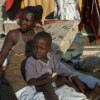
DEVELOPMENT-MOZAMBIQUE: What To Do When a Cyclone Hits
Sandra Alberto (picture) was heavily pregnant when Cyclone Favio struck Mozambique earlier this month on 2 March, ripping the zinc roof off the house she and her two children had taken refuge in.WATER DAY: Key Development Goals Stagnating
Halfway to 2015, the year when the globally agreed Millennium Development Goals (MDGs) are supposed to be reached, the crisis in water and sanitation as well as in water resources management remains among the great human development and environmental challenges.COLOMBIA: Coal Mine Accidents Underreported to Protect Livelihoods
Colombia took in more than 1.3 billion dollars in revenue from coal exports last year. But miners continue to work in inadequate conditions, lacking job stability, safety measures and health coverage.DEVELOPMENT-AFRICA: Forced to Choose ”Which Rights to Violate”
Images of tiny, malnourished African children, some scavenging for leftover food, have continued to grace the covers of brochures, posters and video clips of aid agencies since the devastating famine that claimed more than one million lives in Ethiopia 22 years ago.FINANCE: Debt Relief Cleared for Latin Nations
The Inter-American Development Bank (IDB) said Friday it will cancel 4.4 billion dollars in debt and interest owed by five of Latin America and the Caribbean's poorest countries.DEVELOPMENT: Some More Unequal to EU Than Others
The European Union's development aid chief has been accused of prioritising central African countries for which he has a personal fixation at the expense of other needy nations.WATER DAY: Thirstier World Likely to See More Violence
A strong link between droughts and violent civil conflicts in the developing world bodes ill for an increasingly thirsty world, say scientists, who warn that drought-related conflicts are expected to multiply with advancing climate change.« Previous Page — Next Page »


The Week with IPS

NEXT STOP - SDGs
Tracking global progress towards a sustainable world
Tracking global progress towards a sustainable world
