Languages
Tuesday, November 24, 2026



News and Views from the Global South
Politics
PERU: Government Lashes Out at Human Rights Groups
The Peruvian government, with the backing of the parliamentary bloc that supports former President Alberto Fujimori, has unleashed a campaign against non-governmental organisations that defend human rights, according to activists and lawyers.IRAQ: Corruption Eats Into Food Rations
Amidst unemployment and impoverishment, Iraqis now face a cutting down of their monthly food ration – much of it already eaten away by official corruption.SERBIA: Agreement with EU Deepens Rift
Serbia achieved a long proclaimed foreign policy goal earlier this week when it signed a pre-membership pact with the European Union in Luxembourg.MEDIA-ASIA: More Than Just Freedom
More than gaining the freedom to report on society’s problems Asian media must gauge it’s real contribution to the public‘s needs, especially at a time of increasing commercialisation.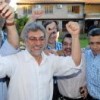
Q&A: A Bishop with His (Sandalled) Feet on the Ground
Fernando Lugo has rocketed into Paraguayan history. Not only is he the first Catholic bishop to be elected president, but he has also ended 61 years of rule by the Colorado Party.RIGHTS-US: Vets Await Verdict in Class Action Lawsuit
Arturo Gonzalez delivered his closing arguments inside a packed courtroom on the 17th floor of the Federal Building in downtown San Francisco.RIGHTS: Impunity Reigns in Journalist Murders
Over the last 15 years, at least 500 journalists were killed directly because of their work. But in less than 15 percent of cases have the perpetrators been brought to justice, according to the New York-based Committee to Protect Journalists (CPJ).RIGHTS-US: “Bioterror” Case Falls Apart
After a four-year legal battle, a U.S. federal judge has dismissed all charges against an avant-garde artist who public officials condemned as a bio-terrorist in a case critics are calling "a persecution, not a prosecution".
EGYPT: New Strike to Greet Mubarak
Hundreds remain in detention following a nationwide protest Apr. 6 against rising food prices and political stagnation. But this has not deterred activists from calling for a second general strike on May 4, timed to coincide with President Hosni Mubarak's birthday.
BANGLADESH: Amnesty for Tainted Tycoons as Economy Flags
Bangladesh’s military-backed interim government hopes that a ‘truth commission’ it plans to set up will give tainted businessmen an opportunity to revive their businesses and help put a badly flagging economy back on the rails.INDIA/IRAN: Course Correction
Relations between India and Iran, which deteriorated over the past three years from traditional friendship and warmth into mutual suspicion and tension, have started looking up again.
BOSNIA: Workers Make a Start for Rights
"Parliamentarians, shame on you!" read a sign in Bosnian carried by four union workers in downtown Sarajevo.DR CONGO: With Rebel Leader's Indictment, a Tentative Step to Accountability
The indictment against a militia leader whose alleged abuses span the Democratic Republic of Congo's war-ravaged east was finally made public at the end of April, almost two years after being delivered under seal to war crimes prosecutors.RIGHTS: People Everywhere Support Free Media
Sixty years after the Universal Declaration of Human Rights asserted the individual's right to "receive and impart information and ideas through any media", it appears that most of the world's people agree, at least in principle.CANADA: Jewish Defence League Energised by Israel’s Far Right
Like an aging group of retro rocker musicians, the Jewish Defence League (JDL) resurfaced in Toronto recently after a decade of dormancy, trying to look a little more mainstream.RIGHTS-US: Sky-High Costs – But Few Executions
Forget the ethics of capital punishment in the United States. Forget the disproportionate number of blacks on death row, or the possibility of executing an innocent victim. The death penalty may really be just too expensive, according to a report released by the American Civil Liberties Union of Northern California (ACLU-NC).LEBANON: Hate the U.S., And Head For It
The growing rift between the U.S. and Iran has spread also to Lebanese soil, with Shia youngsters frequently seen burning U.S. flags. But ironically, for many of Hezbollah's Shia constituency, the U.S. is home.LABOUR-CUBA: The Challenge of Boosting Productivity
Workers are facing thorny questions related to productivity, wages, participation in decision-making or unemployment at a time when the government is discreetly adopting measures aimed at finally pulling the country out of an economic crisis that has dragged on for more than 15 years.EUROPE: Tax Havens Cheating the Poor
Tax havens in Europe are depriving poor countries of more money than they receive in development aid, it has been alleged.TRADE-RUSSIA: Ethiopia Seeks Preferential Treatment for Coffee
After several months of trade negotiations in the joint Russian-Ethiopian economic commission, Russia is considering allowing Ethiopia to bring in its different brands of aromatic coffees on a preferential basis.POLITICS-US: Economy High in Public’s Foreign Policy Worries
The price of oil and other international economic issues are rapidly taking centre stage among the dominant foreign policy concerns of the U.S. public, which has also become increasingly sceptical about the effectiveness of military action to further Washington's interests abroad, according to a major new survey released Wednesday by the influential Foreign Affairs journal.« Previous Page — Next Page »


The Week with IPS

NEXT STOP - SDGs
Tracking global progress towards a sustainable world
