Languages
Wednesday, November 25, 2026



News and Views from the Global South
Politics
ECONOMY-CHINA: Staring At Grain Imports
With global food prices on an upward spiral, China is facing renewed fears that its growing demand for grain to feed the world’s largest population may lead to imports from international markets, driving prices higher and spurring further food inflation.
AFGHANISTAN: Ousted By Iran, Afghan Refugees Languish At Home
Thousands of Afghan refugees, forcibly repatriated by Iran, have been living in makeshift camps across Afghanistan.POLITICS-PAKISTAN: New Gov't Must Tackle Sacked Judges Issue First
While the hung verdict thrown up by this month’s general elections has forced bitter political rivals to try forming a coalition government, the pressing issue remains that of reinstating members of the higher judiciary "who ceased to be judges" after President Pervez Musharraf imposed emergency rule on Nov. 3.BURMA: U.S. Expands Sanctions Against Junta Supporters
The U.S. government on Monday slapped fresh sanctions on businesses and individuals tied to Burma's military rulers and urged stronger international pressure for democratic change in the country, also known as Myanmar.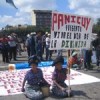
RIGHTS-GUATEMALA: A Minute of Silence for the Victims
"I’m a widow. The army took away my husband," said Celestina Otzoy, an indigenous woman who had five children when her husband was "disappeared" in 1982 in the central Guatemalan region of San Juan de Comalapa during the country’s 1960-1996 armed conflict.CUBA: Raul Castro’s Surprising No. 2
Closely following in the footsteps of his brother Fidel, Cuba’s new president, Raúl Castro, defied expectations and took many by surprise by selecting José Ramón Machado, a member of the Communist Party old guard, as first vice president.RIGHTS-US: Renditions Clothed in State Secrets Mantle
As the U.S. Central Intelligence Agency acknowledged it had erroneously denied using British territory to transport victims of "extraordinary rendition", a federal court bowed to pressure from the George W. Bush administration to dismiss a case against a Boeing subsidiary being sued for providing the aircraft that carried the suspected terrorists.POLITICS-US: Neo-cons Fine-Tune Iran Angle
A new report published by the American Enterprise Institute (AEI) think-tank purports to show the reach and scope of Iranian influence across the Middle East, but stops short of drawing conclusions about Tehran's intentions or grand strategy.POLITICS: U.N. Plans to Resume Capital Punishment Debate
The contentious debate on the death penalty - which split the 192-member U.N. General Assembly last December - is refusing to die.
Q&A: "Before We Single Out the Media… What About Politicians?"
The messenger may not have been killed, exactly, but (s)he has had a rough time of it over the past few days in Kenya.U.S./IRAQ: Strategic Alliances Remain Elusive
The George W. Bush administration has ballyhooed recent legislation passed by the Iraqi parliament as a sign that its troop escalation strategy has indeed created space for political reconciliation.
LATIN AMERICA: Justice Disserved for Indigenous Prisoners
While Mapuche Indians in Chile complain that the government has "criminalised" their land-rights protests, many indigenous people are in prison in Mexico and Peru because there were no translators to explain why they were on trial.IRAN/UAE: US Efforts to Scuttle Economic Ties Fail
Iran and the United Arab Emirates have begun top level talks to boost economic relations despite efforts by the United States to disrupt trade ties and an unresolved territorial dispute over the three strategic islands of Abu Mousa, the Lesser and the Greater Tunb in the Strait of Hormuz.TRADE-AFRICA: ''EPAs Are Not About Partnership''
The economic partnership agreements (EPAs) currently being negotiated between Europe and its former colonies in the African, Caribbean and Pacific (ACP) regions are not about equal partnerships but about enabling ‘‘big giant Europe to gain better access to African markets’’.TRADE-AFRICA: International Call for Action Against EPAs
African and international civil society organisations have adopted a call for action, urging the rest of the world to redouble its efforts to stop the European Union's drive to institute economic partnership agreements (EPAs).POLITICS-PAKISTAN: 'Inter Services Intelligence Interferes in Polls'
A former top official of Pakistan's shadowy but powerful Inter Services Intelligence (ISI) has called for the political cell of the agency to be shut down and 'confessed' to having manipulated the 2002 general elections at the behest of Pakistan President Pervez Musharraf.RIGHTS-AUSTRALIA: Apology To Stolen Generations – A Good Start
Prime Minister Kevin Rudd’s recent apology to indigenous Australians, for the wrongs and injustices inflicted upon them by the policies of past governments, was momentous. But other indigenous issues are yet to be resolved.
POLITICS-KENYA: What a Prime Minister Might – and Might Not – Do
A fifth week of talks to end Kenya's violent election dispute is scheduled to begin Monday, with the extent of power to be exercised by a new prime minister one of the key items on the agenda.
CUBA: Raul Shares His Seat with Fidel
Raúl Castro, one of the leaders of the Cuban revolution and a lifelong communist, is Cuba’s new president as of Sunday. But he said he would listen to the views of Fidel, who he described as "not substitutable," as long as his older brother is around.CULTURE-CHINA: Angst Over State-Managed Festivals
As celebrations for the Chinese new year die down, many are casting a wary eye on government-mandated efforts to revive traditional culture through large orchestrated temple fairs and censored displays of folk religion.POLITICS-BURMA: UN Envoy’s Next Visit May Turn Farcical
The next visit of a special U.N. envoy to military-ruled Burma is in danger of turning into a farce.« Previous Page — Next Page »


The Week with IPS

NEXT STOP - SDGs
Tracking global progress towards a sustainable world
