Languages
Wednesday, November 11, 2026



News and Views from the Global South
Poverty & MDGs
HIV Vaccine Advances Made Ahead of Global Conference
In 1984, then-U.S. Secretary of Health and Human Services Margaret Heckler famously declared, "We hope to have such a vaccine ready for testing in approximately two years." The vaccine in question would prevent AIDS and the goal Heckler set has been missed by over 26 years.
Afro-Brazilian Communities in the Shadow of Space Facility
A space launch centre built in their territory has altered the way of life that members of "quilombos" - village communities originally founded by runaway slaves - have maintained for a century and a half in this municipality in the Brazilian state of Maranhao.ZAMBIA: Parents’ Fears Slowing Uptake of Paediatric AIDS Treatment
Diana Banda* is quickly running out of excuses to give her six-year-old son about why he has to take a schedule of drugs every day.Latin America Keeps Poverty Goals in Sight Despite Harsh Times
Nine million more people have fallen into poverty in Latin American and Caribbean countries since the global financial crisis struck, threatening the achievement of all the Millennium Development Goals (MDGs) by the 2015 deadline, according to a report released Thursday by 18 U.N. agencies.
Gender Meet Ends on High Note with New “U.N. Women”
Nearly 50 government delegations spent the past week at U.N. headquarters in New York hashing over the progress that has been made and challenges that remain in pursuing gender parity worldwide, one of the crucial elements of the Millennium Development Goals.
KENYA: Tradition an Obstacle to Maternal Health
Their kangas and heavy bead necklaces are the only colour in an arid landscape. The weary women waiting outside the Kangatotha dispensary have walked up to 50 kilometres to receive food aid; now they will walk home carrying their share.U.N. Clears Final Hurdle to Create New Gender Entity
After several rounds of intense eleventh-hour negotiations last week over the structure and composition of a proposed new "gender entity" and its executive board, the United Nations has cleared the last of the remaining political hurdles towards the creation of a separate and distinct U.N. agency for women.IOC Joins U.N. to Level the Playing Field for Women
The sight of girls and boys playing cricket and skateboarding together in the streets of Afghanistan and Iraq may be unexpected to some, but it is a homegrown effort aimed at fostering gender equality.
ECUADOR: Like Mother, Like Multi-Tasking Daughter
In Ecuador, girl workers conform to universal statistics: they drop out of school less than boy workers, because they learn from an early age to juggle earning an income with looking after younger siblings and getting an education.Jobs Pact Spotlights Women’s Role in Economic Recovery
One year after the creation of the Global Jobs Pact, members of the International Labour Organisation (ILO) are considering the measure's impact - and what comes next.MALDIVES: Education Reforms Herald Digital Learning, Radical Changes
When students walk into the Majeediya Boys School in this capital of the Maldives every morning, they are invariably drawn to the digital notice board in the courtyard that carries important announcements.
PARAGUAY: Clean Water Out of Reach for Native Peoples
Of the many things that are not within the reach of everyone in Paraguay, safe drinking water is the one the indigenous population longs for most.MEXICO: Laws Criminalising HIV Transmission Are Discriminatory
In 30 of Mexico's 32 states there are laws penalising transmission of HIV, the AIDS virus, which are regarded by experts as discriminatory and ineffective in curbing the epidemic.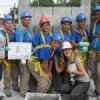
Brick by Brick, Women Builders Make Their Way in Brazil
It looks like any other construction site: wheelbarrows full of bricks, boards and steel bars trundling back and forth to a soundtrack of hammering, sawing and drilling. But there is a difference: some of the construction workers underneath the hard hats are women.Wrangling Continues over New U.N. Women’s Entity
Ahead of a week-long meeting on gender equality starting Monday at the United Nations, women's rights activists have been pushing for concrete progress on a pledge made last September by the world body to create a new, better-funded U.N. agency for women.Activists Slam G8’s Aid Shell Game
The G8 bloc of wealthy nations promised five billion dollars Saturday for health and nutrition programmes that benefit women and children in developing countries.
Time to Give Wall Street the Axe, Say Progressive Groups
As heads of state from the Group of 20 (G20) most developed and economically powerful emerging nations meet in Toronto, Canada this weekend, some activists at the U.S. Social Forum in Detroit are urging a more realistic look at the roots of the global economic crisis - and an end to the free-wheeling capitalist model embodied by Wall Street.
LAOS: Water Headaches Follow Growth of Cities
At 63, Kingkham Duoangsavanh has it made. Now retired after decades of working as a nurse, she lives happily with her grown-up children in a well- appointed home with all the amenities. But up until recently, a constant shortage of water has marred her comfortable existence.Not Everyone in Peru Is Winning “Championship” Against Poverty
The Peruvian government is taking advantage of the broadcasts of the World Cup football games in South Africa to air an ad touting a reduction in the poverty rate from 48 to 34 percent between 2005 and 2009 as an achievement of the administration of President Alan García.LATIN AMERICA: Majority Favours Legalising Abortion – But Not for All Cases
The majority of people surveyed in Brazil, Chile, Mexico and Nicaragua are in favour of legalising therapeutic abortion, but not all forms of elective abortion, according to a study by the Latin American Faculty of Social Sciences (FLACSO).
KENYA: Rural Parents Prevent HIV Transmission to their Children
When Samuel Mwangi’s one-year-old HIV-positive son died five years ago, he thought the death of his child also meant the death of his family’s legacy. "I wept. And to the bottom of my heart, I knew that that was the end of my generation," said HIV-positive Mwangi.« Previous Page — Next Page »





