Languages
Saturday, November 14, 2026



News and Views from the Global South
Poverty & MDGs
DEVELOPMENT: U.N. Prods Drug Firms to Cut Prices for Poorest
The world's poorest nations continue to suffer from high prices for life-saving drugs and a shortage of generics - specifically to treat HIV/AIDS - despite assurances by the some of the major pharmaceutical companies to help lower costs.ECONOMY: India, Brazil and South Africa Should Gang Up With China
The India-Brazil-South Africa (IBSA) formation could have enough clout to stand up to the European Union and the U.S. but it needs the help of emerging superpower China. Alternatively it should align with the BRIC (Brazil-Russia-India-China) group.POLITICS-SENEGAL: Ms. Mayor, Ms. Prefect
The Sicap Baobab neighborhood, one of the prettiest in the Senegalese capital, stands out, but not for the most obvious reasons. Not for its well-paved roads, or the number of naturalised immigrants from Cabo Verde, Togo or Benin, not for the hustle and bustle of the formal and informal economies.
TRADE-EAST AFRICA: Going Bananas to Fight Poverty and Hunger
Arguably one of the world’s most popular fruits, bananas are poorly marketed as a value-added commercial crop in Africa. But that is about to change as a plan is being conceptualised to transform the way Africa produces and sells bananas.ENVIRONMENT: Crises Likely to Spur Mass Migrations
As climate change, sea-level rise, earthquakes and floods threaten countries such as Bangladesh, Tuvalu, Vietnam and Tajikistan, the Tokyo-based U.N. University (UNU) warns that by 2050, some 200 million people will be displaced by environmental problems.MADAGASCAR: A Difficult Step For Women
The northern region of Diana is known for the beautiful beaches of the Nosy-Be district and the scent of fields of ylang-ylang flowers. But the political landscape of Diana is as extraordinary as its geography: the region's administrative head is a woman, Anjara Mantasara.POLITICS: Unchecked Arms Trade Fuelling Conflict, Poverty
With 1.3 trillion dollars spent every year on the world's militaries, countries enmeshed in conflict are often flooded by weapons which are then turned against helpless civilian populations, say human rights organisations pushing for an international treaty to closely regulate arms sales.MEXICO: Legalisation Fight Gains Ground as Illegal Abortions Increase
Legal access to abortion, available since April 2007 in the Mexican capital, should be extended to the rest of the country, where the rate of illegal abortions exceeds the average for developing countries and the total number reached 880,000 in 2006, up 64 percent from 1990.COLOMBIA: Sugar Workers Strike for Basic Rights
"We sugar cane cutters are neither delinquents nor terrorists; we are honest workers demanding respect for our rights," say Colombia’s cane harvesters, who have been on strike since Sept. 15, demanding basic rights.LATAM-CARIBBEAN: Everyone Is Invited to the Summit
For the first time ever, the heads of state and government of Latin America and the Caribbean will gather for a summit meeting Dec. 16 and 17 in Salvador, the capital of the northeastern Brazilian state of Bahia, in a new attempt to further regional integration, at present fragmented in several subregional blocs.
DEVELOPMENT: Is a Food Bank Answer to the Crisis?
Bangladesh, one of the world's 49 least developed countries (LDCs) described as the poorest of the poor, is calling for the creation of a global food bank.
BIODIVERSITY: Mammals Face Extinction Crisis
One in four mammals on Earth is at risk of disappearing forever, according to the new "Red List of Threatened Species" released by the Geneva-based International Union for Conservation of Nature (IUCN) on Monday.EL SALVADOR: Increase in Poverty Driven by Soaring Food Prices
In the village of Talchiga in northeastern El Salvador, 20 families live in wooden shacks with earth floors, have no piped water, electricity or sewer services, and suffer from high levels of malnutrition.
PERU: Native Groups Hemmed in by Coca Threat
Small farmers from Peru’s impoverished Andean highlands provinces of Ayacucho are moving into indigenous land in the country’s central jungle region to grow coca.
POLITICS-GUINEA: "Sheep Who Vote?" Women Say No
Long absent from the top posts in the civil service and under-represented in political parties, Guinean women are calling for changes during legislative elections planned for December.
OBAMA: "Subsidising Big Oil Makes No Sense"
Democratic presidential nominee Sen. Barack Obama sat down with IPS correspondent Bankole Thompson again on Thursday for a one-on-one interview in Grand Rapids, Michigan, where over 15,000 enthusiastic Obama supporters turned out to hear his message of change at downtown's Calder Plaza.
AGRICULTURE-SOUTH AFRICA: GM Sorghum Test Approved
As Africa grapples with the question of food insecurity, biotechnology buffs seem to have an answer: genetically modified crops that could feed a continent vulnerable to famine and food deficits. But environmentalists warn of new dangers.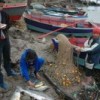
ARGENTINA: Guardians of the River
"There is no water...there are no fish," says Olga Ledesma, her skin weathered from 40 years of small-scale fishing, as the boat slowly winds its way along a branch of the Paraná river, South America’s second-longest river.
ECONOMY: Kenyan Companies Cautiously Venture Into Regional Market
Dr. Manu Chandaria (79) has been lionised as East Africa’s most respected chief executive officer of a company.HEALTH: Dengue Threatens Asia Pacific Region
Over the past three decades, dengue fever has affected more and more countries in the Asia-Pacific region and is now regarded as the fastest of emerging mosquito-borne diseases.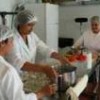
ARGENTINA: Women Create Food and Jobs in Wetlands
Wearing a cap and a white apron, Melina Lucero cuts the heads and tails off fish caught in the Paraná River, before skilfully filleting them. Her co-workers will process and package the fish to sell as traditional, small-scale fish preserves at food fairs along the banks of the river in Argentina.« Previous Page — Next Page »


