Languages
Saturday, November 14, 2026



News and Views from the Global South
Poverty & MDGs
MAURITIUS: Workers Urged to Work Nightshift in ‘24-Seven Economy’
In this era of technological progress people should be working less, not more, says Ashok Subron.CLIMATE CHANGE: Wetlands Loss Fuelling CO2 Feedback Loop
Wetlands are dangerous, scientists say, in the sense that they are ticking carbon bombs best left alone. To help stave off extreme climate change, existing wetlands should be enhanced and new wetlands created so they could capture more carbon.TRADE-AFRICA: Senegal and South Africa Moving Closer?
Senegal’s opposition to United Nations sanctions against Zimbabwe aligns Pres. Abdoulaye Wade’s government with that of South Africa. This should boost the two countries’ bilateral relations, which have seemingly been improving in the wake of a recent bilateral trade treaty.NORWAY: Make Africa’s Tragedies Comic
How do you wake up comfortable Norwegians to the distressing realities of child deaths and maternal health in developing countries? Through the comic books they so love.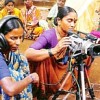
INDIA: Media Lessons From Rural Women
"We don’t know how to read or write, but we make our own films,’’ is how Narsamma, 42, a farmer from Pastapur village in Hyderabad, introduces herself and her colleagues.TRADE: WTO Prescribes More Liberalisation
The shortcomings of globalisation must be amended by more globalisation, according to the World Trade Report 2008, released by the World Trade Organisation (WTO).
Q&A: "Reproductive Rights Can Overcome the Conservative Wave"
This year marks four decades of international recognition of people's right to decide how many children they want to have and when, and for that reason there is a great deal to celebrate, says Brazilian expert Carmen Barroso, of the International Planned Parenthood Federation.ZIMBABWE: ‘‘Companies Cutting Ties Will Hit Average Person Most’’
As state violence in Zimbabwe worsens, economists in the capital Harare have warned that cutting international economic ties with the country will hit the average person the hardest.HEALTH: Activists Hail US Senate Approval of Major AIDS Bill
AIDS and global health activists are hailing Wednesday's approval by the U.S. Senate of an unprecedented five-year, 48-billion-dollar bill to fight AIDS, malaria, and tuberculosis overseas, particularly in Africa.DEVELOPMENT: U.S. Sliding By Nearly Every Measure
The United States is "woefully behind" other developed countries when it comes to providing opportunities and choices - the very essence of the so-called "American Dream" - according to a new analysis ranking the quality of life in the country.
DEVELOPMENT: Progress on Water, Less on Sanitation
The number of people globally who lack access to an improved drinking water source has fallen below one billion for the first time since data was compiled in 1990, according to a report released Thursday by the World Health Organisation and UNICEF.DEVELOPMENT-MADAGASCAR: Not Enough Money for Basic Water
Safe drinking water is a scarce resource in Madagascar. Considerable financial investment is needed to improve sanitation and water treatment and distribution for the population of this large island.
POPULATION-INDIA: Emergency Contraception Pill The Answer?
With unintended pregnancies and unsafe abortions continuing to be a serious problem in India, some doctors have begun advocating use of the emergency contraceptive (EC) pill as a possible solution, though conditions in India are regarded far from conducive.
DEVELOPMENT-MAURITIUS: Water – Waste Not, Want Not
The 1.2 million-strong population of Mauritius presently enjoys plentiful piped potable water from the 2000 mm average annual rainfall that falls over the island annually. But large amounts of water are wasted, and with growing demand from new development, the island's water security may come under pressure in the near future.
ECONOMY-ZIMBABWE: ‘‘Basic Commodities Have Become Luxuries’’
Business has never been this bad, said Nomathemba Nkomo.
Q&A: Denying Antiretrovirals To Migrants Hurts Us All
South Africa has become a destination for people from across the continent and beyond. But in spite of migrants having a legal right to free antiretroviral treatment (ART) for HIV, they are being turned away from government clinics.TRADE: EU Still Targeting Poorest States for Inclusion in EPAs
The European Commission is still targeting those least developed countries that have resisted economic partnership agreements (EPAs) by opting for the Everything But Arms trade preference scheme.AFRICA: Russia Behind China and Brazil in Building Relations
The Soviet-era connections between Russia and some African states have collapsed into low levels of economic engagement between the former partners, with the arms trade remaining the exception.CLIMATE CHANGE: Small Islands’ Warning Went Unheeded
When the president of the Maldives, Maumoon Abdul Gayoom, addressed the U.N. General Assembly about 20 years ago, he warned of the possible death of his tiny Indian Ocean island if steps were not taken to curb climate change.
Q&A: "A Silent Housing Crisis Is Unfolding"
With a billion people living in slums, and thousands more joining them every day, the world faces yet another looming challenge - the rise of an impoverished urban underclass, says Anna Tibaijuka of the United Nations Human Settlements Programme (U.N. Habitat).POPULATION: UN Predicts 12 Billion if Family Planning Falters
The United Nations commemorated World Population Day Friday in the shadow of a staggering array of grim statistics: an estimated 200 million women worldwide want to delay or avoid pregnancy but are not using safe and effective family planning.« Previous Page — Next Page »


