Languages
Saturday, November 14, 2026



News and Views from the Global South
Poverty & MDGs
POPULATION-PAKISTAN: Illegality Inducing Unsafe Abortions
For thousands of Pakistani women, the World Population Day message of ‘Family planning is a right, let’s make it real’’ must sound hollow when they must resort to unsafe, illegal abortions while a debate on whether termination of pregnancy is Islamic or not rages on.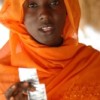
Q&A: Family Planning In Its Infancy in South Sudan
With few roads and almost no health and education infrastructure for the estimated 10 million people of South Sudan - an April census has yet to release any results - health care workers have an enormous task ahead of them.POPULATION-INDIA: One-Child Ideal Catching On
Ponni, 27, lay quiet on a missionary hospital bed in this small town, groggy from the anaesthetic administered to her for a caesarean delivery a couple of hours earlier.
HEALTH-SOUTH SUDAN: Welcome New Attention to Maternal Care
A vast pregnancy has swollen the tiny woman walking South Sudan's shining new maternity ward clutching two pieces of paper stapled together. She looks no more than 16, wide-eyed with recent pain.POPULATION-MIDEAST: Israel Fears the Womb More Than the Bomb
Israeli Prime Minister Ehud Olmert has laid it out in the starkest possible terms for his fellow Israelis. If they do not relinquish control of the occupied territories, he has warned them, Israel will ultimately cease to exist as a Jewish and democratic state.
POPULATION-MIDEAST: Time Bomb Ticking Away in Gaza
Crowded into a tiny strip of territory of 360 square kilometres, plagued by poverty, malnutrition and unemployment, Gaza's 1.5 million people face a demographic time bomb as the fragile infrastructure struggles to cope with a soaring birth rate.DEVELOPMENT: ‘Planet Burns While G8 Fiddles’
While the world's major industrialised nations expressed satisfaction over their three-day summit meetings that concluded Wednesday, non-governmental organisations, after some early and limited approval, were deeply disappointed with the outcome on the whole.DEVELOPMENT: Decades of Bad Policies Brewed a "Perfect Storm"
When the Cold War ended following the collapse of the Berlin Wall in 1989 and the subsequent dismantling of the Soviet Union, there was widespread political euphoria about de-militarisation, global peace, a decline in military spending and economic prosperity.G8: Leaders Produce More Than NGOs Expected
Three key documents – on African development, food security, and corruption - emerging Tuesday from the summit of major industrial nations' leaders seem to have taken non-governmental organisations (NGOs) by surprise in delivering more than expected, even if they did not please all.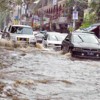
SOUTH ASIA: Eight Nations Unite to Combat Climate Change
As rising seas, melting glaciers, floods and cyclones are increasingly putting millions of people at risk in South Asia, the South Asian Association for Regional Cooperation (SAARC) met here last week to find ways to mitigate the impacts of changing climate.DEVELOPMENT: Vision Exists, Reality Doesn’t
The implementation of internationally agreed development goals (IADGs) - including the eradication of extreme poverty and hunger by 2015 - is being increasingly hampered by lack of coordination and coherence both among rich and poor nations, and also within the United Nations.TRADE: French Report Condemns EPAs as Anti-Development
The approach taken by the European Union (EU) in trade talks with Africa has been strongly criticised in an official report commissioned by France, the new holder of the EU’s rotating presidency.POLITICS-AFRICA: Mixed Reviews From Civil Society
Civil society organisations (CSOs) have mixed feelings about the outcomes of the latest African Union Summit, which concluded in the Egyptian resort of Sharm El Sheikh earlier this week. The summit meeting of African heads of state and officials was largely dominated by debate – or lack thereof – over the crisis in Zimbabwe and the participation of the controversial president, Robert Mugabe.
G8: 'Investment In Health Is Effective Aid'
Japan wants next week's summit of seven major western industrial nations and Russia (G8) to urge the international community to push towards combating HIV/AIDS. It sees this as a critical objective of the Millennium Development Goals (MDGs) that are meant to be achieved by 2015.
MIDEAST: Sewage in Water Threatens Gazans
Gaza is being forced to pump 77 tonnes of untreated or partially treated sewage out to sea daily due to the Israeli blockade of the coastal territory. The fear is that some of this is creeping back into drinking water.
HEALTH-SOUTH AFRICA: Refugees Denied Access to Health Care
Refugees and migrants do not have adequate access to health care services in South Africa, aid organisations and NGOs say. This is particularly detrimental for those who are HIV-positive and in need of continuous antiretroviral (ARV) medication: interrupted treatment can mean illness, development of drug-resistance and ultimately death.CHINA: ‘Within a Generation Beijing Will Cease to Exist’
Few in the Chinese capital are aware of the price their city would pay for staging the world’s first ‘green Olympics’ in August. The fabulous capital of Chinese emperors and the epitome of modern China’s ambitions is being driven to extinction by its chronic lack of water. And the Olympic games are expediting the city’s slow demise, according to experts.
SOMALIA: Fighting for an Education
"I like to study, even though there is fighting everywhere in Mogadishu," says Bashir Gedi, a 15-year-old student in the Somalian capital. "Education is more important for me because if I can get an education, then I can help rebuild my country."ZIMBABWE: Tobacco Sector Up in Smoke as State Violence Escalates
The perennial political and economic crisis in Zimbabwe has wreaked havoc with the country’s once thriving tobacco industry.HEALTH-SOUTH AFRICA: Bleak Future For the Country's Water
Earlier this month, a private pilot reported to a Johannesburg radio station that while flying over the Kruger National Park, in the far eastern reaches of the country, he had spotted the carcasses of several large crocodiles floating in the Olifants River. This was unusual because the crocodiles within the country's largest game reserve are protected from hunting.
AFRICA: Artists Reflect on World Through Toys With A Difference
It’s not child’s play to showcase ‘‘toys’’ made by artists reflecting on a changing world in African countries. Miniature construction vehicles from Malawi, next to a diminutive Nelson Mandela presiding over South Africa’s first democratic parliament, jostle for space with the Belgian comic hero Tintin on safari in the Congo – all captured in carefully crafted wood.« Previous Page — Next Page »


