Languages
Sunday, November 15, 2026



News and Views from the Global South
Poverty & MDGs
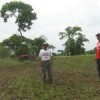
VENEZUELA: Co-operatives Turn Idle Landed Estates Green
"As far as you can see, there was not one litre of milk produced, not even an ear of corn," says José Tapia Coirán, turning with his arms outstretched, pointing to the horizon of the Venezuelan savannah dotted by trees. "Now we produce 500 litres of milk per day and we harvested one million kilos of maize."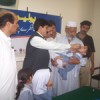
HEALTH-PAKISTAN: Anti-Polio Campaign Resumes With Taliban Support
Health workers fanned out into hundreds of villages in a troubled north-western district of Pakistan to immunise children against polio following a peace agreement with a pro-Taliban faction that had campaigned against the vaccine.PARAGUAY: University Students on the March Again
After nearly two decades of apathy, the university student movement in Paraguay has made a comeback, demanding a law to grant them rebates on public transport fares and opposing a draft law on higher education reform.HEALTH: Cultural Double Standards Undercut HIV/AIDS Fight
The United Nations says religion and culture continue to have a significant impact - both good and bad - on the spread and prevention of HIV/AIDS worldwide.NEPAL: Education Far More than ABCs – Experts
Far more than just the learning of ABCs and 123s, education should be playing a transformative role in children’s lives if it is to ensure them a better and more ‘equal’ and gender-responsive future.NEPAL: Gender Inequality in Education Has Deep Roots
A shortage of female teachers, lack of proper training, inadequate delivery of services and indifferent attitudes combine to add to gender inequality in education in this small Himalayan nation.RIGHTS-SOUTHERN AFRICA: Xenophobia Impacts on Mozambique
A month ago, 47-year-old Catarina Manungo was the owner of a two-bedroom house in Boksburg, where she lived with her four children and a grand-daughter. A few short weeks later, Manungo and her two youngest children find themselves living in a tent in the Maputo neighbourhood of Matola Garre.FINANCE: Inflation to Overshadow Aid at G8 Talks
Inflation is to dominate two-day talks of wealthy nations' finance ministers despite warnings that millions of people face death because of a shortfall in development aid.
BOLIVIA: Domestics to Gain Healthcare Coverage
Domestic workers in Bolivia, most of whom are young indigenous women from the highlands region, are about to gain access to healthcare coverage.
US/MEXICO: Neighbours Try to Reclaim Polluted Valley
A sinuous coil of murky water winds through the Tijuana River Valley. On each side of the U.S.-Mexican border, residents eye each other warily, caught in the cross-currents of political intrigue and economic polices that make the floodplain seem almost orderly by comparison.LABOUR-SRI LANKA: Working Children Get Second Chance
Sujit is 22-years-old and studying hard to graduate in 2010 as a professional electrician. The handsome young man, speaking at a workshop on eliminating child labour, talked proudly of how his life changed dramatically when he was given the opportunity to enter an electrical course and re-start his life again.DEVELOPMENT-AFRICA: High Food Prices Here For Another Five Years
Hundred million people worldwide - mostly from developing countries - may sink deeper into poverty when food prices continue to rise, the World Bank predicts.ECONOMY-AFRICA: HIV/AIDS Reduces Children’s Education Chances
Children who live in communities with an HIV prevalence rate of 10 percent or more have half a year of schooling less than children in other communities.EDUCATION-ASIA: Girls Should Go to School, Stay There
It is not enough that girls go to school - they must also remain in school and complete their education, a goal that educators, policymakers and communities all need to brush up on.SOUTH PACIFIC: Food Crisis, An Opportunity For Change?
Pacific Island governments should not view the global food crisis as a threat but as an opportunity to boost their neglected agricultural sectors, says a professor in development economics.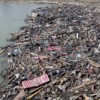
BURMA: One Million Survivors Not Yet Reached – U.N.
U.N. officials are giving the impression that the world body is making headway in helping the millions of survivors in Burma’s cyclone-hit Irrawaddy Delta.
Q&A: “Criminalisation of HIV/AIDS Will Not Help Us”
As the United Nations winds down a major two-day conference to take stock of the global response to the HIV/AIDS pandemic, the problem of persistent discrimination against people living with the virus has been high on the agenda.ECONOMY-AFRICA: Informal Sector Also Needs Skills Training
Bringing basic skills training programmes to workers in the informal sector can help to bring down poverty and unemployment levels, while improving economic growth.ECONOMY: Global Woes Hit Developing Countries
The global credit crunch unleashed in the United States is combining with runaway food and fuel prices to put the squeeze on developing countries, according to the World Bank.AFRICA: Women Say Regional AIDS Plan Falls Short
Despite the admirable progress made by some African countries in preventing and treating HIV/AIDS since 2000, 14 million Africans have died of AIDS in that time span, and an additional 17 million have been infected, says a new report on HIV/AIDS on the continent.RIGHTS-COLOMBIA: Defending Women’s Defenders
After nearly six years of the "democratic security" policy of the government of rightwing President Álvaro Uribe, women activists in Colombia are as vulnerable to human rights abuses as ever, said female rights defenders who met recently in the Colombian capital.« Previous Page — Next Page »


