Languages
Monday, November 16, 2026



News and Views from the Global South
Poverty & MDGs

MIDEAST: Flowers, Strawberries, and Missiles
Just 300 yards from the hidden eyes in the Israeli tank, Ahmed Felfel picks his strawberries. But it isn't the Israelis in the tank who worry him as much as those others who will not let him sell them.KENYA: Free Secondary Schooling Policy Faces Testing Times
When Kenya's government introduced free primary schooling in 2003, vast numbers of additional pupils were brought into the education system overnight, putting it on a steep learning curve.HEALTH-ASIA: Report Faults Gov’t Complacency on AIDS
Some 10 million Asian women sell sex, and at least 75 million men buy it regularly, while male-to-male sex and drug injecting add another 20 million or so to the number of those at high risk of HIV infection, says the first report by the Commission on AIDS in Asia.EGYPT: Can't Wait a Generation to Eat
A World Bank official said this month it could take as long as "a generation" for the effects of Egypt's recent economic growth to be felt by the poorest segments of the population. But as "neo-liberal" economists urge patience, retail prices for essential foodstuffs continue to skyrocket, stretching many household salaries to breaking point.CUBA: Women Talk to Women about HIV/AIDS Prevention
Prevention of sexually transmitted infections (STIs), including HIV, the AIDS virus, has become the centre of the lives of a small group of women in the province of Pinar del Río, in the west of Cuba.BURKINA FASO: Ensuring That the Origin of Life Isn’t Also the End of It
"Water is the origin of life...I come from Central Africa where we have a lot of water, but it was when I came here that I really understood the meaning of this expression," says Antoinette Dinga Dzongo, the African Development Bank's representative in Burkina Faso, in reference to the need for improved water provision in this West African country.HEALTH-PARAGUAY: Vaccination, Anyone?
Now that the panic that broke out after the reappearance of yellow fever in Paraguay for the first time in 34 years has died down, health authorities are facing the challenge of expanding vaccination against the disease.Q&A: EU and U.S. Offering Special WTO Deal to Lure South Africa
The Congress of South African Trade Unions (COSATU) has been an active civil society player in South Africa’s decisions during the current World Trade Organisation Doha Round of talks on non-agricultural market access (NAMA).Q&A: ''Rich Countries Should Bear Burden of Doha Round Adjustments''
The World Trade Organisation’s negotiations on the lowering of industrial tariffs - known as non-agricultural market access (NAMA) - have now reached a critical stage. Faizel Ismail, South Africa’s Geneva-based lead negotiator who also coordinates the NAMA 11 coalition of emerging developing economies, talks to IPS's Aileen Kwa about his concerns.TRADE-AFRICA: France to Push For Extension of EU Farm Subsidies
France is expected to push for the further entrenchment of trade-distorting agricultural subsidies when it ascends to the presidency of the European Union (EU) on July 1 this year.DEVELOPMENT: NGOs Confront EU Over Regional Deals
On his arrival at a Joint Parliamentary Assembly of EU and ACP countries in Slovenian capital Ljubljana this week, EU Development Commissioner Louis Michel was confronted with an array of parliamentarians and civil society activists carrying the message, 'Brussels-made EPAs will not fit ACPs'.DEVELOPMENT- ANGOLA: Research Initiative Nets Interesting Discoveries
More than 50 species of fish have been recorded in the initial phase of a two-year joint research project on the Kwanza River in Angola.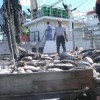
TRADE: ''You Have to Be Rich To Live in This World''
‘‘The globalisation train is moving. It is up to us as developing countries to run fast enough to catch it. Whether we like or not, globalisation is unavoidable. We should accept and adapt to it to be able to benefit from its advantages.’’
DEVELOPMENT-INDIA: Cotton Farmers in Distress – Relief Given Elsewhere
On Mar. 4, barely four days after Indian Finance Minister P. Chidambaram announced a mammoth loan waiver for farmers, 55-year-old Dattu Chaudhary, who owned 3 hectares (ha) of land committed suicide in Nara village in Maharashtra state.
DEVELOPMENT-INDIA: Subsidies Cornered by Politically Powerful
An intensifying agrarian crisis claimed the life of at least one cotton farmer every day last year in Maharashtra, western India. But government subsidies were monopolised by the state’s powerful sugar lobby.
DEVELOPMENT-INDIA: Two Villages, Two Very Different Stories
It is hard to find smiling farmers in Dorli, rural Vidarbha, a cotton growing belt in western India’s Maharashtra state.NICARAGUA: Fighting Over Society’s Scraps
Thousands of people who eke out a living by selling recyclable trash scavenged from the municipal dump in the Nicaraguan capital are staging a protest over control of the city’s waste, blocking access to the dump by the garbage trucks.RIGHTS-ANGOLA: Free Rein for Human Traffickers
There is little awareness on the problem of trafficking in persons, mainly women and children, in Angola, and no laws for cracking down on the growing phenomenon.WORLD WATER DAY-SOUTH AFRICA: Celebrations in the Midst of Crisis?
South Africa is currently celebrating Water Week (Mar. 17-23) to coincide with World Water Day on Mar. 22. The week also coincides with a national crisis in confidence about the ability of government to provide citizens with safe drinking water.ASIA: Sanitation – Experts Call For All-Out Efforts
New technology, religion and the market must be harnessed to secure basic toilet facilities for Asia’s rural and urban poor, sanitation experts from the region said here Thursday.WEST AFRICA: Check Point ''Friendships'' Hobble Regional Trade
''Give It To God''. These are the words inscribed on the front of the huge truck that goods transporter David Agbalanyo drives between the Ghanaian capital Accra and its northern neighbour, Burkina Faso’s capital Ouagadougou.« Previous Page — Next Page »


