Languages
Thursday, October 1, 2026



News and Views from the Global South
Science and Technology

HEALTH: Science on the Trail of New Flu’s Secrets
Scientists around the world are trying to decipher the influenza H1N1 virus in order to develop a vaccine, while others are tracking its origins to fight its spread more effectively.
MEXICO: Nation’s Future Hinges on Near-Empty Science Classrooms
Many solutions for sustainable development in Mexico lie in the scientific and technological training of its younger generations, say academics. But students in this country, where everyone wants to be a doctor or accountant, are ignoring those fields.
CLIMATE CHANGE: Snow Cover Turning to Lakes in the Himalayas
As climate change takes hold, even the mighty Himalayas and Hindu Kush mountain ranges are now losing their snow and ice.DEVELOPMENT: Make Use of African Skills
The theme of the third biennial Knowledge Management Africa (KMA) conference, which opened Monday in the capital of Senegal, is lofty - "knowledge to reposition Africa in the world economy". But the aim is more down-to-earth: to find ways to apply vital information to the basic question of improving the lives of Africa's people.CLIMATE CHANGE: Two-Degree Rise Ever More Likely, Scientists Warn
Climate scientists are calling for a phase-out of fossil fuels because humans are now pumping so much carbon dioxide (CO2) into the atmosphere that the '2-degree-C climate balloon' will burst otherwise, new studies show.
TECHNOLOGY-BRAZIL: E-Waste Can Produce Marvels
Using pieces from all sorts of useless equipment, students at the Computer Recovery Centre in the southern Brazilian city of Porto Alegre have put 1,700 computers into operation in three years.HEALTH-ARGENTINA: Scientists Reveal Effects of Glyphosate
Glyphosate, the herbicide used on soybeans in Argentina, causes malformations in amphibian embryos, say scientists here who revealed the findings of a study that has not yet been published.
SCIENCE: Littering the Cosmos
Tonnes of space garbage is orbiting the Earth and posing serious threats to active satellites and manned space missions, and to astronauts when they conduct space walks outside of their ships.
AGRICULTURE: GM Maize Finds Its Way to Cuba’s Fields
With little fanfare, genetically modified maize produced by Cuba's genetic and biotechnology engineering centre, CIGB, is being grown on test plots as part of a new project involving five of the Caribbean island nation's provinces.ENVIRONMENT: Earth’s Arctic Freezer Turning Into Hothouse
The world is losing its northern freezer as Arctic winter ice is in sharp decline, NASA scientists reported this week. Even with below average winter temperatures, Arctic ice is thinner and covers less area than it did a decade ago.
DEVELOPMENT-AFRICA: A Msg of Hope to Farmers
Mobile phones are being used to diagnose and treat crop diseases that cause massive losses to farmers, presenting an opportunity to increase yields as location-specific information about disease threats is made available.HEALTH-CUBA: HIV-Positive Want Respect, Not Tolerance
Over 20 years after the diagnosis of the first cases of AIDS in Cuba, HIV-positive persons and those who work with them or are involved in the issue on the island are attempting to drop the use of terms like tolerance and acceptance, and speak instead of respect.
ZIMBABWE: Researchers Developing New Ways to Purify Water
Scientists at Bulawayo's National University of Science and Technology (NUST) have embarked on research to develop simple and affordable water purification methods, as more than a billion people live without safe drinking water in developing countries.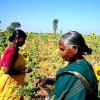
ENVIRONMENT-INDIA: Women Farmers Ready to Beat Climate Change
A collective of 5,000 women spread across 75 villages in this arid, interior part of southern India is now offering a chemical-free, non-irrigated, organic agriculture as one method of combating global warming.CLIMATE CHANGE: In Search of a Green Economic Stimulus
The high-level scientific climate conference that concluded last week in Copenhagen warned that humanity is rapidly approaching an irreversible, 1,000-year-long climate catastrophe.
CLIMATE CHANGE: Polar Satellite Still in Planning Stage
When the European Space Agency (ESA) designed the original CryoSat ice-monitoring satellite, not all scientists accepted global warming as an urgent threat.POLITICS: Near Miss Renews U.N. Interest in Asteroid Defence
As the United Nations grapples with global problems related to collapsing economies, rising poverty and the devastating impact of climate change, there is apparently a new threat looming over Earth: plummeting asteroids.
CLIMATE CHANGE: Acid Oceans Altering Marine Life
Some of the first species impacted by increasingly acidic oceans have been identified just as scientists meet in Copenhagen this week to present new data showing that climate change is far more urgent and serious than current economic problems.POLITICS-CUBA: Crawling with Speculation
While the staff of the cabinet ministries set to undergo major reforms are gearing themselves for what lies ahead, the people of Cuba, from academics to pensioners, are speculating about the extent of the recently announced changes and hoping they will bring improvements to their lives and to living standards in general.DEVELOPMENT: High-Protein Pea Ideal for Drought-Hit Farmers
Agricultural researchers are reporting a major breakthrough in the development of a new, high-yielding variety of pigeonpea, a protein-rich legume that can be grown in marginal lands and is highly resistant to drought.CLIMATE CHANGE: The Heat Is On Washington
A boiling point over government inaction on climate change may have been reached in the United States.« Previous Page — Next Page »


The Week with IPS

NEXT STOP - SDGs
Tracking global progress towards a sustainable world
Tracking global progress towards a sustainable world
