Languages
Saturday, October 3, 2026



News and Views from the Global South
Science and Technology
HEALTH: New Diagnostic Tool Could Slash Malaria Deaths
Malaria kills a child every 30 seconds, but a new diagnostic breakthrough may cut that devastating death toll, Canadian scientists announced Sunday.ENVIRONMENT-INDIA: Sanitation Concerns Shift Into Space
India may be grappling with problems of basic sanitation but, at another level, its top scientists are turning their attention to human pollution in space.
CLIMATE CHANGE: Science Proves Warming of Antarctica
The Antarctic holds the world’s largest amount of fresh water in its icy grip, and it is most certainly warming as a result of greenhouse gases, say new scientific studies.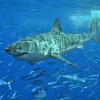
BIODIVERSITY: Ten-Year Probe Reveals Oceans in Peril
A thousand points of light are being shone into the dark ocean depths as scientists from 82 countries work to complete the decade-long global research effort called the Census of Marine Life.
LATIN AMERICA: Campus Party to Bridge Digital Gap
Seeking solutions for closing the digital and technological gap and sharing innovative experiences are the aims of the Ibero-America Campus Party, which is being held parallel to the 18th Ibero-American summit of heads of state and government this week in El Salvador.BIODIVERSITY: Unraveling the Mysteries of Salmon Migration
Tiny juvenile salmon have been electronically tracked for the first time from their natal rivers in the Rocky Mountains 2,500 kilometres north to Alaska.VENEZUELA: Simon Bolivar in Orbit
Venesat-1 Simón Bolívar was launched into space Wednesday in China, making Venezuela the fourth Latin American country with its own satellite, along with Argentina, Brazil and Mexico.
NETHERLANDS: When the Electricity Is in Your Feet
As everyone knows, the wind and the sun produce energy. But now there is also a way to generate electricity by dancing.
INDIA: Reaching for the Moon on a Shoestring Budget
With the successful launch of its maiden, unmanned mission to the moon, India has signalled growing confidence as an emerging Asian space power, ready to rub shoulders with Japan and China.HEALTH-SOUTH AFRICA: New HIV Vaccine Trials Raise Hopes
After two HIV vaccine trials were halted for safety reasons last year, a new trial is set to commence within the next few months in South Africa and the United States. Scientists will test a new vaccine formula produced in South Africa. It will be the first time a HIV vaccine manufactured in a developing country will be trialed in the developed world.
DEVELOPMENT: Turning South-South Rhetoric into Action
While leaders of developing countries have long talked about strengthening cooperation amongst themselves, some say little has been done to translate this into action. At a meeting of the third India-Brazil-South Africa (IBSA) Business Summit in New Delhi, however, discussions were all about turning intent into enterprise.
AGRICULTURE: A Better Banana For Africa
With the eyes of a predator and attention to detail of a master craftsman, Benjamin Maina combs the 100-acre Khosla plantation for fallen banana trees. The good health of this crop is everything to the many people whose lives depend on trading banana -– the best selling fruit in the world.DEVELOPMENT: Challenging the Bio-fuel-Hunger Paradigm
Participants at The Third India-Brazil-South Africa (IBSA) Business Forum 2008 came together here to debunk the belief that development of bio-fuels would invariably exacerbate global hunger. Conventional wisdom has it that increased production of bio-fuel - particularly ethanol - will invariably result in decreasing acreage for food grain production, rising food prices and a surge in hunger and malnutrition. Participants at the Forum - held in New Delhi during the lead-up to the third IBSA Summit - declared that this was not necessarily true.ENVIRONMENT-US: Florida Hopes Energy Farm Will Be First of Many
If an experiment to plant sweet sorghum in rural Florida and convert it to fuel ethanol pans out, it could herald a fundamental change in how the U.S. and other countries create and use renewable bio-energy, researchers say.AFRICA: Research and Tradition Could Save Environment
Africa risks losing up to 50 percent of its indigenous species over the next century due to global warming.KENYA: Predicting Weather With Science and Spider Webs
When the magungu bird flies higher in the sky than usual and seems to float in the air in its passage from south to north, the Abasuba people living on the islands of Kenya's Lake Victoria and on the highlands near the lake know the rains are on their way and that it is time to plant.
ENVIRONMENT: Iceland Finds New Ways to Trap Carbon
At the Hellisheidi geothermal power station, located about 30 km east of Reykjavik, Icelanders are developing novel ways of capturing carbon dioxide (CO2) and hydrogen sulphide (H2S) that are emitted from the plant.
HEALTH-AFRICA: Renewed Fight Against Old Killer
The key to a new multi-billion dollar strategy to eliminate malaria deaths worldwide by 2015 is to widen availability of existing diagnostic and preventative treatments.HEALTH: WHO Warns Against ‘Bird Flu Fatigue’
So where is the pandemic? This is a question most often asked of health experts years after they warned about a pandemic influenza that could infect up to 35 percent of the world's population.
BIODIVERSITY: Mammals Face Extinction Crisis
One in four mammals on Earth is at risk of disappearing forever, according to the new "Red List of Threatened Species" released by the Geneva-based International Union for Conservation of Nature (IUCN) on Monday.ENVIRONMENT-KENYA: Threat to Pastoralists' Way of Life
Ole Kaparo works as a school teacher in Nairobi, though his family still herds cattle in the Masai pastures of the north Rift Valley province. Five years ago, during a prolonged spell of drought, he left this traditional life to seek work in the city.« Previous Page — Next Page »


The Week with IPS

NEXT STOP - SDGs
Tracking global progress towards a sustainable world
Tracking global progress towards a sustainable world
