Languages
Saturday, October 10, 2026



News and Views from the Global South
Science and Technology
CZECH REPUBLIC: US-Russia At Impasse on Radar
The U.S. proposal to set up an anti-missile defence system in Eastern Europe has drawn the Czech Republic into a high-level diplomatic debate between Moscow and Washington for which they may not be fully prepared.ENVIRONMENT-PERU: A (Toxic) River Runs Through It
The Mantaro river basin, one of the main water sources in Peru’s central Andes mountains, is a dump for toxic substances, according to an independent scientific study. Lead levels, for instance, are 180 times higher than those accepted by the World Health Organisation (WHO).CLIMATE CHANGE: Kyoto on Track, Despite Some Slackers
Total greenhouse gas emissions of 40 industrialised countries rose to a near all-time high in 2005, but the Kyoto Protocol will still exceed its reduction targets, a United Nations agency said two weeks before political leaders meet in Bali, Indonesia to begin negotiations on a new and more aggressive treaty to battle climate change.CLIMATE CHANGE-ICELAND: Emissions Quota Debate Heats Up
"I am of the opinion that Iceland should not ask for a repeat of the Iceland Provision in the upcoming climate change negotiations," says Iceland's environment minister Thorunn Sveinbjarnardottir.HEALTH: Tropical Species Migrating North
New species of insects have begun to establish themselves all across Europe, raising concerns about the impact of global warming on biodiversity and public health.ENVIRONMENT: Emergency Brakes Needed to Stop Climate Crash
In the end, governments accepted evidence from the world's top scientists that climate change impacts could be abrupt and irreversible, and that they require urgent action.
VENEZUELA: Lightning in the Sky Fed by Underground Methane
A red, yellow and orange flash illuminates a slice of the sky and Lake Maracaibo in Venezuela. For a fraction of a second after, lightning of incandescent white move left to right and right to left between small clouds like dark silhouettes.
Q&A: ''We Need to Be Living in a De-Carbonised Economy in Four Decades''
With the ‘Synthesis Report’ of the Intergovernmental Panel on Climate Change (IPCC) to be released this weekend, scientist, environmental activist and 2007 ‘Australian of the Year’, Prof. Tim Flannery, warns that action must be taken to avoid the worst of global warming.LATIN AMERICA: New ‘Cyber Paradise’ for Paedophiles and Racists?
The crackdown in eastern Europe and the United States on websites posting racist content or child pornography could expose Latin America to the risk of becoming a new "cyber paradise" for on-line paedophilia and racism, experts say.CLIMATE CHANGE: Global Consensus, Lingering Discrepancies
The Intergovernmental Panel on Climate Change (IPCC) has achieved a general consensus with respect to the report presented at its 27th session this week in Spain, but it must still overcome discrepancies raised by some countries.
SCIENCE: Reproductive Cloning Could Be "Inevitable"
As scientists master the technology to clone primates, some legal experts worry that human clones are no longer in the realm of science fiction, and wonder what legal rights they would have in the absence of an international ban on the practice.COMMUNICATIONS: Internet – Ruled by the Many, or by Special Interests?
The Internet Governance Forum (IGF) being held in Rio de Janeiro Monday through Thursday, with more than 1,500 people attending, is discussing issues that are not yet a concern for the majority of users, but are already having a major impact on their lives.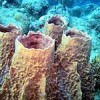
ENVIRONMENT: Between a Reef and a Hard Place
Coral reefs face certain extinction in a few decades unless there are unprecedented reductions in carbon emissions, leading Australian scientists warn.
BRAZIL: Biofuel Revolution Reaches Airline Industry
Biokerosene has the potential to take off on the international market faster than other alternative fuels, even though it is among the newest and faces stricter quality standards because it is to be used in aviation.ENERGY: Fossil Fuel Train Heads into Overdrive
Today's skyrocketing fossil fuel use will accelerate far faster in the coming decades, driving oil prices higher and virtually guaranteeing catastrophic climate change in the decades to come, energy experts say.SPAIN: Europe’s Gateway for Cocaine Clamps Down on Trafficking
The Spanish government plans to use more modern technology and strengthen its intelligence services to fight drug trafficking, both domestic and across its borders. Spain is the main gateway for drugs into Europe, and is also the European country with the highest levels of consumption.
BIODIVERSITY: How Many Species Are "Enough"?
Plants are the only source of oxygen on Earth - the only source. And studies around the world show that as plant species become extinct, natural habitats can lose up to half of their living plant biomass.
ENVIRONMENT: Sanitation Beyond Septic Tanks and Sewers
To meet one of the Millennium Development Goals (MDGs) and halve the number of people without basic sanitation by 2015, the world must make a radical shift away from septic tanks and sewers, say experts and activists.CLIMATE CHANGE: Rich Must Cut GHGs Fast, Deep – UN Experts
The world's richest countries must drastically reduce greenhouse gas (GHG) emissions to mitigate climate change impacts, says the lead author of a United Nations report, due for release later this month, that focuses on impacts of global warming on the developing world.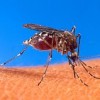
HEALTH-ASIA: Dengue No Longer Paediatric Says WHO
As public health experts in South-east Asia come to grips with one of the worst outbreaks of dengue fever in years, they discern a disturbing pattern about the profile of patients who have died from the virus vectored by the aedes aegypti mosquito.CLIMATE CHANGE: CO2 Levels Begin Accelerated Climb
Global warming has been compared to a slow-moving train wreck, in which the passengers are blissfully unaware of the coming catastrophe.« Previous Page — Next Page »





The Week with IPS

NEXT STOP - SDGs
Tracking global progress towards a sustainable world
Tracking global progress towards a sustainable world
