Languages
Sunday, October 25, 2026



News and Views from the Global South
Southern Africa
WATER-NAMIBIA: Policy to Create a Water Scarcity?
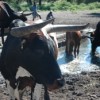
Several 20 litre buckets of water are crammed inside the small enclosure around the only tap in Epingiro, a small gathering of kraals in the Kavango woodlands in northern Namibia.TRANSPORT-ZIMBABWE: Your Money And Your Life
Despite the crater-sized potholes that fill Bulawayo roads, Desmond Hikwa is not slowed down as he speeds across this city of more than two million transporting commuters from sunrise to sunset.BOTSWANA: Media Laws Stir Dissent Within Ruling Party
There is growing dissent in the ruling Botswana Democratic Party (BDP) over laws that enable the government to regulate the media. Member of parliament, Keletso Rakhudu, broke ranks with his party by publicly criticising the Media Practitioner’s Act as an "assault" on the "fundamentals" and "undermining" free and independent media. He claims a number of his colleagues shared his dismay but were fearful of speaking out.
DEVELOPMENT: Mauritians Also Competing For Land in Africa
Soaring food prices and lack of land have forced Mauritius, a net food importing country, to launch an ambitious initiative. The island state is starting to grow its food in other African states where land is lying fallow and labour is cheap.MADAGASCAR: Closed-Door Talks Over Political Impasse
Both parties agreed not to release any details after a second direct meeting between President Marc Ravalomanana and his principal opponent, Andry Rajoelina, the deposed mayor of Madagascar’s capital Antananarivo, on Feb. 23 with no official being issued.ZIMBABWE: New Cabinet Ignores Quota for Women
Women’s rights activists in Zimbabwe are outraged by the low representation of female politicians in the new unity government. Only four women are part of the 35-member cabinet, laughably short of the equal representation of women in decision-making that Zimbabwe signed onto at a regional summit in September 2008.TRADE: 'Gulf States’ Technology Can Be Swapped for Africa’s Food'
Countries in the Gulf and in Africa can form mutually beneficial partnerships, with Africa supplying fertile arable land and the Gulf investing in technology, fertiliser and other agricultural inputs.BOTSWANA: High Profile Trial Could Open Can of Worms
The high profile trial of former Debswana Managing Director, Louis Goodwill Nchindo, could open a can of worms about the shady activities of senior government officials in Botswana, officially Africa's least corrupt country.
ECONOMY: Using the Rand Makes Zimbabwe ‘South Africa’s Province’
Zimbabwe may soon become part of the South African rand monetary union when the troubled southern African country officially assumes the use of the rand as part of a raft of economic initiatives aimed at kick-starting its comatose economy.ECONOMY-BOTSWANA: Job Losses Show ‘‘Diamonds Are Not Forever’’
‘‘The situation is now very bad, very bad for workers. It is no longer about the workers alone, it is about the government, the companies, everyone. We need to talk. Dialogue is the only solution.’’
ENVIRONMENT: Fighting for the Right to Fish
"When my belly is crying I must fill it. I can sit on the side of the road and beg for bread, but there is the bread right there," says Hahn Goliath, a fisherman in the small village of Doring Bay on South Africa's West Coast, as he points furiously at the Atlantic Ocean.ZAMBIA: Corruption in Water Sector Makes Clean Water A Pipedream
In his address to the National Assembly on Jan. 30, Zambia's finance and national planning minister, Situmbeko Musokotwene, allocated additional resources to the water sector, with the specific aim of preventing the spread of waterborne diseases. But Zambians have heard such promises before.
ENVIRONMENT: Climate Change Threatens Livelihoods Along Africa's Coast
Environmental experts warn that climate change will lead to oceanic acidification and increase surface water temperatures, especially around the African continent.HEALTH-BOTSWANA: HIV Prevalence Remains High
Despite significant financial investments in both prevention and treatment, Botswana has been experiencing only a modest decline in HIV prevalence, especially among women.AFRICA: Yet Another Case of Graft Involving French Arms Trade
Three days ago, Jean-Charles Marchiani, a former member of the French secret services, was released from the Paris prison of La Santé where he had been serving time since May 2008. Last year, a tribunal in Paris found Marchiani guilty of influence peddling and other corruption charges involving African countries.
Q&A: Zimbabwe's Finance Minister, ‘‘The Worst Job In The World''
Zimbabwean president Robert Mugabe last week presided over the formation of a new unity government. Movement for Democratic Change (MDC) secretary general Tendai Biti was appointed to the post of finance minister.
CULTURE-SWAZILAND: ‘We’re Artists Now, Not Just Souvenir Makers’
A developing national arts scene requires a developing national arts center, with luck one that is owned and operated by artists themselves. In Swaziland, the growth of indigenous talent has been complemented by the flowering of a venue popular with performers, audiences and critics.
ZIMBABWE: Question Marks As Tsvangirai Sworn In
His first days as prime minister of Zimbabwe's government of national unity have, as expected, thrown down several challenges to Morgan Tsvangirai of the Movement for Democratic Change.
Q&A: 'Move Beyond Goodwill To Action'
Efforts to free fiscal resources for social spending over the past few years have started to pay off in Zambia, where government is reporting a positive trend of poverty alleviation and social development. But progress is uneven.POLITICS-SOUTH AFRICA: ‘Media Must Adopt Its Own Agenda’
Electioneering in South Africa is in full swing. Party posters emblazon lampposts and the media has been lapping up the weekly rallies and manifesto launches as parties set out to woo voters. As in previous elections, the focus has been on party political events.ZIMBABWE: Unity Govt – Guarded Optimism At Local Level
Zimbabwe's power sharing deal comes as the country's Movement for Democratic Change (MDC) controlled urban councils are facing a multitude of challenges after years of what they claim is interference in the running of their affairs by the Zimbabwe African National Union-Patriotic Front (ZANU-PF).« Previous Page — Next Page »





The Week with IPS

NEXT STOP - SDGs
Tracking global progress towards a sustainable world
Tracking global progress towards a sustainable world
