Languages
Tuesday, October 20, 2026



News and Views from the Global South
Southern Africa

MALAWI: Bringing TB Testing and Treatment To Those Who Need It
Malawi does not have accurate statistics that define the extent of tuberculosis (TB) cases within its borders, and there are fears that only half of those infected with the disease are able to access testing and treatment.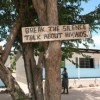
SOUTHERN AFRICA: Politicians Fail to Address HIV
Parliamentarians across the Southern African Development Community (SADC) have failed to put HIV on the political agenda.
SOUTH AFRICA: Water Meters for the Poor: New Name, Old Problems
Many poor communities in South Africa continue to struggle for their constitutional right to clean, safe drinking water.
ECONOMY: Namibia Gets BIG on Poverty
There was no mention of a special grant to tackle poverty in the Namibian national budget speech delivered on Mar. 19, much to the disappointment of campaigners for a Basic Income Grant (BIG) for all citizens.
AGRICULTURE-MALAWI: Water Makes the Difference
Water has become the very essence of economic development for a rural community of Ngolowindo, in Malawi’s lake district of Salima, where households are reducing poverty thanks to irrigation.POLITICS-MADAGASCAR: Rajoelina Assumes Power
After 24 months as self-declared head of a transitional authority, the deposed mayor of Antananarivo, Andry Rajoelina, was confirmed as the new president of Madagascar by the Constitutional Court on Mar. 18.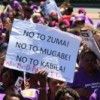
RIGHTS-SOUTH AFRICA: Election Campaign Silent on Violence Against Women
With its emphasis on gender equality, the South African constitution is regarded as a great example for many other developing countries. Yet, despite laws intended to protect the rights of women like the Sexual Abuse Act and the Domestic Violence Act, women in the country still suffer indignities at the hands of police and in court.
ENVIRONMENT-NAMIBIA: Ten Dollars for a 200-Year-Old Tree
Despite the investment of millions of donor dollars, the permit system in Namibia’s Community Forests has failed dismally, say biodiversity experts. Illegal logging in the inland Kavango is more alive than ever.TRADE: Southern Africa Buckling Before EU Pressure to Sign EPA?
While South Africa plays for time, the signing of a finalised economic partnership agreement (EPA) between the European Union (EU) and the southern African countries seems imminent - despite regional trade fragmentation remaining a danger.BOTSWANA: Retrenchments Turn Villages Into “Little Hells”
The closure of two major mines and the scaling down of operations at most mines in Botswana have had a knock-on effect beyond miners in this southern African producer of diamonds.
ENVIRONMENT: 'Capital Shapes the Creation of Waste'
The South African government has been heavily criticised by environmental justice NGO groundWork for failing to produce accurate data on the production of waste in the country.ZIMBABWE: The Railways — From Public Utility to Public Liability
Zimbabwe’s poorly funded public transport utilities - which over the years have all but stopped functioning - are making it difficult for small and informal traders to import essential goods from neighbouring countries.ECONOMY: Microlenders and Swazi Government: Untidy Divorce
When the Swazi government announced that it would no longer deduct loan repayments from the salaries of civil servants on behalf of microlenders, the sector was thrown into chaos.
ZAMBIA: Food Vouchers Not Enough to Fight Hunger
In an attempt to mitigate rising food insecurity and malnutrition, the Zambian government and the World Food Programme (WFP) have started to hand out food vouchers to the country’s urban poor.
Q&A: Does SADC require a regional parliament?
The Southern African Development Community (SADC) Parliamentary Forum has set its sights on becoming a regional parliament with law-making powers. The body was established in 1997 to create a platform for the region's legislators to share knowledge and experiences in governance.SOUTH AFRICA: ‘My Body, My Business’: Sex Workers Seek Protection from the Law
The steps of the Cape Town High Court, a frequent site of protest, have seen it all, but Mar. 6, was the first time, sex workers openly stood up for their rights there.ZIMBABWE: Inclusive Govt Must Respect Human Rights
Heather Bennett, a former commercial farmer, candidate for Parliament and the wife of detained Movement for Democratic Change (MDC) treasurer, Roy Leslie Bennett, says the party has let her husband down.
TRADE: Middle-aged Women Keeping Zimbabwean Economy Afloat
Her small tattered book is full of lists of orders for goods such as beer, maize-meal and chemicals. On another page are addresses and phone numbers of store managers while, on another, a list of names has been jotted down along with corresponding amounts.
POLITICS: Malawi’s Women Challenge For Top Posts
Sitting side by side, clothed in bright traditional outfits complete with headgear, they looked like any of the women who always dance and ululate for politicians at rallies.
WATER-NAMIBIA: ‘Decentralisation’: Code for Recovering Costs From the Poor
What if a well-intended programme to democratise water management is really a poverty trap? This is a question a soon to be published study on Namibian rural water supply poses to decision makers.HEALTH-ZIMBABWE: Doctors Fear High Risk of Drug-Resistant TB
Zimbabwe’s crumbling health system makes it almost impossible to detect and treat tuberculosis (TB), doctors say. As a result, they suspect the country has large numbers of unidentified cases of multi-drug resistant (MDR) as well as extensively drug resistant (XDR) TB.« Previous Page — Next Page »





The Week with IPS

NEXT STOP - SDGs
Tracking global progress towards a sustainable world
Tracking global progress towards a sustainable world
