Languages
Friday, October 23, 2026



News and Views from the Global South
Sudan

Time to Let Sudan’s Girls Be Girls, Not Brides
Lawyers and rights activists are calling for a change in Sudan’s laws which allow for the marriage of girls as young as 10.
Sudan Hits Hard at Female Activists
More and more of Sudan’s female politicians and rights activists are being arrested and detained in the government’s clampdown on opposition political parties.
Asylum Seekers Struggle to Survive Under Israeli Restrictions
Tesfahiwet Medin holds a university degree and experience as a nurse. But six years after escaping the violent dictatorship in his native Eritrea, the 39-year-old says he feels like a part of him is missing, as he's been prevented from continuing in his profession in Israel.
Despite Halt in Deportations, Refugees in Israel Live in Fear
Since Israel secretly deported over 1,000 Sudanese refugees several months ago, sending them back to Sudan and threatening to deport hundreds more Sub-Saharan African refugees, Israeli authorities have suspended this practise in the face of international outrage and condemnation by the United Nations.
Sudanese Rebels Prepare for War
A rebel coalition in Sudan has declared war on the government less than a week after it attacked Sudanese forces. “Now there is a fully-fledged war in the new south of the north,” Yasir Arman, a leader of one of the armed groups in the alliance, told IPS, adding that the rebels now control a southern stretch of the country.
South Sudan “Between Somalia and Congo”
Experts here are calling on the United States and the international community to increase pressure on the government of South Sudan to address weaknesses in its central governance.
Crisis Group Urges Comprehensive Talks to End Sudan Conflicts
Amidst ongoing violence and continuing humanitarian emergencies in Darfur, South Kordofan and Blue Nile states, the International Crisis Group (ICG) called Thursday for a comprehensive solution to Sudan’s many regional conflicts.
African Union Unable to Bring Peace to Warring Sudans
The African Union summit failed to provide a breakthrough in the ongoing negotiations between Sudan and South Sudan when it ended on Monday Jan. 28.
Major Study Suggests Crimes Against Humanity in Sudan
Reporting on the results of a two-year investigation, on Wednesday the U.S.-based Human Rights Watch presented findings that suggest that the Sudanese government’s aerial bombardment of civilians in the country’s south could amount to crimes against humanity.Khartoum Fire Blamed on Israeli Bombing
Sudan has accused Israel of bombing a military arms factory, threatening retaliation after a resulting fire killed two people and injured a third.
OP-ED: Polio Eradication – A Reflection on the Darfur Campaign
It was early July 2004, and Darfur was looking like a war zone - massive human displacements of an estimated one million people, ongoing skirmishes, inclement weather, a parched landscape due to the recurring droughts, and sheer misery everywhere.
International Community “Overselling” Sudan-South Sudan Pact
The international community is reacting triumphantly following an agreement on Thursday between Sudan and South Sudan to resume oil production and trade, despite the accord’s failure to address two of the situation’s most intractable issues, on border demarcation and control over lucrative oil-producing regions.
Fighting for a Free Press in Sudan
In Sudan’s newspaper district in Khartoum East, dozens of people sit beneath the trees sipping tea or reading newspapers. Most are journalists who once worked for the 10 newspapers that were either forced closed by the country’s security services or because of economic constraints that resulted after the government raised printing taxes in an attempt to prevent the media from reporting on anti-government demonstrations.
New Satellite Evidence Suggests Sudanese Atrocities
An NGO here unveiled new satellite evidence on Friday that would seem to suggest the torching of a village in southern Sudan by state soldiers.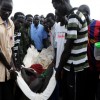
Sudan, South Sudan Resume Talks Amid Doubts for Long-term Success
Ahead of an Aug. 2 deadline, the leaders of Sudan and South Sudan over the weekend engaged in their first direct talks since hostilities spiked in late April.
Refugees in South Sudan Facing “Full-blown Humanitarian Crisis”
Within the next nine days, drinking water at refugee camps in South Sudan's Upper Nile state will run dry, warned the aid agency Doctors Without Borders on Tuesday. Meanwhile, refugees continue to stream into the state, as the few camps set up to house to entrants are stretched even further beyond capacity.
After War, Economic Crisis Hits South Sudan
The United Nations has warned that despite the austerity measures put in place by South Sudan to deal with its economic woes, humanitarian agencies will have to increase relief efforts in order to keep the country’s poor alive as the financial situation worsens.
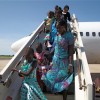
SOUTH SUDAN: Bracing for a Massive Influx of Returnees
In the wake of border tensions, the United Nations is airlifting 12,000 southerners from a Sudanese frontier town into South Sudan. But they are returning home in the midst of an economic crisis that has the U.N. warning it may appeal for more funding to scale up humanitarian operations.« Previous Page





The Week with IPS

NEXT STOP - SDGs
Tracking global progress towards a sustainable world
Tracking global progress towards a sustainable world
