Languages
Friday, October 9, 2026



News and Views from the Global South
The Amazon
BRAZIL: Agribusiness Undermines Environmental Leadership Role
Brazil is a world leader in agriculture and on several environmental issues, but it will find it hard to reconcile both fronts, judging by the many battles lost by former environment minister Marina Silva, in spite of the political clout she wielded for over five years.BRAZIL: Sugarcane Alcohol Tarnished by U.S. Maize Ethanol
Recent efforts by President Luiz Inácio Lula da Silva to clearly mark the difference between Brazilian ethanol and the agrofuels produced by the United States are an admission that signing an agreement with Washington to promote a global bioethanol market was a serious political mistake, say analysts.ENVIRONMENT-BRAZIL: Controversy Over Indigenous Land and Biofuels
The legal status of an indigenous territory in the far north of Brazil, and biofuels, are two hot potatoes at the Third National Conference on the Environment being held in the capital city, which is focusing on climate change.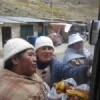
CLIMATE CHANGE: Indians Speak Out Against Carbon Markets
International policymakers are facing fierce criticism from leaders of the world's 370 million indigenous peoples over plans to use carbon markets as one of the tools to mitigate climate change.DEVELOPMENT-BRAZIL: Activists Opposed to Rebuilding Amazon Highways
Nearly four decades after they were first planned, three highways through the jungles and swamps of Brazil’s Amazon region are being rebuilt. Neglected in the past when they became economically obsolete, they are once again a focus of environmental criticism.LATIN AMERICA: Reconciling Oil and the Environment
Years of public scrutiny, ever-newer technologies, more government regulations, notions of corporate responsibility and the market-driven need for greater efficiency are all factors behind improvements in the environmental policies of Latin America's petroleum industry.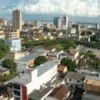
BRAZIL: Amazon Ghost Highway to Be Brought Back to Life
BR-319, a road blazed 35 years ago through the heart of the Amazon jungle and now impassable due to neglect, has sparked a new battle between environmentalists and the Brazilian authorities, who have decided to rebuild it.BRAZIL: Growing Foreign Appetite for Land
It is a question of "national sovereignty, not xenophobia," said the president of Brazil’s land reform agency, INCRA, explaining the need to regulate foreign land ownership in Brazil.CLIMATE CHANGE: Brazilian Ethanol Goes It Alone
Despite the urgency to reduce emissions that contribute to climate change, Brazil has been unable to stave off the doubts that are slowing the growth of an international market for plant-based biofuels.CLIMATE CHANGE: Lula Calls for Flexibility from Rich Countries
Industrialised nations must live up to their Kyoto Protocol commitments and be flexible in trade negotiations in order for the world to make progress towards solutions to climate change and to prevent the poor from being steeped in poverty for a long time to come, Brazilian President Luiz Inácio Lula da Silva said Thursday.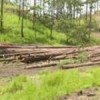
LATIN AMERICA: Deforestation Still Winning
Never before have Latin America and the Caribbean fought so hard against deforestation, say experts and government officials, but logging in the region has increased to the point that it has the highest rate in the world.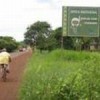
RIGHTS-BRAZIL: Recovering Guarani Traditions
Until the visitor runs across a large "house of prayer" that confirms the area's indigenous character, this place in the central-western Brazilian state of Mato Grosso do Sul looks like any other rural district, with the ramshackle housing highlighting the widespread poverty.
RIGHTS-BRAZIL: Pantanal Indians Threatened by Deforestation
The indigenous peoples of the central-western Brazilian state of Mato Grosso do Sul do not look like the tribes portrayed in film, decked out in colourful clothing and adornments and depending on their natural surroundings to survive in the Amazon jungle. But some of their problems are similar to their Amazonian counterparts, and in some cases even more serious.ENVIRONMENT-PERU: “For Sale” Signs in Amazon Jungle
The Peruvian Congress plans this week to debate a draft law pushed by the government that would authorise the sale of vast tracts of deforested, uncultivated land in the Amazon jungle to private companies that invest in "reforestation" efforts.
PERU: Logging Firm Accused of Using Workers’ Identities for Tax Fraud
Impoverished local residents of the Amazon jungle town of Orellana in Peru have filed a complaint against a logging company for using their identity documents to commit tax fraud in illegal timber sales worth more than 200,000 dollars.WORLD SOCIAL FORUM: Diversity, a Birthright Waiting to Be Recognised
For many people, the World Social Forum (WSF)’s influence and effect is waning, perhaps because it has outpaced public opinion and the dominant political processes, but not the real needs of the times, which require complex and urgent solutions.
PERU: Intercultural University Scores Poorly on Equality
Peru’s only intercultural university was established in the country’s Amazon jungle region to provide higher education for indigenous people, thanks to a concerted struggle by native leaders. Yet only 40 percent of the students are actually from indigenous communities, while the majority are "mestizos" (people of mixed-race) from urban areas.BRAZIL: Land Shortage Provokes Murders of Indigenous People
At least 76 indigenous people were murdered in Brazil in 2007, 58 percent more than in 2006. The killings increased the most in the west-central state of Mato Grosso do Sul, where the Guaraní people are confined to territories too small for them to maintain their traditional way of life.
COLOMBIA: Black Communities Organise in Country’s Poorest Region
During the "high season" of popular festivals in Colombia’s Chocó region, "pregnant girls as young as 13 start flowing in," says a nursing assistant in the obstetrics department at the hospital of the provincial capital, Quibdó.CHALLENGES 2007-2008: Brazil Seeks Formula for Continued Growth
The Brazilian economy is finally coming close to the dream of creating the "broad mass consumer market" announced in 2002 as a campaign promise by President Luiz Inácio Lula da Silva. But several hurdles still lie ahead.
BOLIVIA: Guarayo Indians Struggle to Hold Onto Their Land
The Guarayo indigenous people in eastern Bolivia are losing their land to large landowners. But one woman is heading a social movement to fight the greed of timber companies and agribusiness interests in the area.« Previous Page — Next Page »





The Week with IPS

NEXT STOP - SDGs
Tracking global progress towards a sustainable world
Tracking global progress towards a sustainable world
