Languages
Sunday, September 13, 2026



News and Views from the Global South
Troubled Waters

SENEGAL: Dispute Over Fishing Permits for Foreign Fleets Hots Up
Senegal's small-scale fishers are challenging the government over licences granting foreign trawlers permission to fish in Senegalese waters. The artisanal fishers condemn the "selling off" of the country's fishery resources at a time when stocks off Senegal's coast are severely depleted.
ENVIRONMENT: Military Debris Threaten Oceans
 Military debris dumped into the world’s oceans are hazardous to coral ecosystems, reefs, fish and marine wildlife, say experts, who also warn - in light of the recent tragedy in Japan - that earthquakes and tsunamis could disturb this debris and even wash it ashore.
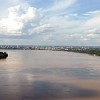
Emerging Powers Harnessing Neighbours’ Hydroelectricity
Emerging countries like Brazil and China are building numerous hydroelectric dams at home and abroad to help drive their economic growth. But while in Latin America the phenomenon is touted as an integration process, in Asia it has generated tension over the shared use of rivers.WATER-SOUTH AFRICA: Managing Flooding on the Orange River
Many farms and crops were devastated when the January floods hit South Africa at the start of this year. Farmer organisation Agri South Africa (AgriSa) estimated damages as high as 270 million dollars.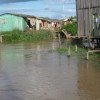
BRAZIL: Belo Monte Dam Faces Endless Hurdles and Controversies
The Xingu river flows around small isles and islands and across rapids and waterfalls in Brazil's Amazon jungle, and has a dramatically reduced flow during dry season. Navigating it presents constant hurdles and risks.
SOUTHERN AFRICA: Assessing the True Value of Water
As water resources in Southern Africa come under pressure from growing population, climate change and increasing industrial and agricultural use, economic accounting for water is among the tools that could aid better management.A Fatal Addiction to Plastic
"Be fantastic, don't use plastic!" chanted a troop of 10-year- olds from President Thomas Jefferson Elementary School in Honolulu at the conclusion of an international conference on the millions of tonnes of trash that enter the oceans every year, with serious consequences for marine life and habitats as well as to human health and the global economy.BOTSWANA: Capital Upgrade for City’s Sewers
The evidence of Gaborone's inadequate sewerage system hangs in the air over the Botswana capital's low income area. Pit latrines dominate, and residents complain that the city doesn't empty them frequently enough. But the end may be in sight.Fight Against Marine Garbage Runs Into Plastics Lobby
Every day, billions of plastic bags and bottles are discarded, and every day, millions of these become plastic pollution, fouling the oceans and endangering marine life.Heaviest Ever Floods in Northern Namibia
North-central Namibia is experiencing the heaviest floods ever recorded, but unlike in previous years, the area is fully prepared.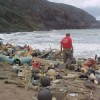
Plastic Circulating Endlessly in World’s Oceans
That plastic bottle or plastic take-away coffee lid that has 20 minutes of use can spend decades killing countless seabirds, marine animals and fish, experts reported here this week.
BOLIVIA: Cochabamba Still Thirsty
There is still no apparent solution to the unsatisfied demand for drinking water in Cochabamba, 11 years after this central Bolivian city made international headlines with a popular uprising that halted the privatisation of water service.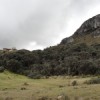
ECUADOR: Water Management Transcends “Public or Private” Debate
For one day, civil servants are trading their desks for the chilly highland plains in a rural community 3,500 metres above sea level on the outskirts of the Ecuadorian capital, where they are helping to plant native trees.Peak Water Has Already Come and Gone
Canadian Kevin Freedman is celebrating World Water Day Tuesday by living on 25 litres of water a day, instead of the North American average of 330 litres per day. And he has enlisted 31 others in his "Water Conservation Challenge" to go water- lean, using just 25 litres per day for cooking, drinking, cleaning, and sanitation for the entire month of March.
MALAWI: Enterprising Approach Underlies New Sanitation Campaign
The market can do better: a sanitation and hygiene campaign to be launched in Malawi plans to apply this tenet to improve cleanliness and public health in the country's cities.
LATIN AMERICA: Wave of Water Privatisation Over; Coverage Challenge Remains
Now that the wave of water privatisation of the 1980s and 1990s has let up, the main challenge facing water utilities in Latin America is expanding coverage of high-quality water services.
U.N. Water Conference Focuses on Cities
As a U.N. conference on water opens in South Africa today, the country's Council for Scientific and Industrial Research has repeated warnings that the country faces a water supply crisis. Experts attending the three-day conference will consider the challenges posed by growing demands, migration and water resources potentially limited by careless use and climate change.
A Moment of Silence for Dying Millions on World Water Day
When the international community commemorates World Water Day next week, perhaps it should ponder the words of U.N. Secretary-General Ban Ki-moon, who once remarked he does not expect people the world over to stop what they are doing and observe a moment of silence, come Mar. 22.
NAMIBIA: Water in the Kambashu
For Namibia's capital city, the goal of sustainable water and sanitation is a major challenge for the 21st century.
MALAWI: In Praise of Dry Sanitation
At its best it is waterless, odorless, eminently affordable and has a rich fertiliser as byproduct, yet for residents of Malawi's informal settlements, dry sanitation retains a whiff of the unwanted.Vietnam, Laos Split Over Mekong Dam
The first in a new series of 11 dams planned across the Mekong, South-east Asia’s largest river, could break a special bond between two communist-ruled countries.« Previous Page — Next Page »


The Week with IPS

NEXT STOP - SDGs
Tracking global progress towards a sustainable world
Tracking global progress towards a sustainable world
