Languages
Thursday, May 7, 2026



News and Views from the Global South
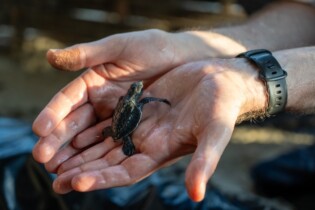
Guardians of the Sea: How GEF Small Grants Program Enables Young Volunteers Take the Lead in Sea Turtle Conservation
Every winter thousands of sea turtles come ashore at Cox’s Bazar, in the Bay of Bengal, Bangladesh, to lay eggs.
Community Volunteers Working to Safeguard Bangladesh’s Last Wild Elephants
When wild elephant herds come down from the hills in search of food, Sona Miahm, with community volunteers, steps forward to help prevent human-elephant conflicts.
Bangladesh Chief Advisor’s China Tour Cements Dhaka-Beijing Relations
Bangladesh's Chief Adviser, Professor Muhammad Yunus's state visit to China, where he met Chinese President Xi Jinping, was seen as an opportunity to reaffirm old diplomatic and economic ties between the two countries.
Bangladesh’s Ethnic People Safeguarding Forests and Wildlife
Kishore Kumar Chakma, a young man from an ethnic community in Rangamati district, voluntarily guards a village common forest (VCF) so that none can hunt wild animals and fell trees from it.
UN Chief’s Ramadan Solidarity Visit Revives Rohingya Refugees Hope
When United Nations Secretary-General António Guterres appeared before the Rohingya refugees wearing a traditional white panjabi, a costume of Muslims, to join an iftar party in Ukhiya refugee camp, thousands who had gathered waved to welcome him.
Davos Leaders Pledge Support for Bangladesh Reform Agendas
As Bangladesh Chief Adviser Professor Muhammad Yunus emerged from a meeting during the World Economic Forum (WEF), Timor-Leste President Jose Ramos-Horta came forward to greet him, a demonstration of how warmly the global leaders and dignitaries received the person tasked with leading the interim government.
Bangladesh Students, Community Moves to Protect Minorities Following Fall of Hasina Government
Immediately after the fall of the Sheikh Hasina government on August 5, 2024, following weeks of deadly demonstrations staged by students, people carried out attacks on the houses and temples of the Hindu community in Dacope of Khulna, about 225 kilometres from Dhaka. They particularly attacked and vandalized the houses of minorities believed to be involved in the politics of the ousted Awami League government.
Rizwana Hasan Vows to Ensure Justice for Those Killed During Bangladesh’s Quota Reform Movement
Justice for all those who died and suffered injuries during the recent student-led quota reform movement in Bangladesh and reforms to the systems to ensure that this justice takes place are not negotiable, an adviser to the Bangladesh interim government, Syeda Rizwana Hasan, told IPS in an exclusive interview
Climate Change, Pollution Push Karnaphuli Fishers Out of the Profession
Jishuram Das, a sexagenarian who was born in Jelepara, located in Chattogram, has been catching fish from the Karnaphuli River since his childhood. But nowadays, he often sits idle without going to catch fish, as their catches have drastically fallen.
LDCs Need Concessional Grants, Not Loans, Say Experts
Olaide Bankole was born and raised in Nigeria, and he observed how climate change was evident in the country with temperature rises and rainfall variability and how drought, desertification, and sea level rises have been affecting its people. He is also aware of how rising sea levels threaten southern Nigerian cities like Lagos and coastal areas, increasing their vulnerability to flooding and waterborne diseases.
Conservation Efforts by Ethnic Communities in Bangladesh Bolster Water Security
Just a few years ago, Sudarshana Chakma (35), a resident of the remote Digholchari Debarmatha village under Bilaichari upazila in the Rangamati Hill District, had to traverse a long hilly path to fetch water for her household because there were no local water sources. "Unchecked deforestation and degradation of village common forests (VCFs) led to the drying up of all-natural water sources in our village. We struggled to collect drinking and household water," Chakma explained to IPS.
Moimuna Nursing Institute Ushers Hope for Vulnerable Rural Girls in Bangladesh
After passing her secondary school certificate (SCC) in 2019, Sweety Akter went door-to-door to collect money to enroll in a college, but she wasn't successful. Born to an extremely poor family in Fultala village under Baliadangi upazila in Thakurgaon district, Akter saw her dream of studying fading as she was unable to enroll in a college because of a lack of funding, despite her good results at school.
Cooperative Farming Makes Bangladesh’s Coastal Women Farmers Climate-Resilient
In the past, Salma Begum, 40, lost her crops every year due to natural disasters. She lives with her five-member family in Ashabaria village under Rangabali upazila, a remote coastal island in Patuakhali district. “We did not have enough livelihood options in the coastal area where we live. Cyclones, coastal floods, and tidal surges have been having adverse impacts on agriculture, making it difficult for my wage-laborer husband to find work regularly,” she said.
High Prevalence of Undetected Hypertension Found in Bangladesh
Since her childhood, Parveen Begum, 52, has been adding extra salt while eating her meals. However, she did not know that this contributed to high blood pressure.
Rohingya Camps Become Dengue Hotspots in Bangladesh
With the monsoon in Bangladesh, Rohingya refugee camps in Cox's Bazar have emerged as a dengue hotspot, with the mosquito-borne disease continuing to spread among the stateless refugees. "A total of 1,066 dengue cases were reported in highly cramped refugee camps in Cox's Bazar up to May 23 this year, while the case tally was only 426 among the local community there," Dr Nazmul Islam, Director of Disease Control and Line of the Directorate General of Health Services (DGHS), said.
Women Advocates for Harvesting Rainwater in Salinity-Affected Coastal Bangladesh
Like many other women in Bangladesh's salinity-prone coastal region, Lalita Roy had to travel a long distance every day to collect drinking water as there was no fresh water source nearby her locality.
Bangladesh Plans to Launch Toll-free SMS Flood Warning
Ziaur Rahman, a farmer of Pakuar Char under Sariakandi Upazila in Bogura, cultivated jute on a newly emerged river island (char) in the Brahmaputra River, but this year’s flood washed away his crop.
Bangladesh Flood Victims Cry for Relief
After losing everything in the recent devastating flood that swept the northeastern districts in Bangladesh, pregnant mother Joynaba Akter, her three children and her husband took refuge in a shelter centre at Gowainghat in Sylhet.
Bangladesh’s Indigenous Forest Dwellers Fear Losing Ancestral Land as Officials Grapple with Land Grabs
When the Bangladesh Forest Department felled Basanti Rema’s banana orchard, Rema, a Garo indigenous forest-dweller of Madhupur Forest, felt she was living a nightmare. Rema, from Pegmari village in Madhupur, Tangail district, had cultivated the banana plants on half an acre in the Madhupur Forest. But the Forest Department claimed that the land on which the bananas were cultivated belonged to the department.
COVID-19 Pandemic Exacerbates Domestic Workers’ Plight in Bangladesh
Rani Akter, a mother of five, usually works as a domestic helper in Dhaka’s Zikatola area. When the coronavirus pandemic broke out in Bangladesh last March, her employers asked her not to come to their homes for fear of infection. “I lost my work in three houses one after the other, which became a nightmare for me. My rich employers did not allow me in their homes as they thought that I might carry the invisible virus,” Akter told IPS.
Is Sharing More than Water the Key to Transboundary Governance in the Meghna River Basin?
Kajol Miah is a rice farmer from the Bangladesh side of the Meghna River Basin. And in towns on the Indian side of the river basin, Bangladeshi rice is in great demand.Next Page »


The Week with IPS

NEXT STOP - SDGs
Tracking global progress towards a sustainable world
Tracking global progress towards a sustainable world
