Languages
Sunday, October 11, 2026



News and Views from the Global South
Gender
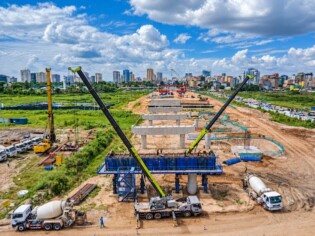
Tanzania’s Biggest City Bets on Elevated Bridge to Dodge Chronic Flooding
Each morning on her way to Kariakoo, Clementina Nyangwine looks out of her commuter bus as it crawls through Jangwani and watches giant foundation piles rising above the muddy Msimbazi valley.
Nearly 50,000 Women and Girls Killed or Severely Injured in Gaza in Three Years of War – One in 21 Gazan Women and Girls
Since October 2023, 50,000 women and girls in Gaza have been killed or seriously injured.- • UN Women estimates that nearly 50,000 women and girls in Gaza have been killed or severely injured since the onset of war in October 2023 [1], amounting to one in 21 Gazan women and girls losing their life or living with lifelong disabilities [2].
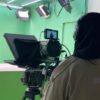
Smartphone Ban Robs Afghan Female Journalists of a Vital Working Tool
It has become difficult for Afghan journalists to obtain information from the authorities, who are permitted to use smartphones only with special authorization. This ban particularly affects women, for whom face-to-face interviews are not an option.
Dementia: A Rapidly Rising Global Challenge
Dementia is a rapidly growing global health challenge that affects many millions of people worldwide and places significant economic, healthcare, and social strains on societies, particularly as populations age.
Climate Change Is Becoming a Pregnancy Hazard Worldwide, Survey Finds
Extreme heat is increasingly threatening pregnant women and newborn babies around the world, with almost all maternal health professionals surveyed across five continents saying they have cared for women or infants whose health was affected by high temperatures.
For Pakistan Rising Fistula Cases Make SDG 3 Goal Elusive
“You’re living a life drained of joy,” is how Shehnaz Sher Ali describes her “perpetually wet and stinky” existence. “I wouldn’t wish it on my worst enemy,” says the 35-year-old, who travelled by bus for more than 12 hours with her husband from their village in Rahim Yar Khan, Punjab, changing diapers whenever possible to keep the smell from reaching the fellow passengers.
SUDAN: ‘It’s Shocking to Be Forced into Silence Simply Because You Are a Refugee’
CIVICUS discusses life as a refugee with an exiled Sudanese civil society activist who has asked to remain anonymous for security reasons.

Caring for Carers: Addressing Workplace Violence Against Nurses in Malaysia
Nurses are often called the backbone of the health system. We praise their compassion, commitment and resilience. On Nurses’ Day we thank them. During emergencies and crises, we call them heroes. But there is a harder question Malaysia, like most countries around the world, needs to ask more seriously: what happens when the people who care for everyone else are not safe, supported or respected at work?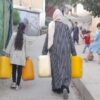
Afghanistan’s Drought Deepens, and Women Bear the Heaviest Burden
Drought has depleted wells, withered fruit trees, and reduced crop yields across Afghanistan. The heaviest burden of the water shortage falls on women in their daily lives, as they must fetch water from increasingly distant sources and use every single drop with extreme care.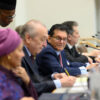
UNGA81: UN Leaders Calls for Faster Action on Pandemic Preparedness
The United Nations High-level Meeting on Pandemic Prevention, Preparedness and Response (PPPR) on September 25 called for faster and more sustained investment in pandemic preparedness. Speakers emphasized that future outbreaks will require coordinated action across governments, health systems, and communities.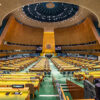
Strategic Blindness at UNGA 81: “Super Intelligence” and “Killer Robots” Take Center Stage as Women’s Rights Take a Back Seat
“Artificial intelligence (AI) must be shaped by humanity, with humanity, and for all humanity... Life-and-death decisions must never be surrendered to machines. Killer robots must have no place in our future.”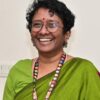
India Still Needs to Address Harmful Dark Skin Stereotypes
As a young girl, Sarada Murlidharan cringed at the thought of going to school. It was not the studies but the taunts of 'being black' or having dark skin, where fair skin was considered preferential, that made her unhappy.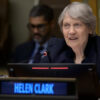
The Global Leaders Network Pushes to Protect Women’s and Children’s Health
In the wake of the largest decline in global health financing on record, the Global Leaders Network (GLN) for Women’s, Children’s and Adolescent Health convened a high-level meeting on September 22 to sustain political momentum for women and children's health financing. The event, Financing for Women’s, Children’s and Adolescent’s Health in a Time of Austerity, was co-hosted by the Governments of South Africa, Spain, and Tanzania, in addition to the Partnership for Maternal, Newborn, and Child Health (PMMCH).
Nepal’s Devastating Floods Have Put Women and Girls at Greater Risk
On August 26, 2026, deadly flash floods and landslides ripped through Himalayan towns and villages along Nepal and Tibet’s border, devastating communities. The United Nations estimates that in Nepal’s worst-affected districts of Rasuwa and Nuwakot, 157,050 women and girls are directly or indirectly impacted.
IRAQ: ‘Art Is the Only Weapon That Doesn’t Hurt or Kill’
CIVICUS discusses public art, gender-based violence and censorship in Iraqi Kurdistan with Tara Abdullah, a multidisciplinary visual artist from Sulaymaniyah who is currently based in Oslo, Norway as part of the Safemuse – Safe Havens for Artists residency.
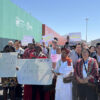
What Isn’t Named Isn’t Protected and being Named Isn’t Enough
Rightsholders came to Ulaanbaatar from across the world, carrying declarations, demands and years of experience defending the lands on which their communities depend. Indigenous Peoples, local communities, Afro-descendant Peoples, women and youth were equally clear about what they needed from COP17. But being in the room is not the same as having power in the room.
Life-Changing Humanitarians Empower Women Against Violence in Papua New Guinea’s Highlands
In the remote Highlands region of Papua New Guinea (PNG), humanitarians are life-saving beacons to women and girls facing myriad forms of violence. Despite years of awareness programmes and advocacy, the incidence of domestic and sexual violence is not declining. But Janet Kilea is one survivor who has rejected the fear and stigma of her experience and now dedicates her energy to transforming other women’s lives.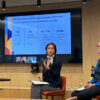
Family Law Reforms Are Needed to Advance Gender Equality
On September 16, at the lead-up to the 81st UN General Assembly, Equality in Family Law (GCEFL), Equality Now, TrustLaw, and the World Bank Group convened in New York City for the event titled The Gender Equality Dividend: Investing in Women’s Economic Prosperity Through Family Law Reform. Hosted by APCO, the event introduced new data on barriers to family law reform and highlighted strategies to help the international community maximize women’s economic participation.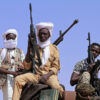
Sudan: Blood on Foreign Powers’ Hands
Sudan’s civil war grinds on. It’s close to three and a half years since the Sudanese Armed Forces (SAF) and the Rapid Support Forces (RSF) militia began their battle for supremacy, and the two forces and their allies continue to slaughter civilians with impunity. As a recent UN report makes clear, the killing is enabled by numerous foreign powers that continue to supply weapons, personnel and logistical support. They have made a civil conflict their proxy war, and their self-interest is sustaining the killing.
WHO Launches New Global Health Strategy for Childhood Cancer Medications
When a child is diagnosed with cancer, their chances of survival should not depend on where they live, yet according to the WHO, more than 80 percent of children with cancer in high-income countries are cured, compared with fewer than 30 percent in many low- and middle-income countries (LMICs).
What it Means to be ‘Too Old’ and a Woman: Systemic Gendered Ageism and Loss of Belonging
Chung Sun-cha started collecting cardboard, plastic, and other recycling materials off the streets of Incheon, South Korea, to sell when she was in her mid-70s. She is now 87. Without an adequate pension, Chung worked six days a week, sometimes seven, in the wind, rain, and snow until she fell and broke her arm while working in 2025. “I couldn’t find any other work because of my age,” she said.Next Page »





Women make up half the world's population, but don't nearly share half of the world's wealth, well-being and opportunity. Two-thirds of the world poor are women, disproportionally exposing women to precarious living conditions, disease and unmitigated natural disasters. The media, meanwhile, remains a male-dominated sector in much of the world, contributing to women's voices lacking a crucial amplifier to put their concerns on political agendas and unleash the development potential of their ingenuity. Rather than then stereotypical victims of local and global forces, women are also organizer, innovators, conservators and community builders. These are some of their stories.

The Week with IPS

NEXT STOP - SDGs
Tracking global progress towards a sustainable world
Tracking global progress towards a sustainable world
