Languages
Saturday, October 17, 2026



News and Views from the Global South
Health
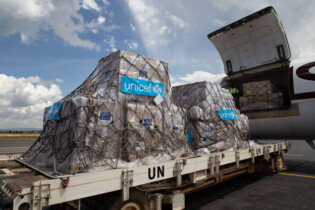
Ebola Spread Raises Fresh Urgency for Africa’s Domestic Health Funding
An Ebola death last week in Kenya is highlighting the urgency of Africa’s public health emergency preparedness and how the continent’s governments are committing their national budgets to the health sector.
International Day for the Eradication of Poverty 2026

A safe home is more than a roof over our heads. It is the foundation of health, security, opportunity and human dignity. Yet for billions of people, that foundation remains out of reach.

Afghanistan’s Stolen Peace: The Women Who Refuse to Be Silenced
When the Taliban took control of Afghanistan in August 2021, Zahra Nader was pursuing a doctorate in Women and Gender studies at York University in Canada. Nader had planned to return to Afghanistan to continue her research, possibly teach at Kabul University, and continue exploring Afghan women's role in political history.

When Medicine Becomes a Tool for Torture: The Hidden Role of Medical Personnel in Russian Captivity
Medicine is supposed to protect human life and dignity. Yet testimonies from Ukrainians released from Russian captivity reveal a disturbing reality: medical personnel in places of detention have not only denied prisoners necessary treatment but, in documented cases, participated in torture and ill-treatment.
How Nepal is Learning To Cope With the Psychological Toll of Its Missing
Nearly three decades ago, in the final stretch of Nepal's civil war, Dr Brandon Kohrt sat with parents whose sons had been conscripted as child soldiers and never returned.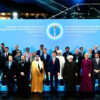
Kazakhstan Has Spent 23 Years Bringing Faiths Together. Now Comes the Harder Part.
In a world increasingly divided by war, political distrust and competing ideologies, Kazakhstan has spent more than two decades pursuing an unusual diplomatic undertaking: keeping representatives of different religions in conversation.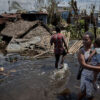
UNICEF Warns Impending El Niño Threatens Education, Health, and Safety for Millions
New figures from the United Nations Children’s Fund (UNICEF) project that the impending 2026-2027 El Niño cycle could be one of the strongest on record. Marked by unusually wet and dry conditions, this cycle is forecast to trigger a host of extreme weather events, threatening the health, security, education, and development of over 347 million children worldwide.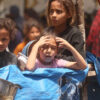
Nearly 50,000 Women and Girls Killed or Severely Injured in Gaza in Three Years of War – One in 21 Gazan Women and Girls
Since October 2023, 50,000 women and girls in Gaza have been killed or seriously injured.- • UN Women estimates that nearly 50,000 women and girls in Gaza have been killed or severely injured since the onset of war in October 2023 [1], amounting to one in 21 Gazan women and girls losing their life or living with lifelong disabilities [2].
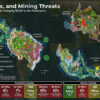
Protection That Holds: Keeping Nature Safe From Extraction
When governments gather in Yerevan this month for the 17th UN Convention on Biological Diversity, they will weigh a promise nearly 200 countries adopted six years ago: to effectively conserve at least 30 percent of land, inland waters, and sea by 2030. Achieving the ambitious 30x30 target is essential to sustaining the systems humanity relies on for survival—including crop pollination, purification of water and air, and climate regulation—as well as the biodiversity that underpins food production, fisheries, and tourism.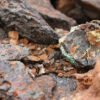
How AI-Powered War Drives the Critical Minerals Race
The demand for critical minerals is accelerating as world powers scramble to stay on top of emerging technologies. Meanwhile, the environment and frontline communities are paying a steep price.
Dementia: A Rapidly Rising Global Challenge
Dementia is a rapidly growing global health challenge that affects many millions of people worldwide and places significant economic, healthcare, and social strains on societies, particularly as populations age.
Sweden’s Far Right Falters
Four years ago, Sweden’s far right became the power behind a right-wing government. This time, it expected further gains and cabinet seats. But voters turned against it. In the 13 September general election, support for the far-right Sweden Democrats fell for the for the first time in the party’s history. Four days later, Prime Minister Ulf Kristersson resigned, leaving the way clear for the centre-left Social Democrats to negotiate a coalition. But the Sweden Democrats’ defeat will prove hollow if the next government maintains the hostility towards migrants that has come to characterise Sweden’s politics.
Climate Change Is Becoming a Pregnancy Hazard Worldwide, Survey Finds
Extreme heat is increasingly threatening pregnant women and newborn babies around the world, with almost all maternal health professionals surveyed across five continents saying they have cared for women or infants whose health was affected by high temperatures.
For Pakistan Rising Fistula Cases Make SDG 3 Goal Elusive
“You’re living a life drained of joy,” is how Shehnaz Sher Ali describes her “perpetually wet and stinky” existence. “I wouldn’t wish it on my worst enemy,” says the 35-year-old, who travelled by bus for more than 12 hours with her husband from their village in Rahim Yar Khan, Punjab, changing diapers whenever possible to keep the smell from reaching the fellow passengers.
SUDAN: ‘It’s Shocking to Be Forced into Silence Simply Because You Are a Refugee’
CIVICUS discusses life as a refugee with an exiled Sudanese civil society activist who has asked to remain anonymous for security reasons.

Caring for Carers: Addressing Workplace Violence Against Nurses in Malaysia
Nurses are often called the backbone of the health system. We praise their compassion, commitment and resilience. On Nurses’ Day we thank them. During emergencies and crises, we call them heroes. But there is a harder question Malaysia, like most countries around the world, needs to ask more seriously: what happens when the people who care for everyone else are not safe, supported or respected at work?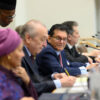
UNGA81: UN Leaders Calls for Faster Action on Pandemic Preparedness
The United Nations High-level Meeting on Pandemic Prevention, Preparedness and Response (PPPR) on September 25 called for faster and more sustained investment in pandemic preparedness. Speakers emphasized that future outbreaks will require coordinated action across governments, health systems, and communities.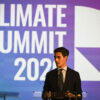
Overshoot of Paris Agreement and the Looming Super El Niño Drive Urgent Calls for Global Climate Action at UNGA 81
The United Nations 2026 Climate Summit addressed critical strategies to mitigate the compounding impacts of the climate crisis and accelerate progress toward the Sustainable Development Goals (SDGs).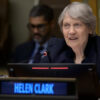
The Global Leaders Network Pushes to Protect Women’s and Children’s Health
In the wake of the largest decline in global health financing on record, the Global Leaders Network (GLN) for Women’s, Children’s and Adolescent Health convened a high-level meeting on September 22 to sustain political momentum for women and children's health financing. The event, Financing for Women’s, Children’s and Adolescent’s Health in a Time of Austerity, was co-hosted by the Governments of South Africa, Spain, and Tanzania, in addition to the Partnership for Maternal, Newborn, and Child Health (PMMCH).
Nepal’s Devastating Floods Have Put Women and Girls at Greater Risk
On August 26, 2026, deadly flash floods and landslides ripped through Himalayan towns and villages along Nepal and Tibet’s border, devastating communities. The United Nations estimates that in Nepal’s worst-affected districts of Rasuwa and Nuwakot, 157,050 women and girls are directly or indirectly impacted.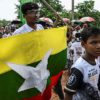
Myanmar: Corporate Complicity in the Spotlight
On 15 September, Norwegian police and security services raided the headquarters of Telenor in Oslo. Authorities accuse the multinational telecoms company, majority owned by the Norwegian state, of aiding and abetting crimes against humanity in Myanmar and breaching sanctions.Next Page »





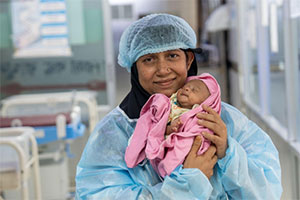 Bangladesh: Sarid, born one month early, receives specialized newborn care and grows stronger every day. Credit: UNICEF/UNI944397/Mojumder
Since the onset of the 2000s, global life expectancy has seen an overall rise, attributed to significant technological and scientific innovations in healthcare. Due to an increased understanding of different conditions as well as a rise in cooperation among healthcare experts around the world, there have been major strides made in ensuring that as few people die from chronic illnesses as possible. Despite the belief that healthcare is a fundamental human right, people from low- or middle-class backgrounds, marginalized groups, and underdeveloped countries have far more limited access to basic healthcare services.
The COVID-19 pandemic showed how marginalized communities are disproportionately affected by health crises, proving that we have much work to do in ensuring that no one dies of terminal conditions. While the global response to the coronavirus saw significant strides in immunization and vaccine development, the global outbreak of mpox in 2022 and its upsurge in parts of Africa in 2024 must remind us to remain vigilant.
Other major disease outbreaks in recent years have been linked to the destruction of infrastructure during warfare. Notably, in 2024, the Gaza Strip witnessed a return of the poliovirus since its eradication in the region 25 years ago. Israel’s blockade on Gaza has resulted in the collapse of the region’s sewage plants and desalination plants, and also destroyed healthcare capacities. The UN stated that this lack of clean water and sanitation would lead to an outbreak of cholera and other deadly infectious diseases. The 2026 OCHA Humanitarian Situation Report confirmed that the over two years of conflict in Gaza has produced a catastrophic health emergency, with millions remaining dependent on relief aid amid tight restrictions and no functioning public health system.
IPS is committed to providing full and comprehensive coverage on healthcare challenges around the world. IPS seeks to address the multifaceted causes of such challenges, including unprecedented pandemics, conflict-driven disease outbreaks, as well as socioeconomic barriers to equal healthcare access. IPS is also dedicated to reporting on innovations in the healthcare industry.

The Week with IPS

NEXT STOP - SDGs
Tracking global progress towards a sustainable world
Tracking global progress towards a sustainable world
