
Monday, September 28, 2026



News and Views from the Global South
IRAN: Benetton Gets Lessons in Shock Advertising
Kimia Sanati
- When the pro-government ‘Iran’ newpaper ran a full-page advertisement for the United Colours of Benetton, it indicated official approval for the famed Italian clothing manufacturer.
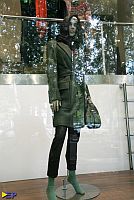
Mannequin in a Tehran Benetton store complete with mandatory headscarf Credit: Mahdi Tazary/EP
Distributed at Friday prayer the following day, the Iran told readers that ‘’the company’s chief executive and some of its board members were Jewish and members of the Zionist lobby.’’
The power of suggestive association was in no way diminished after it became apparent that the real target of the attack was neither Benetton nor his company but the mayor of Tehran, Mohammad Ghalibaf, a known critic of President Mahmoud Ahmadinejad and his government.
Attacks on Ghalibaf by the government mouthpiece and pro-Ahmadinejad news sites did not cease even after clarification by the Iranian ambassador in Rome (name) that the visit by Benetton was a private one and had no connection whatever to the mayor or the municipality.
Alef, a hardline news portal run by the legislator Ahmad Tavvakkoli who is an Ahmadinejad critic, called the incident the ‘government’s media-political scandal’. "The recent Benetton incident demonstrated a revolting conspiracy and was based on a lie," the news and analysis portal wrote.
The news of Benetton’s visit first appeared on the website of the headquarters for combating contraband goods and currency, a state organisation headed by government spokesman Gholamhossein Elham.
It was the website that claimed – erroneously as it turned out – that the Italian ‘Zionist billionaire’ was visiting Tehran on an invitation from the municipality to explore new business avenues. It claimed that Benetton had opened its seventh store in Iran during the visit. The clothing retailer has three stores in Tehran, two in Mashad and one in Yazd now. The company entered the Iranian market nearly ten years ago, a Benetton spokeswoman was quoted by Mehr news agency news as saying.
If Benetton’s controversial depictions have been criticised for inconsistency between advertising and the actual products, then the controversy kicked up over the Italian tycoon’s visit and the campaign against Ghalibaf are no less disjointed.
''The whole scandal had nothing to do with Benetton, except that they are so much against anything associated with the western culture in general. The real target was the mayor whose political affiliates are now in another feud with Ahmadinejad supporters ahead of the upcoming parliament elections in March," an observer in Tehran told IPS. "Benetton stores have been operating in Iran for several years now – this would have been impossible without authorisation from various government ministries such as economy and trade or Islamic guidance (culture) ministries," he said.
Yet the battle was joined in by hardline legislators. In a notice read on the parliament floor, five members protested against Benetton’s vist and demanded that the interior ministry stop "the influence and involvement of Zionist investor Benetton in women’s fashion scene". They also proposed a bill to ban Benetton stores in Iran.
A statement released by Abolfazl Zohrevand, the Iranian ambassador in Rome, provided clues to what had actually transpired. The embassy had put an Iranian investor resident in Italy in touch with the municipality for exploring investment opportunities in Tehran.
Benetton, a close friend of the Iranian investor, had merely hopped a ride on his friend’s private plane to look into his own business in Iran, according to the statement. The municipality had, in fact, hosted the Iranian investor and not the Italian billionaire, the statement said.
Zohrevand defended the mayor in his statement and stressed that Benetton, accused by the mayor’s attackers of being a Zionist, was actually a Christian and a Catholic. The initiators of the media attack had intended to destroy Ghalibaf and to show to Benetton that they were the ones in charge, he said.
One of the articles that appeared in the Iran newspaper accused Benetton of secretly using spyware chips in its clothes. "Modern RFID (Radio Frequency Identification) technology will permit the producer to track the consumer … and provide invaluable information about the consumer," one of the articles ‘Clothes That Spy’ said.
The newspaper did not cease its attacks on Benetton or the mayor even after the clarifications issued by the Iranian ambassador were circulated and a foreign ministry spokesman clarified that Benetton was not included in the Iranian foreign ministry’s list of ‘pro-Zionist’ regime enterprises.
Farda, a news portal close to Ghalibaf, had in a report warned that a team of journalists had been drafted to conduct a psychological warfare operation against him, inlcuidng the plan to distribute the Oct 4 ‘Iran’ edition at the Friday prayer venue.
Ghalibaf, a hardline turned conservative politician who was a former commander of the Revolutionary Guards Air Force, was one of Ahmadinejad’s close rivals in presidential elections. His camp has accused Ahmadinejad of winning by rigging votes.
On her personal website reformist Masoumeh Ebtekar, member of the Tehran city council and former vice president, said: "Zionist is such a versatile label to apply to anyone they want to destroy. Calling Benetton a Zionist could easily rub off on Ghalibaf. Some portals went as far as to say Ghalibaf’s children bore Jewish names, quite commonly used among Muslims, to offer more ‘proof’ that he was a Zionist.’’
 Print
|
Print
|




