Languages
Wednesday, October 14, 2026



News and Views from the Global South
Iran
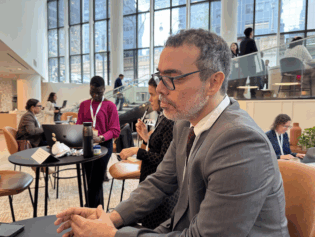
Prioritize Multilateralism to Resolve Iran War Deepening Humanitarian Crisis, Says OSF Vice President
Seven months into the Iran War, threats of further military escalation and stalled efforts to reopen the Strait of Hormuz have heightened fears of worsening humanitarian suffering and wider regional instability.
‘I am one who dies for life, not one who lives for death’ – Kurdish Political Prisoner Pakhshan Azizi
In 2024, Kurdish social worker Pakhshan Azizi was sentenced to death. She remains incarcerated in Evin Prison, Tehran, Iran. This is her story ...
Humanitarian Response in Lebanon ‘Under Significant Strain’ after Wednesday Airstrikes
On April 8, Israeli military forces launched the deadliest series of airstrikes on Lebanon since hostilities escalated in early March, resulting in the deaths of at least 254 civilians. This latest incident threatens to further complicate humanitarian efforts in Lebanon that are already under immense pressure.
War in Iran, Middle East Threatens Global Agrifood Systems
The current conflict in Iran and the Middle East region threatens to disrupt the global energy and agri-food sectors, as the closure of the Strait of Hormuz affects oil and fertilizer exports for farmers during critical harvest seasons.
EXCLUSIVE: Water Laureate Kaveh Madani on Arrest, Exile and Fight for Science
Professor Kaveh Madani of Iran has been named the 2026 Stockholm Water Prize laureate. The award will be formally presented by King Carl XVI Gustaf of Sweden in August during World Water Week in Stockholm.
Running on Sunshine: Pakistan’s Solar Boom to Tide Over Middle East Energy Crisis
Energy expert Vaqar Zakaria believes solar power makes “excellent economic sense” – and he lives by it. For over five years, his rooftop panels have slashed his bills, sometimes to zero, even allowing him to sell surplus electricity back through net metering.
UN Leaders, Diplomats Warn of Middle East Instability Following Weekend Air-Strikes in Iran
The United States and Israel launched a joint military strike on Iran on February 28. Iran followed with military strikes on Israeli bases and on Arab Gulf states, including Bahrain, Oman, and the United Arab Emirates. The realized threat of a new war has caused alarm for the security situation in the Middle East and its impact on civilian populations.
Forcefully Deported Afghan Women Return to a Life of Fear and Anxiety
When Roya, a former police officer under Afghanistan’s Republic government, left the country with her family, she felt a great sense of relief, having escaped from the horrors of Taliban rule. She never imagined that less than three years later she would be forced back into the same conditions, only worse.
Climate Finance Not Charity, But Obligation, International Court of Justice hears
Developing nations should not bear the brunt of the climate crisis caused by the industrialized world's historical emissions. This was the resounding message as the Solomon Islands, India, and Iran, among others, presented their cases before the International Court of Justice (ICJ).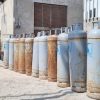
Fine, Sanctions, or Waiver: Iranian Gas Will Come at a Price for Pakistan
When Iranian President Ebrahim Raisi visits Pakistan this week (April 22, 2024), experts say the two issues topmost on his mind that he will want to discuss with his Pakistani counterpart, President Asif Ali Zardari, will be border security and the Iran-Pakistan gas pipeline.
Harassment of Journalists Jeopardises Keeping Public Safe amid Coronavirus Pandemic
Growing intimidation and repression of journalists reporting on the coronavirus is threatening public health in some countries, press freedom monitors have warned.
U.S. Sanctions Imperil Aid to Iran’s Flood Victims
Two major humanitarian groups have warned that United States sanctions on Iran are stopping cash flows for vital humanitarian work in the country, adding another complication to the growing rift between Washington and Tehran.
New Neocon Mantra: Iran, like Soviet Union, on Verge of Collapse
Iran hawks suddenly have a new mantra: the Islamic Republic is the Soviet Union in the late 1980s, and the Trump administration should work to hasten the regime’s impending collapse.
Reporting from Inside a Refugee Detention Centre
Despite being locked up in an Australian detention centre on Papua New Guinea's Manus Island, Kurdish-Iranian journalist Behrouz Boochani has continued reporting - gaining bylines and media attention around the world. Journalism is the reason Boochani was forced to flee his home country of Iran, and - like the other 900 men detained indefinitely on Manus Island - seek refuge in Australia.
Iran Deal Is Key Test of Trump’s Commitment to NATO Allies
Donald Trump’s victory over Hillary Clinton threatens to mainstream the Islamophobia, misogyny, racism, and anti-Semitism that swirled around his candidacy and supporters. On the foreign policy front his comments were no less shocking. But the Iran nuclear deal, which Trump hasn’t discussed in any depth beyond his promise at AIPAC’s March conference that his “number-one priority is to dismantle the disastrous deal with Iran,” may stand as an early litmus test for his relationship with NATO allies.
Syria: Minding the Minds II
Baher Kamal, in … And All of a Sudden Syria!: “The “big five,” the United Nations veto powers, have just agreed United Nations Resolution 2254 of 18-12-2015, time to end the Syrian five-year long human tragedy; they waited until 300,000 innocent civilians were killed and 4.5 million humans lost as refugees and homeless at home, hundreds of field testing of state-of-the-art drones made, and daily U.S., British, French and Russian bombing carried out.” No Chinese bombing.
… And All of a Sudden Syria!
The “big five” – i.e., the most military powerful states on earth (US, UK, France, Russia and China) have just agreed that it would be about time to end the Syrian five-year long human tragedy.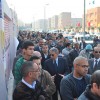
New Poll Highlights Need for Reform in the Middle East
A new public opinion survey undertaken in six Arab countries, Iran, and Turkey finds that people are more likely to blame “corrupt, repressive, and unrepresentative governments” and “religious figures and groups promoting extremist ideas and/or incorrect religious interpretations” for the rise of violent groups like al-Qaeda and the Islamic State than they are to blame “anger at the United States.”
Opinion: The Early History of Iran’s Nuclear Programme
Iran has had a nuclear programme since 1959 when the United States gave a small reactor to Tehran University as part of the “Atoms for Peace” programme during Mohammad Reza Shah Pahlavi’s reign. When the Non-Proliferation Treaty (NPT) was introduced in 1968 and entered into force in 1970, Iran was one of the first signatories of that Treaty.
Opinion: Iran and the Non-Proliferation Treaty
Iran’s nuclear programme has been the target of a great deal of misinformation, downright lies and above all myths. As a result, it is often difficult to unpick truth from falsehood.
Opinion: A Farewell to Arms that Fuel Atrocities is Within Our Grasp
The recent explosions that apparently destroyed a 2,000-year-old temple in the ancient city of Palmyra in Syria were yet another grim example of how the armed group calling itself the Islamic State (IS) uses conventional weapons to further its agenda.Next Page »





The Week with IPS

NEXT STOP - SDGs
Tracking global progress towards a sustainable world
Tracking global progress towards a sustainable world
