
Saturday, October 17, 2026



News and Views from the Global South
Forty Years of the ‘Right to Development’: When Growth Excludes, Is It Still Development?
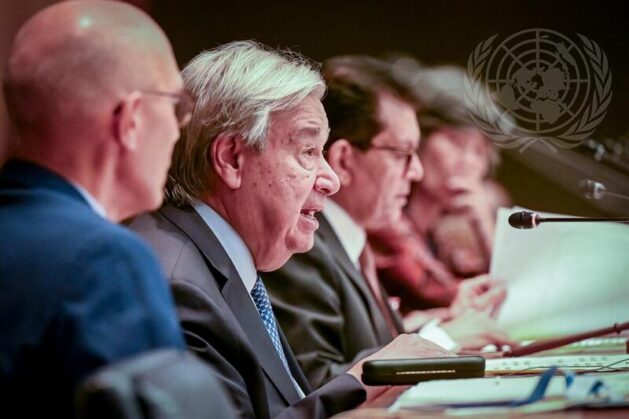
Secretary-General António Guterres (second from left) addressing the high-level segment of the General Assembly to commemorate the 40th anniversary of the Declaration on the Right to Development. Also visible (from left to right) are Volker Türk, United Nations High Commissioner for Human Rights; Khalilur Rahman, President of the 81st session of the United Nations General Assembly; and Chee Yoke Ling, Executive Director of the Third World Network (TWN). Credit: UN Photo/Laura Jarriel
- World leaders have warned that the most vulnerable people have been left behind as the right to development has promised more than it has delivered, with development seemingly the preserve of the superrich and powerful.
Addressing a session on the sidelines of the 81st UN General Assembly in New York to commemorate the occasion, global leaders marked the 40th anniversary of the Declaration on the Right to Development with a call to do more to eliminate deep inequality resulting from uneven development in the world.
The Declaration, adopted by the General Assembly in December 1986, proclaims that “the right to development is an inalienable human right by virtue of which every human person and all peoples are entitled to participate in, contribute to, and enjoy economic, social, cultural and political development, in which all human rights and fundamental freedoms can be fully realised.” But the Declaration, espoused as a fundamental shift in humanity’s progress, has not delivered on its promise.
“For millions around the world, promises made in the declaration remain unfulfilled, yet we know how to make it real,” UN Secretary-General António Guterres told world leaders, noting that the declaration’s anniversary is a call to action and pointing to the Sustainable Development Goals (SDGs) as the blueprint to leave no one behind.
“Development, human rights and peace are not separate ambitions. They advance together. In today’s divided world, this vision can still unite us, and the Sustainable Development Goals are the roadmap to get us there.”
Under the 2030 Agenda for Sustainable Development, the 17 SDGs contain goals and targets that are lifting people out of poverty and protecting their rights. However, 36% of 139 SDG targets are on track or have made moderate progress.
Guterres said the promise of development faces new tests today, from widening inequalities and persistent food insecurity to rising debt, conflicts and economic instability that are impeding development and economic growth.
“The climate crisis is reaching devastating new levels each year, reminding the world that there can be no development on a degraded and unhealthy planet,” said Guterres, warning that while the digital revolution and artificial intelligence hold enormous potential to improve lives, they can also be drivers of exclusion and division.
“The declaration unequivocally establishes development as a right and puts people at the centre of the development process,” he said.
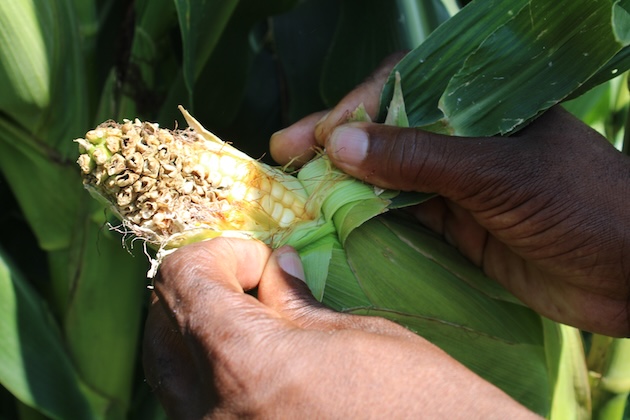
Ensuring food security forms part of the right to development, according to the United Nations. Credit: Busani Bafana/IPS
Some Progress, but More Needs to Be Done
Development is not about economic growth but about the constant improvement of human well-being through their active, free and meaningful participation in development, said Khalilur Rahman, President of the 81st UN General Assembly.
“We measure progress not only by aggregate growth but by whether people can live in dignity, exercise their rights and shape their own futures,” he said, emphasising that the Declaration should be honoured through action and by protecting the “hard-won gains of the past four decades” and addressing the inequalities and structural barriers that persist.
“Let us make multilateralism more representative, more responsive and more capable of delivering for all,” he emphasised.
Citing that global life expectancy has increased, along with access to education and health for many, Rahman said 1.5 billion people have escaped poverty in the past four decades. However, he bemoaned that many countries suffer from unsustainable debt burdens and unequal participation in global decisions, which have provided lessons over the last 40 years: development is inclusive and cannot be separated from human rights, environmental concerns, peace and security.
The cost of debt is $1.4 trillion in developing countries, and 3.4 billion people are currently living in countries that spend more on debt interest than on education or health.
Noting that the goal of development was broader and calling for the elimination of several barriers to development, United Nations High Commissioner for Human Rights Volker Türk said the current financial system was grotesquely out of balance and squeezed human rights out of budgets. Budget cuts, he said, affected the poorest more, calling for the elimination of human misery alongside insatiable military and economic power.
Türk said 2025 marked the 11th consecutive year in which military spending hit $2.8 trillion, which is eight times more than the cost of ending poverty globally.
“Development must be equitable and environmentally sustainable,” he said. “Sustainability cannot be equated to economic growth achieved at any cost to people and the planet. We need a strong shift to greater equality, participation, dignity, freedom and mutual respect, and we need to recommit to the principle of international cooperation, which is at the core of the right to development.”
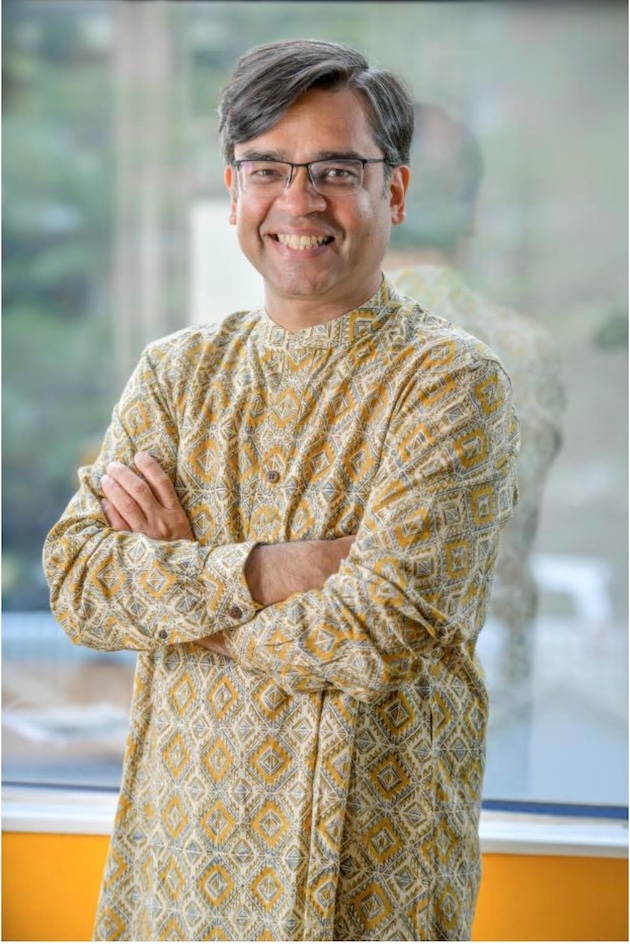
Oxfam International Executive Director Amitabh Behar. Credit, Oxfam International
The Rich Growing Richer and the Poor, Poorer
According to Oxfam’s 2026 report, Resisting the Rule of the Rich: Protecting Freedom from Billionaire Power, the unprecedented rise of the ultra-wealthy has deepened the global divide. Billionaire wealth surged by $2.5 trillion last year—an amount roughly equal to the total assets held by the bottom 4.1 billion people combined.
Amitabh Behar, executive director of Oxfam International, said the right to development remains in principle, despite progress made in the 1990s and 2000s, but there has been some regression in the last few years. The right to development was being questioned because, for instance, the right to education and health were being converted into commodities and privatised.
Behar said rights arising from agreements at international platforms should be translated at the national level to ensure people understand their rights and that there is a movement towards their realisation.
“For any right to become a real right, it’s really important that we build it from the bottom up. If we do not invest time, energy and resources in building from the bottom up, the realisation of these rights will remain inadequate,” Behar said.
Behar noted that the right to development speaks to the indivisibility of human rights and that governments have demonstrated the political will to start delivering on these rights, but this progress can only be realised when people start demanding their rights.
“We are seeing an economic system where the money is going upward and getting concentrated in the hands of the few super-rich billionaires, so the government must tax them and get revenues for the people and ensure that they are investing in making sure the right to development is a reality for everyone,” Behar said.
Harjeet Singh, global convenor of the Fill the Fund campaign, warned that “we must confront an uncomfortable truth: the dominant global economic model has spent four decades betraying the core of that declaration.”
Singh, who is also the founding director of the Satat Sampada Climate Foundation and engagement director at the Fossil Fuel Treaty Initiative, warned that “we must confront an uncomfortable truth: the dominant global economic model has spent four decades betraying the core of that declaration.”
“Development was meant to be an emancipatory project centred on the human person, affirming everyone’s right to active, free and meaningful participation and an equitable share in economic and social progress,” Singh told IPS. “Today, however, global finance capital has hijacked it, serving multinational corporations and private bondholders rather than smallholder farmers, indigenous peoples, or urban workers.”
Singh highlighted that developing countries that contributed least to climate change are forced to divert significant portions of their budgets to disaster recovery, driving them deeper into debt. “On this 40th anniversary, governments in the Global South and their allies should demand a Binding Fossil Fuel Treaty and create an explicit international framework to equitably phase out fossil fuels, end expansion, and fund a global just transition.”
“The 1986 Declaration was designed as a charter for liberation and justice. Unless the UN General Assembly anchors development in human rights, climate reparations, a fossil fuel phaseout, and systemic economic reform, this milestone will mark four decades of unfulfilled promises.”
Note: This article is brought to you by IPS Noram in collaboration with INPS Japan and Soka Gakkai International in consultative status with ECOSOC.
IPS UN Bureau Report



 Print
|
Print
|



Pictures for this story
This story includes downloadable print-quality images -- Copyright IPS, to be used exclusively with this story.


