Languages
Thursday, October 22, 2026



News and Views from the Global South
Oxfam International
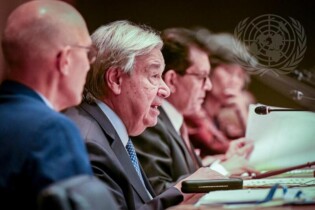
Forty Years of the ‘Right to Development’: When Growth Excludes, Is It Still Development?
World leaders have warned that the most vulnerable people have been left behind as the right to development has promised more than it has delivered, with development seemingly the preserve of the superrich and powerful.
Humanitarian Response in Lebanon ‘Under Significant Strain’ after Wednesday Airstrikes
On April 8, Israeli military forces launched the deadliest series of airstrikes on Lebanon since hostilities escalated in early March, resulting in the deaths of at least 254 civilians. This latest incident threatens to further complicate humanitarian efforts in Lebanon that are already under immense pressure.
Challenging Elites, Defending Democracy: Oxfam’s Amitabh Behar Speaks Out
Speaking to IPS on the sidelines of the International Civil Society Week in Bangkok (November 1–5), Amitabh Behar, Executive Director of Oxfam International and a passionate human rights advocate, highlighted his concerns about rising inequality, growing authoritarianism, and the misuse of AI and surveillance. Yet, he expressed optimism that, even as civic spaces shrink, young people across Asia are driving meaningful change. He also shared his vision of a just society—one where power is shared, and grassroots movements lead the way.
Exclusive: Winnie Byanyima Speaks about Inequality in Africa and Next Steps at UNAIDS
 While the 28th World Economic Forum (WEF) on Africa is being held in Cape Town, South Africa this week, the international aid and development charity Oxfam released its latest report: A tale of two continents: fighting inequality in Africa.
Africa Demands for More Input to Save the Climate
African civil society organisations championing for climate justice have criticised the Intended Nationally Determined Commitments (INDC’s) presented to the United Nations Framework Convention on Climate Change, calling them “weak, inadequate and not ambitious enough.”
Civil Society Sceptical Over “Action Agenda” to Finance Development
Despite high expectations, the third International Conference on Financing for Development (FfD) ended on a predictable note: the United Nations proclaimed it a roaring success while most civil society organisations (CSOs) expressed scepticism over the final outcome.
Global Tax Body Sticking Point at Financing Conference in Addis
When the four-day-long international conference on Financing for Development (FfD) concludes in the Ethiopian capital later this week, one of the lingering questions in the minds of departing delegates may well be: did we really achieve anything concrete after years of negotiations?
781 Million People Can’t Read this Story
If you are reading this article, consider yourself one of the lucky ones; lucky enough to have received an education, or to be secure in the knowledge that your child will receive one. Lucky enough to be literate in a world where – more often than not – the ability to read and write can mean the difference between a decent life and abject poverty.
Women Leaders Call for Mainstreaming Gender Equality in Post-2015 Agenda
Women leaders from every continent, brought together by U.N. Women and the Chilean government, demanded that gender equality be a cross-cutting target in the post-2015 development agenda. Only that way, they say, can the enormous inequality gap that still affects women and children around the world be closed.
Everyone Benefits from More Women in Power
Women’s participation in decision-making is highly beneficial and their role in designing and applying public policies has a positive impact on people’s lives, women leaders and experts from around the world stressed at a high-level meeting in the capital of Chile.
Women’s Political Representation Lagging in India
National outrage over women’s security in India – or the lack of it – is nothing new. From the gang rape of a young girl on a Delhi bus two years ago, to the recent rapes and lynching of two teenage cousins in the northern state of Uttar Pradesh, gender-based violence has claimed headlines.
Op-Ed: Overcoming the Twin Hurdles of Inequality and Climate Change
Two major injustices – inequality and climate change – are threatening to undermine the efforts of millions of people to escape poverty and hunger.
Storm Brews at U.N. Climate Talks
Hundreds of representatives from various NGOs walked out of the negotiating rooms at the United Nations climate talks in Poland on Thursday in protest against the reluctance by developed nations to commit towards achieving a global climate treaty.





The Week with IPS

NEXT STOP - SDGs
Tracking global progress towards a sustainable world
Tracking global progress towards a sustainable world
