Monday, September 7, 2026



News and Views from the Global South

Uphill Effort for Eco-Friendly Housing
- Buildings in North America produce vast amounts of greenhouse gases, sewage and other waste. In Mexico, ecological construction is just getting started, with 5,000 housing units near completion.
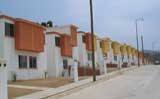
Mexican eco-housing does not include solar energy or wastewater treatment. - National Housing Commission
In North America, 11 to 30 percent of greenhouse-effect gases, which lead to global warming, come from buildings, which use a large part of the available electricity, water and raw materials, including precious lumber — often from illegally logged forests — and plastic composites like polyvinyl chloride or PVC, which are harmful to health.
Just in the United States, producer of nearly one-third of greenhouse gases globally, buildings use around 65 percent of all electricity, 40 percent of raw materials and 12 percent of the water consumed.
In Mexico, responsible for two percent of the world's greenhouse gases, buildings use 20 percent of the nation's electricity, 80 percent of which is generated by burning fossil fuels.
Canada, Mexico and the United States, partnered in the North American Commission for Environmental Cooperation (CEC), seek to curb the sector's contributions to climate change, which most of the scientific community agrees is caused by the accumulation of the Earth's atmosphere of gases that come mostly from the burning of carbon-based fuels.
Experts from the three countries have been studying the matter since the beginning of the year and in September will issue a broad-ranging report that is to include recommendations for government action.
The goal is to limit polluting construction practices and give a boost to sustainable building, which can be integrated better into the environment, consumes less electricity and, ideally, processes its own wastewater and garbage, as well as providing comfort and shelter to its inhabitants.
But it is an uphill fight. “The development of 'green building' is new, and the governments have no core policy in this area,” said David Morillón, an expert with the Autonomous National University of Mexico (UNAM) and who will be one of the authors of the CEC's report.
Nevertheless, there are already some plans under way, and dozens of architects, engineers and researchers across North and South America who exchange information and expertise through virtual networks, and through regular seminars on “green building”.
In the past six years, Canada and the United States have developed new environmental standards for construction, private companies have set up certification systems for contractors who build sustainable buildings, and there is a “green” mortgage business emerging that takes environmental considerations into loan decisions.
Even so, the percentage of eco-buildings in those countries is no more than 10 percent of the total.
In Mexico, the government is sponsoring a sustainable construction plan for low-income residents. The initiative is being managed by the private sector. The result is some 5,000 housing units, most of which are between 40 and 70 square meters, are near completion.
For a country where housing demand surpasses a million units a year — although in the last six years only 500,000 have been built annually — the project is just a tiny step.
The eco-housing in Mexico aims especially to reduce consumption of electricity and water, but does not include solar energy or systems for treating wastewater, which are ideal for this type of construction.
“This is an experimental step” and is geared towards generating information and verifiable data so that it is the market “that finally imposes the need to head towards sustainable construction,” said Evangelina Hirata, director of the government's housing development commission, CONAFOVI.
But there is no promise that in six years Mexico will build all housing under sustainability standards, “which doesn't occur in any part of the world,” she added.
On Mar. 29 in Spain, the Technical Code for Building entered into force, requiring inclusion of renewable energy sources for supplying hot water and electricity in all buildings that begin construction or renovation as of that date.
According to the new rules, there will be limits on energy consumption based on the building's characteristics, greater efficiency of heat and lighting systems will be promoted, and there will be a required percentage of clean energy sources: direct solar energy and solar panels.
Meanwhile, in Mexico, the sustainability seed is just being planted. “I hope that within a year the Mexican financial system begins to offer green mortgages,” after seeing that in the long term any sustainable construction will be cheaper and more beneficial for the user and the community, said Hirata.
According to UNAM expert Morillón, building sustainable housing can cost three to 20 percent more than conventional housing. But he is confident that the market will see prices fall once it becomes more widespread.
However, that could take years, and time is of the essence, he added.
Conventional construction in Mexico lasts 30 to 40 years, but in 10 to 12 years, the country could run out of petroleum, meaning there would be little electricity available for those buildings.
The clock is also ticking for the world's response to climate change. If fossil fuel consumption and environmental degradation continue at today's pace, by the end of the century the planet's average temperatures could increase 1.8 to 6.4 degrees Celsius and sea levels could rise 18 to 59 centimeters, according to the recently released Fourth Assessment Report by the Intergovernmental Panel on Climate Change.
 Print
|
Print
|