
Saturday, October 17, 2026



News and Views from the Global South

Manganese Mines Harm Children's Mental Development
- Decades of manganese mining in the Mexican state of Hidalgo have left an indelible mark on children, according to health studies.
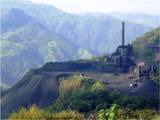
Autlán mining operations in the mountains of Hidalgo. - Courtesy of INSP
“The company has a skeptical position (about studies that show the effects of manganese poisoning); it does not believe that it is causing the problems or that it is to blame,” but the evidence is irrefutable, Horacio Riojas, from the Population Health Research Center of the government's National Public Health Institute (INSP), told Tierramérica.
INSP studies in areas near the Autlán deposits, distributed among the towns of Molango, Lolotla, Xochicoatlán and Tlanchinol, which together cover some 1,000 square kilometers and just over 60,000 inhabitants, show that the manganese that has been mined there for decades has caused severe harm to human health.
The region is one of the world's main storehouses of this mineral, used in the steel industry, as well as in some chemical production, glass, batteries, fertilizers and medications.
With Riojas at the head of an interdisciplinary group that included the government's National Institute of Neurology, the INSP over the past decade measured the presence of manganese in the air, water supplies, soils, homes and roads near the mines, which are both open-air and underground operations.
In 2002 and 2003, blood and hair samples were taken from 300 adults and underwent a variety of medical tests. In 2007, the same studies were carried out for 300 children ages 7 to 11. One part of the samples came from residents of areas near the mines, and the rest from residents of places similar in social and economic development, but not near manganese mines.
Riojas said the findings are alarming. Sixty percent of the adults who live near the mines present neurological problems and trembling similar to the effects of Parkinson's disease. In the case of the children near the mines, it was found that their intellectual and learning abilities are 20 percent lower than the comparable group that does not live near any mines. There is no doubt that the exposure to manganese is the cause of the problems, he said.
Autlán began manganese exploration and exploitation in the area in 1960.
“We've had reports about problems, but my understanding was that the mining company had already assumed some commitments with the residents and that everything is fine now,” Alejandro Dionisio, municipal secretary of Molango, one of the affected towns, told Tierramérica.
In a telephone interview, the official said the mining company provides employment and supports the local population with infrastructure for housing.
Tierramérica was insistent in its efforts to contact spokespersons from the company for interviews about the situation and the company's relationships with the communities, but had not obtained a response by the time this story was published.
According to Riojas, some residents of the company's area of direct influence — a rural zone of 50 square kilometers shared by Molango, Lolotla, Xochicoatlán and Tlanchinol — have staged regular protests about health problems and low farm yields, which they blame on the manganese.
But the demands dissipated when the company built sports fields and school infrastructure and distributed materials for roofing, said Riojas.
Furthermore, exposure to manganese has taken a back seat to other problems arising from the poverty of the local population, he added.
According to official studies, the level of social marginalization is relatively high in the municipalities where Autlán operates.
Most of the INSP research results were released in early December at an international meeting about environment and health, held in Mérida, in southeastern Mexico, an initiative of the International Development Research Center (IDRC).
The authorities from Hidalgo and the federal government of conservative President Felipe Calderón, and the company itself are aware of the studies and their results.
Riojas acknowledged that that authorities know about the research and that there is a negotiation panel to define what measures to adopt, but he says they are not acting with the urgency required.
Between January and September, Autlán reported income of 315 million dollars. On its web site there are no references to the manganese-related health problems.
A text on the site states that unnamed international institutions have declared that they know of no cases in which manganese has caused environmental damage or that the metal poses a threat to the environment, and, on the contrary, there are publications about the beneficial impact of manganese for the soils.
Manganese is an element that is found in dried fruits, cereals and legumes. Ingestion of small amounts is essential to maintain strong bones, functioning of the nervous system and metabolism of carbohydrates.
But excessive exposure causes an illness known as manganism. The symptoms include: slower movement and lack of coordination, trembling similar to Parkinson's, muscular weakness and even schizophrenia, according to the World Health Organization.
The INSP has not studied the health of the mine workers, because “it has not been part of the project and we know it would be unlikely that the company would allow it,” said Riojas.
The analyses began in 1999 in the mining zone, at the request of authorities who had received the complaints from the residents.
The company has taken some steps in the past 10 years, some recommended by the INSP, such as not using the mine waste as fill for roads, and modifying some of the machinery to reduce emissions of manganese.
Even so, the studies indicate that the local population remains affected by the mining. The INSP is proposing norms that establish obligatory limits of manganese emissions — no such standards exist today in Mexico — and ongoing monitoring to ensure compliance.
“At no time do we propose that the mine shut down operations, nor do the neighbors, but we want production to be clean and safe,” said Riojas.
If no major decisions are made about the Hidalgo manganese contamination in the first months of 2009, the case will be presented to the National Health Council, which comprises the health secretaries of the country's 32 states and the federal health minister. Autlán, which employs 1,400 people, states on its web site that it has been “decisive and constant” in its environmental efforts and that evidence of this was “the ISO 14.000 certification of all of the company's units and plants since 1998.”
ISO (International Standardization Organization) 14.000 establishes parameters for environmental management that companies can adopt in order to be certified.
 Print
|
Print
|




