Languages
Wednesday, October 14, 2026



News and Views from the Global South
Opinion
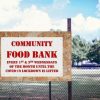
Ending Hunger in America: Here’s What the White House Conference on Hunger, Nutrition and Health Should Do to Be Inclusive
This September, the White House will convene a conference on Hunger, Nutrition, and Health. Leading up to the conference, the White House is organizing several virtual listening sessions across America to hear firsthand from people impacted by food insecurity and to collect ideas about how to end hunger and hunger-related diseases and disparities.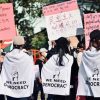
Death Sentences in Myanmar
"The illegal military junta provides further evidence to the international community of its disregard for human rights as it prepares to hang pro-democracy activists," said Thomas Andrews and Morris Tidball-Binz, UN special rapporteurs in Myanmar for human rights and extrajudicial arbitrary executions, respectively on June 10, 2022.
The Weaponization of Energy & Europe’s Way Out
The fast-changing environment requires Europe’s energy system not only to adapt but to also find the right mechanisms to ensure its unity in the face of turbulent challenges.
SWIFT Dollar Decline
US-led sanctions are inadvertently undermining the dollar’s post-Second World War dominance. The growing number of countries threatened by US and allied actions is forcing victims and potential targets to respond pro-actively. SWIFT strengthened dollar The instant messaging system of the Society for Worldwide Interbank Financial Telecommunication (SWIFT) informs users, both payers and payees, of payments made. Thus, it enables the smooth and rapid transfer of funds across borders.
How to Stop the ‘Hunger Pandemic’ During COVID-19
Johnny, living in the United States (US), goes to his school and gets free breakfast and lunch there. There may not be enough food for dinner at home. But he knows that he can get fed at school. Sadly, however, after the pandemic, schools were closed, which meant no breakfast and no lunch for him.
A Treasonous President and a Nation in Peril
I am at a loss for words to express my horror as I watched the first segment of the public hearing of the Congressional committee investigating the January 6 insurrection. As long as the Republican Party denies what happened that infamous day and Trump remains free, this country faces unprecedented peril.
At Half-time, the European Green Deal is Still Grounded
This month marks the mid-point of the much-heralded European Green Deal. Taking office at the end of 2019, the European Commission went into rhetoric overdrive. This was Europe’s ‘man on the moon’ moment, we were told. The Green Deal would herald an economic paradigm shift, and “reconcile the economy with our planet…to make it work for our people” the new President, Ursula von der Leyen, said.
US President Biden Refuses to Mention Worsening Dangers of Nuclear War While Media & Congress Enable His Silence
I’ve just finished going through the more than 60 presidential statements, documents and communiques about the war in Ukraine that the White House has released and posted on its website since Joe Biden’s State of the Union address in early March.
An Open Borders World
A world with open borders, as some strongly advocate while others insist on maintaining controlled borders, is an interesting exercise to consider given its potential consequences for nations, the planet's 8 billion human inhabitants, climate change, and the environment.
Living in Harmony with Nature
Thirty years ago, the Earth Summit, which took place in the Brazilian city of Rio de Janeiro, paved the way for the establishment of three major conventions on the environment - specifically on biodiversity, climate change and desertification.
African Solutions to African Problems: Reframing Science Innovation
Africa is plagued by many epidemics — from tuberculosis and HIV/AIDS to malaria and wild polio — but the continent has also worked for decades to fight these threats. The key to beating these deadly diseases is turning inward to existing expertise and finding locally driven solutions.
The World’s Worst Food Crisis for Decades – and What to do About It
This is what happens when you starve. With no food, the body’s metabolism slows down to preserve energy for vital organs. Hungry and weak, people often become fatigued, irritable and confused. The immune system loses strength. As they starve, people—especially children—are likelier to fall sick or die from diseases they may have otherwise resisted. Cholera, respiratory infections, malaria, dengue, and diphtheria kill more people in famines than starvation itself.
US Leads Sanctions Killing Millions to No End
Food crises, economic stagnation and price increases are worsening unevenly, almost everywhere, following the Ukraine war. Sanctions against Russia have especially hurt those relying on wheat and fertilizer imports. Unilateral sanctions illegal Unilateral sanctions – not approved by the UN Security Council – are illegal under international law. Besides contravening the UN Charter, unilateral sanctions inflict much human loss. Countless civilians – many far from target countries – are at risk, depriving them of much, even life itself.
The UN Security Council is in Desperate Need of Comprehensive Reforms
Any fair analysis of the United Nations strongly suggests that the UN of today is not the same UN that was established in 1945. The United Nations Security Council in particular, which was intended to maintain international peace and security, has sadly outlived its usefulness in its current makeup.
Public Land Protection Cells in India: A New Hope for Our Commons
Common lands are natural resources that are used collectively by a community, such as forests, pastures, ponds, and ‘wastelands’. They act as a resource base for non-cash, non-market economies that provides fodder, fuelwood, water, oils, fish, medicinal herbs, and a wide variety of fruits and vegetables to the local communities.
Animal Farm, Ukrainian Resistance and Russian Propaganda
Warfare and misinformation are intimately connected. The 29th of May was globally observed as The Day of Communication and due to the ongoing war in Ukraine it was difficult to avoid thinking of affiliated propaganda campaigns, carried out by warring factions and far from indifferent bystanders.
Elections: a Global Ranking Rates US Weakest Among Liberal Democracies
Defending democracy has suddenly become one of the central challenges of our age. The land war in Ukraine is widely considered a front line between autocratic rule and democratic freedom. The United States continues to absorb the meaning of the riot that took place on January 6 2021 in an attempt to overthrow the result of the previous year’s election. Elsewhere, concerns have been raised that the pandemic could have provided cover for governments to postpone elections.
Developing countries and the Perfect Storm
Part II: What Developing Countries Need to Do
Developing countries are facing a combination of crises that are unprecedented in recent times. Over the last three years they have had to face the COVID-19 crisis, the food crisis, the energy crisis, the climate change crisis, the debt crisis and, on top of all this, a global recession. The crises have overlapped, and each has added to the problems created by the previous ones.

UN System, Too Complex & Fragmented, is in Urgent Need of Reform
Few deny the huge role the United Nation plays in global multilateral system especially in the area of poverty eradication, sustainability and climate change. As enabler of the Agenda 2030, the UN system has the ability, stemming from its extraordinary convening powers, to bring around the table global leaders and key stakeholders for the most consequential decisions humanity must take.
Climate Change in South East Asia: Where are we and What are we Bound for?
It is increasingly clear that human health and wellbeing are being threatened everywhere because of global warming and environmental damage. Extreme weather events, sea level rise, increasing scarcity of freshwater, drought and high temperatures, combined with loss of biodiversity and other aspects of ecological degradation such as soil erosion and coral bleaching are all features of anthropogenic self-harm and an increasingly inhospitable planet for human society.
Transforming Africa: Just & Equitable Energy Transition
A global transition to lower-carbon energy sources is crucial for our species' survival given the worsening effects of climate change. With many people increasingly advocating for a rapid shift from an energy system dependent on fossil fuels, questions on how to make this transition arise - one that is just and equitable, especially in the developing world.« Previous Page — Next Page »





The views expressed in these articles are those of the authors and do not necessarily represent the views of, and should not be attributed to, IPS-Inter Press Service

The Week with IPS

NEXT STOP - SDGs
Tracking global progress towards a sustainable world
Tracking global progress towards a sustainable world
