Languages
Saturday, November 7, 2026



News and Views from the Global South
Opinion

Every Girl Can’t Be a Scientist Until We Make Big Changes
Over a month ago, the world celebrated the International Day of Women and Girls in Science. But the celebrations ring hollow when there’s still been no meaningful progress in the representation of women in the research sciences field. At present, less than 30 percent, of scientific researchers worldwide are women, a percentage that has been the same for almost a decade.
Failing to Collect Data About Women is no Trivial Offence
Women get freezing cold in trains and in big city offices because the air conditioning is set for men’s sensitivity to the cold. They spend the whole theatre interval (when visits to the theatre were still possible) in the queue because there are too few toilets.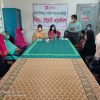
Five Steps to Combat Gender-Based Violence Globally
The 410 Legal Aid Centers that I manage in Bangladesh for BRAC’s Human Rights and Legal Aid Services received approximately 35,900 requests for assistance in 2020. Almost all of them involve gender-based violence against women and girls.
Inequality, COVID-19 and the Plight of the Young
Inequality characterizes the world we live in, predisposing how we act and think. We perceive our existence as composed of dichotomies – men and women, young and old, black or white, as well as a difference between those who have and those who do not have access to wealth, health, education and influence. Dichotomies are also born out of comparisons, about how things are now and how they could have been, how they were before and how they are now.
Sustainable Development Goals Can Guide Asia-Pacific to Build Back Better
The COVID-19 crisis poses an unprecedented threat to development in the Asia-Pacific region that could reverse much of the hard-earned progress made in recent years. The good news is we know how to tackle this challenge. Recovery from the pandemic and our global efforts to deliver the United Nations Sustainable Development Goals (SDGs) by 2030 must go hand-in-hand. The Goals provide a compass to navigate this crisis, faster and greener, everywhere and for everyone.
COP26 and India’s NDCs
Climate change is one of the most pressing issues that the world is collectively facing at the moment. It is contended that strengthening the global response is pertinent to combat the threat of climate change.
Magellan, Inquisition and Globalisation
Globalisation’s beginnings are symbolised by Ferdinand Magellan’s near circumnavigation of the world half a millennium ago. But its history is not simply of connection and trade, but also of intolerance, exploitation, slavery, violence, aggression and genocide.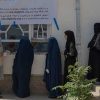
How to Achieve Peace in Afghanistan
There is much expectation about US President Joe Biden's Afghanistan strategy to end the United States' longest war effectively. So far, he continues to rely on Ambassador Zalmai Khalilzad, the Special Envoy for Afghanistan, appointed by Mr. Trump.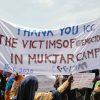
Sudan Took Important Step, But Now Should Send the ICC Suspects to The Hague
Sudanese authorities concluded a Memorandum of Understanding with the International Criminal Court (ICC) in February in its investigation of Ali Kushayb. This much needed step is expected to allow ICC investigators access to Sudan ahead of ICC judges’ deliberations in May to assess whether there is sufficient evidence to send his case to trial.
International Women’s Day, 2021
More Women Leaders Make Better Societies
This year it will be 128 years since the right of women to vote was first recognized, with New Zealand becoming the first nation to allow the participation of women in its general election in 1893.
From the suffragettes - to today’s feminists, both men and women have fought to increase women’s political participation and representation. It has been a slow, sometimes bitter and occasionally even dangerous struggle. Yet global progress remains slow and uneven – as it does in Samoa. As we approach the 2021 General Election on 9 April, it is important to remember that women’s full and effective participation in all areas of life drives progress for everyone.
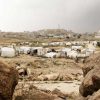
Peace & Security in Armed Conflicts Mean Presence of Food & Absence of Gunfire
In 1941, the people of Greece were facing a horrific winter. The Axis powers had plundered local supplies and introduced an extortionate tax on Greek citizens. Allied forces imposed a cruel blockade, cutting off imports. Prices skyrocketed. Hundreds of thousands of civilians perished.
More ‘Can & Must be Done’ to Eradicate Caste-Based Discrimination, Says UN Rights Chief
There is hardly a better way to promote human rights in Nepal than celebrating Muskan Khatun for being one of the winners of the prestigious International Women of Courage (IWOC) Award, released on the International Women’s Day by the Government of the United States of America.
Death of an Ambassador and the Congolese Slaughter
On the morning of 22nd February a jeep from the World Food Programme (WFP), followed by another one with the Italian ambassador, Luca Anastasio, was driving along Route Nationale 2 passing by The Virunga National Park, an UNESCO Congolese World Heritage Site famous for its dwindling population of unique mountain gorillas.
Can Free Phones Close the Digital Gender Divide?
The gender gap in mobile phone ownership is well-documented. For years now, the financial inclusion community has been trying to get phones into the hands of more women at the last mile — spurred on by mounting evidence that mobile money can increase women’s financial resilience, expand their economic opportunities and improve their intra-household bargaining power.
Down in Hell
I am about 200 feet down a rickety old mine shaft, in the Ashanti gold mining region of Ghana. It is stiflingly hot and darker than a moonless night. I can only feel the touch of sweaty bodies passing in the darkness and hear the reverberating sound of miners coughing and breaking rocks. The lack of oxygen and dust make it hard to breathe. I have no idea how deep this shaft goes – hundreds of feet? More? If there is a Hell this must be what it feels like.
What Africa Expects of New WTO Chief Dr. Ngozi Okonjo-Iweala
When on 15 February the chair of the World Trade Organization’s (WTO’s) General Council, Ambassador David Walker of New Zealand, announced that Dr. Ngozi Okonjo-Iweala would be the new Director-General, the mood among delegates was of relief.
Prioritise Pandemic Relief, Recovery: No Time for Debt Buybacks
Developing country governments are being wrongly advised to use their modest fiscal resources to pay down accumulated debt instead of strengthening pandemic relief and recovery. Thus, debt phobia risks deepening and extending COVID-19 recessions by prioritising buybacks.
The Ethics of AI to Ensure Food Security and Development
One year after the call for a group of international and religious organizations and important multinational companies to incorporate ethics into the design of artificial intelligence (AI), Pope Francis said in a tweet: “I hope that more and more people of good will cooperate in the promotion of the common good, the protection of those lagging behind and the development of a shared algor-ethics”.
International Women’s Day, 2021
Why Green Growth and Climate Action Fall Short Without Addressing Gender Inequality
As the global effort to address climate change has strengthened over the last few years, so has the realization that rising temperatures and climactic disruptions disproportionately impact women, particularly in developing countries, as they tend to be more dependent upon natural resources and are thus overrepresented in resource-intensive economic sectors. Furthermore, inherent in gender inequality are disadvantages for and discrimination against women in all facets of society, including in the economy and politics. Thus, it is unfortunate, yet perhaps unsurprising, that these structural disparities are mirrored in the negative effects of climate change. Therefore, if gender differences are not incorporated into climate change plans, women will be unable to access the co-benefits that arise from concerted climate action.

The Mexican Economy: A Short or Long Recession Cycle?
The trend of the Mexican economy during the last two years has not been positive. INEGI, the official bureau of statistics, has just reported that GDP registered a fall of 8.5 percent compared to 2019 with seasonally adjusted figures. But in 2019 GDP also receded, although in far less measure, less than one percentage point. However, it must be considered that the Mexican economy has been falling for 6 quarters (compared to the previous year). Considering the population growth rate (1.2 percent per year), the fall in the GDP per capita is close to 11 percent. This figure matters because it gives a more accurate idea of the size of the downturn. It is also necessary to take into account the two years, since our interest should be now to try to figure out how long the recession will be the endure, that is, when will Mexico reach the pre-pandemic level of GDP.
Drug Users Often Do Not Seek Help Because They Fear Legal Repercussion
In the February 12th editorial on the issue of illicit drug use, the Samoa Observer stated that “… there is no data currently available to show that drug abuse including meth consumption levels in Samoa have reached crisis levels, which would warrant the government considering decriminalizing drug use and consumption.” The United Nation’s position on this is clear, we must not sit by and wait for a problem to blight our communities before acting. The evidence shows that it is cheaper and more effective to prevent drug use than to deal with the consequences. To be clear, my concerns are for the drug users and their families and not for the criminal dealers.« Previous Page — Next Page »





The views expressed in these articles are those of the authors and do not necessarily represent the views of, and should not be attributed to, IPS-Inter Press Service

The Week with IPS

NEXT STOP - SDGs
Tracking global progress towards a sustainable world
Tracking global progress towards a sustainable world
