Languages
Sunday, November 8, 2026



News and Views from the Global South
Opinion
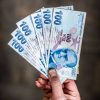
Crisis alla Turca II – From Currency Crisis to Debt Crisis?
The meltdown of the Turkish currency that began in 2018 has continued unabated with the decline reaching unprecedented proportions in recent days. The causes of that turmoil including underlying financial fragilities and political shocks were discussed in a previous piece by this author. Since then the economy has become even more vulnerable in these respects.
Nepal Needs to Bridge the Gap Between Legal Provisions Against Child Marriage and Social Norms
Mohan and Sarita (name changed) studied together in the same school from Grade 6 onwards. They were friends initially, but fell in love and wished to be together, though underage.
Reclaiming Africa’s Early Post-independence History
In 1965, Kwame Nkrumah described the paradox of neocolonialism in Africa, in which “the soil continue[s] to enrich, not Africans predominantly, but groups and individuals who operate to Africa’s impoverishment.” He captured what continues to be an essential feature of Africa’s political economy.
Global Data Community’s Response to COVID-19
The world is currently counting more than 42 million confirmed cases of the COVID-19 and over 1 million deaths since the start of the pandemic.1
The Mental Health Consequences of the Lekki Toll Gate Attack
On October 20, 2020, young Nigerians who were protesting against police brutality were shot by men in Nigerian military uniforms. Unarmed, peaceful citizens were massacred at the Lekki Toll Gate in Lagos, southwest Nigeria.
The Path to Global Food Security
This year, the Nobel Peace Prize recognised the inextricable link between hunger and conflict. With climate change as a further complicating factor, research, investment, and coordination with local farmers are critical for ensuring food security for all.
Finance Covid-19 Relief and Recovery, Not Debt Buybacks
In July, the UN Secretary-General warned that a “series of countries in insolvency might trigger a global depression”. Earlier, the United Nations Conference on Trade and Development (UNCTAD) and the International Monetary Fund (IMF) had called for a US$2.5 trillion coronavirus crisis package for developing countries.
The United Nations, 75 Years Young: Engaging Youth Social Entrepreneurs to Accelerate the SDGs
This year, the United Nations is marking its 75th anniversary – a milestone of extraordinary economic and social progress in Asia and the Pacific. While the Organization enjoys a lifespan almost equal to the world’s improved average life expectancy, the future lies with those who have recently embarked on theirs: our young people.
Not in Our Name, Never in Our Name: A Conversation with Muslim Faith Leaders Echoing the Wisdom of a Pontiff
As the Grand Imam of Al-Azhar, Ahmed Al-Tayeb said on October 20: “As a Muslim and being the Grand Imam of Al-Azhar, I declare before Almighty God that I disassociate myself, the rulings of the religion of Islam, and the teachings of the Prophet of Mercy, the Prophet Muhammad (pbuh), from such heinous terrorist act and from whoever would embrace such deviant, false thought.
Can Agroecology Feed the World?
Producing food and ensuring nutrition security, protecting the environment and restoring biodiversity, building sustainable and fair food systems: That’s the promise of agroecology.
Budgeting for a Better Future, for Every Child
2020 has not turned out as planned. As the COVID-19 pandemic continues to impact populations around the world, governments have been forced to take a fresh look at their spending and how to meet additional costs of pandemic response as they expect a fall in revenue. Budget information has become even more critical.
Child Protection: the Pandemic has Left the Most Vulnerable Children Invisible
A right is an entitlement and it has three basic principles, without which rights cannot be enjoyed. The first principle is that of universality: A right has to be enjoyed by all citizens, including all children. There cannot be a distinction between a Dalit or an Adivasi child and a child who is better endowed.
Mahatma’s Non-Violence: Essence of Culture of Peace for New Humanity
I will begin by presenting to you excerpts from the message from UN Secretary-General António Guterres on the International Day of Non-Violence.
The Plight of Domestic Workers in Brazil
The inclusivity of Brazilian society is put to the test as the coronavirus pandemic highlights a labour sector ripe with historical and structural inequality: domestic work.
Food Security Bursts Onto the Global Agenda
The month of October 2020 will be recalled as one of the most important moments in raising awareness about world food security, whether in the global debate or in the search for possible concrete solutions.
A Long, Uneven and Uncertain Ascent
The COVID-19 pandemic continues to spread with over 1 million lives tragically lost so far. Living with the novel coronavirus has been a challenge like no other, but the world is adapting.
Enhanced Social Protection an Opportunity Asia Pacific Must Grasp
In the fight against COVID-19, success has so far been defined by responses in Asia and the Pacific. Many countries in our region have been hailed as reference points in containing the virus. Yet if the region is to build back better, the success of immediate responses should not distract from the weaknesses COVID-19 has laid bare. Too many people in our region are left to fend for themselves in times of need. This pandemic was no exception. Comprehensive social protection systems could right this wrong. Building these systems must be central to our long-term recovery strategy.
Venezuela, Twitter, and Crimes Against Humanity
In mid-September, the United Nations Human Rights Council approved the renewal, for another two years, of the mandate of the Fact-Finding Mission to determine and document the existence of crimes against humanity in Venezuela, under the government of Nicolás Maduro.
Education: Act Now, Don’t Wait for the Bill
School reopening doesn’t mean that education is back on course. For a start, schools remain closed in over 50 countries, affecting more than 800 million students. The poorest ones may never make it back to school, driven by poverty into child labour or early marriage. Distance learning has been out of reach for one third of the 1.6 billion students affected worldwide by school closures. They may disengage altogether if school closures continue.
Limited Liability: Profit Without Responsibility
Limited liability protection for shareholders in joint stock companies was introduced to encourage investments in them. However, it has encouraged irresponsibility, causing much harm while generating profits without responsibility. Limited liability limits responsibility Columbia Law School’s Professor Katarina Pistor has extended her critique of the legal system to emphasize the implications of such limited liability. Limited liability encourages shareholders not to pay attention to the harm corporations they invest in may do.
Why Food System Transformation Needs Water
The impact of Covid-19 on supply chains and food security has dealt a blow to the already faltering global development ambition of ending hunger.« Previous Page — Next Page »





The views expressed in these articles are those of the authors and do not necessarily represent the views of, and should not be attributed to, IPS-Inter Press Service

The Week with IPS

NEXT STOP - SDGs
Tracking global progress towards a sustainable world
Tracking global progress towards a sustainable world
